
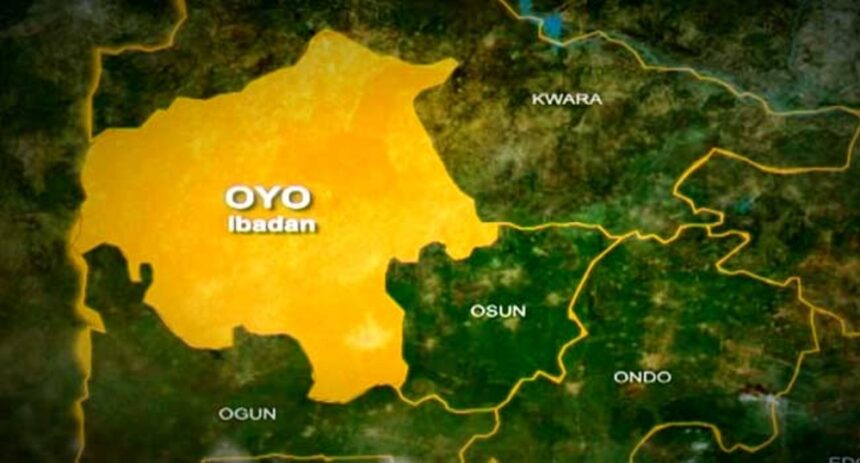
Oyo State government says it is employing a programme-based budgeting approach to ensure that public funds are directly linked to specific projects and outcomes, aiming to strengthen a programme-based budget system that prioritises the critical needs of its people.
Commissioner for Budget and Economic Planning, Prof. Musibau Babatunde Adetunji, made this known at the opening of a two-day workshop on the role of the Medium-Term Expenditure Framework (MTEF), Medium-Term Sector Strategies (MTSS), and Programme-Based Budgeting (PBB) in Oyo’s budget process.
The workshop, held in Oyo town, brought together budgetary stakeholders, state legislators, and development partners, with support from UNICEF. It was to deepen the understanding of programme-based budgeting and strengthen Oyo’s public financial management systems.
Adetunji declared that Oyo has revolutionised budgeting by embracing inclusivity, a move that has not only improved transparency and ensured that government spending directly addresses the most pressing needs of citizens but also translated into stronger budget performance across sectors.
“We have made a top-down approach in our budgeting framework. It has always been all-inclusive budgeting in Oyo State. It involves a whole chain of activities that enhances transparency, and this is why our budgeting framework has been exceptional in Oyo State. We prioritise health and education as a major pillar in our budget,” he said.
Also speaking at the event, Chairman of the Oyo State House of Assembly Committee on Appropriation, Hon. Babalola Sukanmi, lauded the initiative and the executive’s resolve to align its policies with campaign promises aimed at improving the welfare of ordinary people in the state.
The UNICEF team, led by Chief of the Lagos Field Office, Ms Celine Lafoucriere, said the Programme-Based Budgeting workshop is part of the SUSI Project funded by the European Union with UNICEF’s technical support.
She commended Oyo State’s commitment through the launch of its first Social Protection Policy, creation of a coordination department, and institutionalising the MTSS process aligned with Agenda 2040 and the 5-year Medium-Term Development Plan.
Lafoucriere emphasised the need for children’s welfare to remain a priority in budget planning, stressing that investments in child-focused programmes are crucial to sustainable development.
She declared, “Oyo has already shown leadership. The state launched its first Social Protection Policy, created a coordination department, and institutionalised the MTSS process aligned with Agenda 2040 and the 5-year Medium-Term Development Plan. These steps strengthen budget realism and accountability, and they set the stage for better outcomes.
“We see these measures in the 2025 budget. Education receives N145 billion, about 21 per cent of the total budget. Health gets N59 billion. Social protection has grown fourfold in two years, now at N2.18 billion. These are impressive numbers that translate into real opportunities for the 1.7 million children under five in Oyo and the 334,000 children still out of school.
“Yet challenges remain. Only 37 per cent of one-year-olds are fully immunised, and one in three children is stunted. More than four million people still practise open defecation, and gaps in planning, data, and monitoring continue to limit progress.”
ALSO READ TOP STORIES FROM NIGERIAN TRIBUNE
WATCH TOP VIDEOS FROM NIGERIAN TRIBUNE TV
- Relationship Hangout: Public vs Private Proposals – Which Truly Wins in Love?
- “No” Is a Complete Sentence: Why You Should Stop Feeling Guilty
- Relationship Hangout: Friendship Talk 2025 – How to Be a Good Friend & Big Questions on Friendship
- Police Overpower Armed Robbers in Ibadan After Fierce Struggle


