
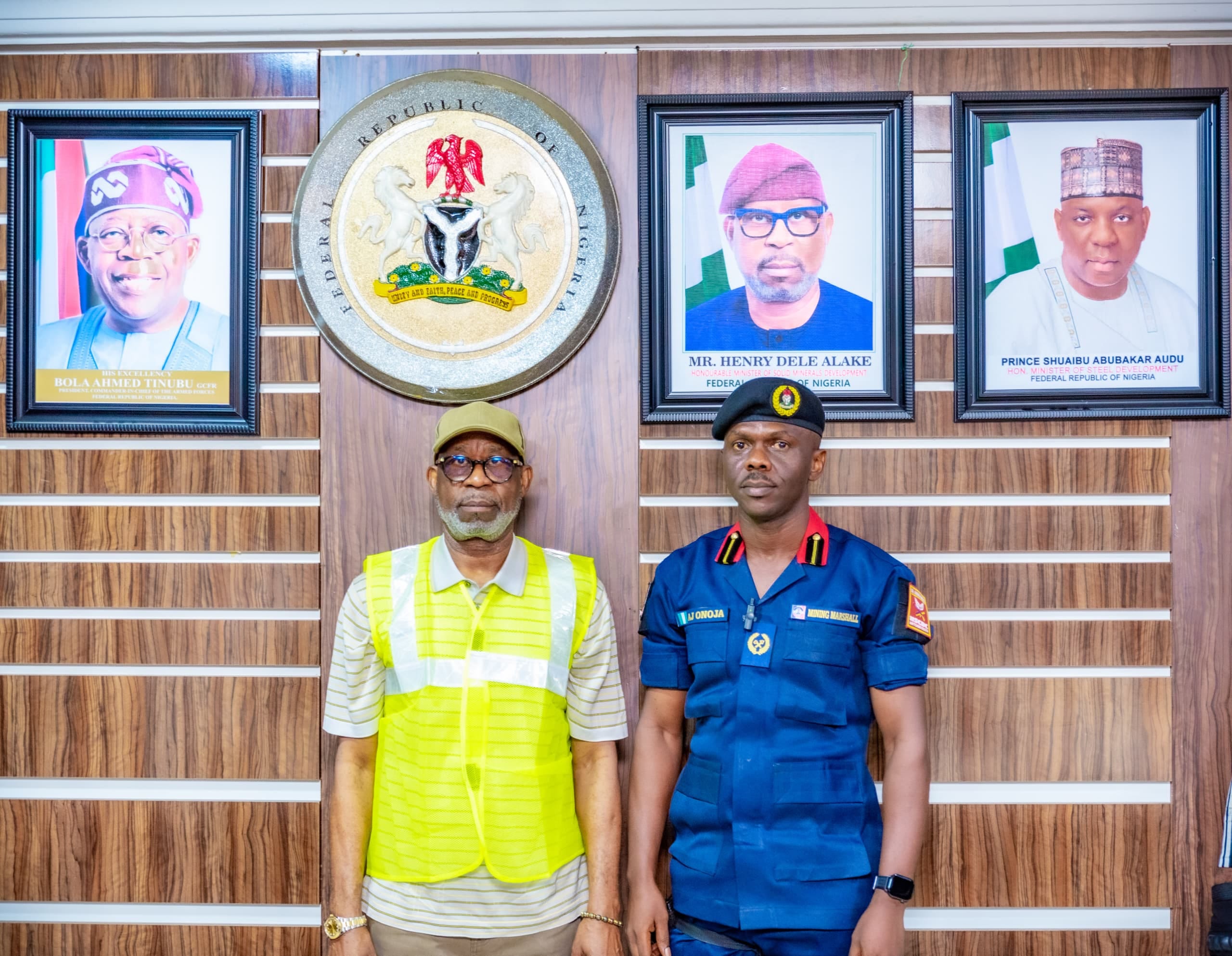
By Abdullahi O Haruna Haruspice
When the Federal Ministry of Solid Minerals Development inaugurated the Mining Marshals (MM) in 2024, it did so with an urgent mission: to sanitize Nigeria’s chaotic and corruption-prone mining sector. Just a year later, the security outfit faces challenges—not only from illegal operators but also from what observers describe as coordinated attempts to discredit their progress.
At the recently concluded Ministerial Retreat in Abuja, themed “Enhancing Performance, Strengthening Accountability, and Fostering Innovation in the Solid Minerals Sector,” Minister Dele Alake addressed what many had whispered in policy and industry circles: that the Mining Marshals are contending with a wave of allegations, most of them lacking clear evidence but charged with political or economic undertones.
“There is serious pushback,” Alake stated, “from those benefiting from the status quo.” According to the Minister, such resistance is coming from illegal operators, local actors, and entrenched interests accused of thriving under lax enforcement. With reform threatening longstanding privileges, some elements appear to be mobilizing against the enforcement agency.
The alleged strategy? Accusations of corruption, abuse, and high-handedness—some perhaps plausible, many unsubstantiated. But Alake, with the firmness that has marked his tenure, emphasized that without verifiable evidence, the leadership of the Mining Marshals would not be scapegoated. “I will not be blackmailed,” he said emphatically.
Nigeria’s mining sector has long grappled with insecurity, weak oversight, and unclear regulation. Illegal mining not only depletes the economy but also fuels criminal networks and deters legitimate investment. If the Marshals are making waves, it may be because longstanding practices are being disrupted.
This is not to suggest the Marshals are beyond scrutiny. Alake himself noted that any credible allegations should be investigated thoroughly and transparently. However, the growing tendency to use unverified claims as instruments of disruption is part of a broader pattern in Nigeria’s reform history: genuine institutional changes often provoke resistance from those who stand to lose.
Beyond enforcement, the Minister addressed persistent issues in the sector, such as the manipulation of landowners’ “letters of consent” and the proliferation of regulatory levies. In practice, the letter-of-consent process has become a flashpoint for disputes and opportunistic interference, dividing communities and discouraging investment. Alake’s plan to engage stakeholders and lawmakers reflects a willingness to approach this complex issue with nuance and diplomacy.
Notably, the Ministry under Alake’s leadership has received national recognition for its commitment to reform and innovation. From the adoption of the internationally recognized PARC reporting code to the operationalization of the Nigerian Mining Corporation under a private-sector-led model, progress in the sector is evident and measurable.
Commendations from the National Assembly—such as those from Senator Ekong Sampson and Hon. Jonathan Gaza—were not mere formalities. Their calls for enhanced accountability and innovation reflect a growing consensus: Nigeria’s solid minerals sector has untapped potential to diversify the economy and increase GDP. But this transformation depends on whether bold reforms like the Mining Marshals initiative are protected—not sabotaged.
Alake’s remarks serve as a reminder: we cannot seek reform and then retreat when it becomes uncomfortable. The mining sector has, for too long, served as a playground for the unscrupulous. To sanitize it, the Marshals must be empowered—not undermined. While accountability remains essential, it should not be manipulated to obstruct reform.
As the dust settles from the Abuja retreat, one thing is clear: the fight for Nigeria’s mineral future extends beyond the minefields—it is being contested in boardrooms, group chats, and policy platforms. This time, the reformers appear ready to stand their ground.
If Dele Alake maintains his resolve—and if Nigerians rally behind purposeful reform—we may yet witness the long-overdue transformation of one of our most underutilized sectors into a cornerstone of national prosperity.
WATCH TOP VIDEOS FROM NIGERIAN TRIBUNE TV
- Relationship Hangout: Public vs Private Proposals – Which Truly Wins in Love?
- “No” Is a Complete Sentence: Why You Should Stop Feeling Guilty
- Relationship Hangout: Friendship Talk 2025 – How to Be a Good Friend & Big Questions on Friendship
- Police Overpower Armed Robbers in Ibadan After Fierce Struggle


