Economic reform being implemented by the administration of President Bola Tinubu is all-encompassing, beyond the removal of fuel subsidy and the unification of the foreign exchange (FX) market, writes JOSEPH INOKOTONG.
President Bola Tinubu’s economic reforms have started crystalising as the life span of the administration progresses. It has become clearer beyond the already known removal of fuel subsidy and unification of the foreign exchange (FX) markets. It is encompassing.
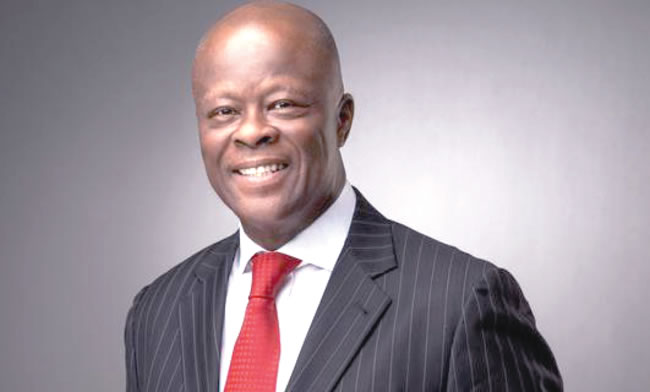
This was made known by the Minister of Finance and Coordinating Minister for the Economy, Mr. Wale Edun during his maiden press briefing last week Friday in Abuja.
After the interaction with the media, it became more discerning that the thrust of President Tinubu’s economic reforms is focused on diversifying Nigeria’s economy and boosting growth. His main priority is to move away from the country’s dependence on oil and gas and to focus on developing other sectors such as agriculture, manufacturing, and technology. He has also prioritised infrastructure development, including roads, railways, and airports, in order to improve connectivity and increase trade.
To give elements of the President’s visions, his strategy for the economy, and plans to give a better economy and life to Nigerians, Edun commenced the talks with the present stead of the economy. He noted that “we are not where we should be, the economy is barely growing above the rate of population growth. But it was not always so”. In his view, in trying to trudge forward, it is pertinent to understand the past and present. At present, the country is witnessing slow growth, double-digit inflation, weak depreciating exchange rate as well as security concerns that have resulted in an economy that is not growing, as well as not lifting Nigerians out of poverty.
“If we think back to when last the economy was stable when it was growing, when inflation rate was low, when the exchange rate was stable, and when interest rates were affordable, that period is about a decade ago,” he pointed out.
Edun observed that growth was above 6 percent around 2013 and 2014 because from 2010 there was an appreciation in prices of commodities worldwide; oil prices and volumes were high, and Nigeria and the government earned over 80 billion dollars per annum into its coffers compared to the figure now that hovers around $25 billion.
According to him, the above scenario points to the fact that there was a time when the government had enough foreign exchange, and naira revenue to meet its obligations and provide the funding to grow the economy. It had enough foreign exchange such that when people came in to invest and they needed to import raw materials and machinery, the government could provide the wherewithal. “What that points to is that we have a situation where if the government doesn’t have the money it needs to facilitate, and it allowed private funding, other sources of funding such as foreign direct investment, domestic investment by Nigerians in all areas”, Mr. Edun.
He explained that some of that actually took place in Lagos State when President Tinubu was governor, as he did open up the power sector to private investment, the road sector, infrastructure, waste management, and even cemeteries to private investment because the government did not have the funds, and those who were willing and able to provide jobs and grow the economy by making those investments were offered the opportunity. “That is a pointer to the fundamentals of the President’s strategies”, he stressed, adding that private investments abound worldwide, and there are huge flow of foreign direct investment once investors are given the right conditions.
The Coordinating Minister for the Economy noted that the President has pointed out eight priority areas where he’s going to take Nigerians and his key priorities to improve the lives of the populace by providing food security and ending poverty. He explained that President Tinubu’s plan for the economy entails inclusive economic growth that creates jobs and provides access to capital, particularly consumer credit that makes goods affordable to ordinary Nigerians. “And he is concerned about utilising our vast capable human resources by focusing on inclusivity, women, youth, making all have the opportunity to come to the table and contribute to the growth of the economy and society and likewise by focusing on security, rule of law, and anti-corruption, he tends to create a fairer and safer playing field for all”, further stated.
He highlighted that for the team the President has put together, he has set specific targets, and objective measures of performance so that Nigerians can see the targets and measure him and the team against them. “So in the area of inclusivity, we will measure literacy rate, measure out-of-school children and see how successful the trend in increasing literacy and reducing out-of-school children will go, etc., measures will be put in place for security, for rule of law, anti-corruption, and likewise for the other metrics, there will be measures that allow Nigerians to check how well the administration is doing. In terms of how to get to where Mr. President is going to take us, the key is to increase revenues so that government has enough funding to carry out its obligations and to stabilise the economy as a whole”, Mr. Edun stated.
He was quick to add that increasing tax revenue does not mean increasing taxes but entails bringing greater efficiency, cutting leakages, and maximizing the legitimate revenue that should come to the government. Also, in order to gain and build public trust, the government would lay emphasis on efficiency in government expenditures and similarly effective debt management.
The president is going to deliver a better life to Nigerians by encouraging investment that increases productivity grows the economy and thereby creates jobs and reduces poverty.
However, as commendable as the President’s initiatives are, analysts say there are a few key factors that will be crucial for the success of President Tinubu’s economic reforms. First, he will need to ensure that there is political stability and a strong commitment to reform from all levels of government. Also, he will need to attract significant levels of foreign investment, particularly in the non-oil sectors, and ensure that the reforms are implemented in a transparent and accountable manner, with clear targets and timelines.
In the same vein, the lack of foreign exchange has been a major challenge for Nigeria in recent years, and it is a key reason why the country’s economy has been so reliant on oil and gas. To address this issue, President Tinubu’s reforms will need to focus on increasing exports and attracting more foreign investment. This will require creating a more favorable business environment, including reducing bureaucracy and red tape and improving infrastructure.
In the short term, the government can take some measures to boost foreign exchange reserves and ease pressure on the naira. These could include reducing imports, increasing remittances from Nigerians living abroad, and allowing for more flexible exchange rates. However, these measures are only temporary fixes and will not solve the underlying issues. The long-term reforms that the President is proposing are what will really make a difference.
One way to encourage Nigerians abroad to remit more of their earnings back home is to make the process easier and cheaper. This could involve reducing the fees associated with money transfers, simplifying the process, and providing incentives such as tax breaks or preferential exchange rates. Another way to encourage remittances is to promote financial inclusion and increase access to banking services for Nigerians living abroad.
It is also important to consider the broader economic conditions that are driving the decision to remit money or not. For example, if the Nigerian economy is not doing well, people may be less likely to send money home. So, in addition to making it easier and cheaper to remit money, the government should also focus on improving the overall economic conditions in the country.
There are a number of things the government can do to improve the economic conditions in Nigeria. For example, it can focus on diversifying the economy away from oil and gas, investing in infrastructure, improving the business environment, and creating jobs. It can also work on reducing corruption, which many say is a major problem in Nigeria.
In addition to these measures, the government should also work on improving the education system and promoting innovation and entrepreneurship. Some hold the view that the quality of education in Nigeria is not very high, and there is a lack of skills that are needed for the workforce. Promoting innovation and entrepreneurship is important because it can create new businesses and jobs.
A number of factors have been identified that can improve the overall economic conditions in Nigeria, including diversifying the economy, investing in infrastructure, reducing corruption, improving education, and promoting innovation and entrepreneurship. Education is the foundation for economic growth and development. It is also important for reducing poverty and inequality, and for promoting innovation and entrepreneurship. It is not just about increasing the amount of money spent on education, but how that money is spent and how the education system is structured. For example, the government could focus on improving teacher training, providing better resources for schools, and increasing access to higher education. The government cannot do it alone. Civil society organisations, the private sector, and individuals also have a role to play in improving education in the country.
Also, technology can be a powerful tool for improving education in a number of ways. For example, it can be used to provide access to high-quality educational content, to support personalised learning, and to improve assessment and feedback.
As stated by the Minister of Finance, taxation is an important source of revenue for governments, and it can play a role in driving economic growth. For instance, by using taxation to fund infrastructure projects, governments can create jobs and stimulate the economy. Taxation can also be used to promote social and economic development, such as through progressive taxation policies that redistribute wealth and income.
Nigeria has one of the lowest tax-to-GDP ratios in the world, which means that the government is not generating enough revenue to meet its needs. Again, experts say that there are a number of reasons for this, including tax evasion and corruption. Many countries, including Nigeria, offer tax incentives to businesses and individuals in an effort to encourage investment and job creation. However, these incentives can sometimes be misused and can end up costing the government more money than they generate. Reviewing these incentives and making sure they are being used appropriately could be a great way to improve tax revenue.
One area of tax policy that requires improvement is in the area of property tax. Property taxes are an important source of revenue for local governments, but in Nigeria, they are often not collected effectively. This is due to a number of factors, including a lack of accurate property records and a lack of capacity among local tax authorities. Improving the collection of property taxes could be a way to increase revenue at the local level.
READ ALSO FROM NIGERIAN TRIBUNE
WATCH TOP VIDEOS FROM NIGERIAN TRIBUNE TV
- Relationship Hangout: Public vs Private Proposals – Which Truly Wins in Love?
- “No” Is a Complete Sentence: Why You Should Stop Feeling Guilty
- Relationship Hangout: Friendship Talk 2025 – How to Be a Good Friend & Big Questions on Friendship
- Police Overpower Armed Robbers in Ibadan After Fierce Struggle