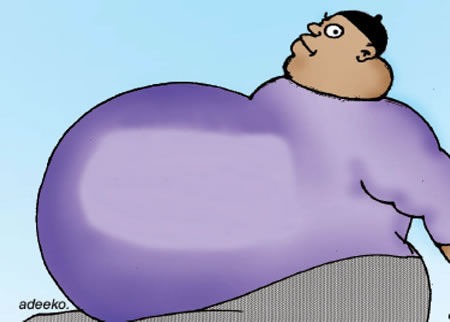
Gone are the days when being fat was seen as a ‘sign of good living’ and the society recognised fat people as influential and wealthy people. Nowadays, being fat does not go with wealth but increased risk of serious medical health conditions. Obesity is simply defined as abnormal or excessive fat accumulation in the body that can cause adverse effect on health and is even life threatening. The prevalence is increasing rapidly in numerous developing nations worldwide, including Nigeria, although it is a substantial public health crisis in the developed world. According to World Health Organisation (WHO) 2014, about 13 per cent of the world’s adult population (11 per cent of men and 15 per cent of women) are obese. Once considered a high-income country problem, obesity is now on the rise in low and middle income countries, particularly in the urban settings. Also, in the developing countries, the rate of increase of childhood obesity has been more than 30 per cent higher than that of developed countries. According to World Bank Gender Statistics 2015, the proportion of obese adult males and females in Nigeria is 5.9 per cent and 16.3 per cent respectively; this shows the alarming increase in obesity in Nigeria. Non communicable diseases have overtaken communicable diseases as the leading causes of morbidity and mortality in Nigeria. Among these non communicable diseases is obesity.
Body mass index (BMI) is a simple index of weight-for-height that is commonly used to classify obesity in adults. It is defined as a person’s weight in kilograms divided by the square of his/her height in meters (kg/m2). Obesity, according to WHO definition, is a BMI greater than or equal to 30. Extreme obesity, also called severe obesity or morbid obesity occurs when you have a BMI of 40 or more. With morbid obesity, you are more likely to have serious health problems. Although BMI is considered to be a useful way to estimate healthy body weight, it does not measure the percentage of body fat.
The health risks associated with obesity are life threatening and has been associated with so many conditions particularly cardiovascular diseases, type 2 diabetes mellitus, osteoarthritis (a highly disabling degenerative disease of the joints), some types of cancer (endometrial, breast and colon) and low life expectancy. The risk for these non communicable diseases increases with an increase in BMI. The fundamental cause of obesity is an energy imbalance between calories consumed and calories expended. This means that it occurs when you take in more calories (in food) than you burn through exercise and normal daily activities. Your body stores the excess calories as fat and that’s what leads to obesity. Globally, there has been an increased intake of energy-dense foods that are high in fat and a decrease in physical activity due to the increasingly sedentary nature of many forms of work. Changes in dietary pattern are often the result of environmental and societal changes. Other causes include genetics, pregnancy, lack of sleep, certain medications and medical problems. The risk of becoming obese increases across all socio-economic classes as a result of improved access to foods decreased physical activity, and the consumption of ‘western’ diets.
While caloric intake has been rising, exercise has been declining. Economics has systematically eliminated exercise from our lives. Workers commute by car from home to work in an office or factory, driving quite literally from door to door. Automobiles have eliminated daily walking and cycling. Elevators and escalators have replaced stairs. Leisure time is spent watching television and surfing the internet. Studies have shown that children who watch television five or more hours a day are five times as likely to be overweight as those who watch less than two hours a day. Time spent playing computer games and surfing the internet instead of playing outside is also contributing to the surge in obesity. Having a diet that’s high in calories, eating fast food, skipping breakfast, eating most of your calories at night, consuming high-calorie drinks and eating oversized portions all contribute to weight gain. Studies have shown, that over the past four decades, consumption of food eaten away from home has also risen alarmingly. It is well known that eating out may lead to excess calorie intake and increases the risk of obesity because of large portion sizes and increased energy density of foods. Fast foods are typically high in calories, fat (saturated and trans fat), sugar, simple carbohydrate and salt. Fast foods reduce the quality of diet and provide unhealthy choices especially among children and adolescents raising the risk of obesity.
If you are obese, you are more likely to develop a number of health problems including: type 2 diabetes, high blood pressure, metabolic syndrome, heart diseases, stroke, cancer, breathing disorders, gall bladder disease, gynecological problems, erectile dysfunction and sexual health issues, non alcoholic fatty liver disease and osteoarthritis. If you are obese, your overall quality of life may be diminished and you may even encounter discrimination. Other weight-related issues that may affect your quality of life include: depression, disability, shame and guilt, social isolation and lower work achievement.
The general recommendations to reduce the obesity epidemic is to increase consumption of fruits and vegetables, as well as legumes, whole grains and nuts; limit energy intake from total fats and shift consumption away from saturated fats to unsaturated fats; limit the intake of sugars and be physically active. Parents and guidances should teach children/wards healthy habits. Children must have enough leisure time. They shouldn’t spend many hours watching television. As children grow, they should be taught to eat fruits rather than chocolate and other unhealthy pastries. As adults, people must always be active by engaging in regular exercise, at least 60 minutes a day for children and 150 minutes per week for adults. Tests and diagnosis for BMI include: taking your health history, general physical exam, calculating your BMI, measuring your waist circumference, blood tests and checking for other health problems. These can be done by your health care provider.
Obese individuals should consult health professionals to help understand and make changes in their eating and activity habits. All weight loss programs require changes in your eating habits and increased physical activity. The treatment methods that are right for you depend on your level of obesity, your overall health and willingness to participate in your weight loss plan. Although you may lose weight quickly at first, slow and steady weight loss over the long term is considered the safest way to lose weight and the best way to keep it off permanently.
- Olufemi writes from the University of Ibadan.
WATCH TOP VIDEOS FROM NIGERIAN TRIBUNE TV
- Relationship Hangout: Public vs Private Proposals – Which Truly Wins in Love?
- “No” Is a Complete Sentence: Why You Should Stop Feeling Guilty
- Relationship Hangout: Friendship Talk 2025 – How to Be a Good Friend & Big Questions on Friendship
- Police Overpower Armed Robbers in Ibadan After Fierce Struggle