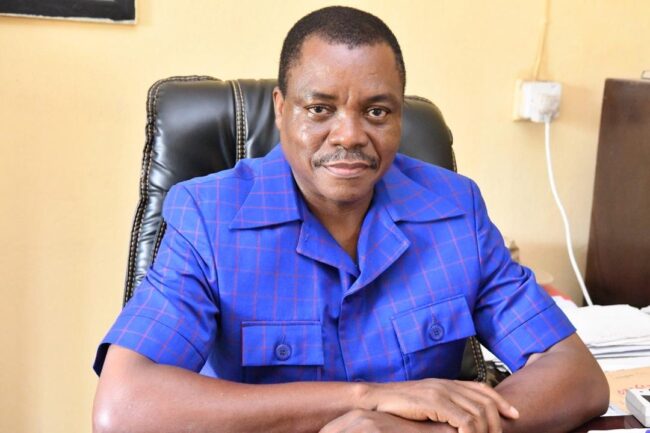
In this interview, COLLINS NNABUIFE speaks with Dr Charles Amadi, Principal Investigator, Global Biotech Potato Partnership Project on the importance of biotechnology on potato production.
1. Why did Nigeria venture into the GM Potato project?
Over the last four decades, our farmers have been helpless in addressing the increasing attack of Late Blight disease which has been ravaging potato farms on the Plateau leading to low yield, frustrating farmers and forcing some farmers to contemplate suicide while many others have abandoned potato farming for other crops. The only available solution so far has been a chemical spray of fungicide, this development has its own implementation on the health of our farmers. The GM potato project was introduced to assist farmers overcome the challenges of Late Blight and the huge capital flight on chemicals.
2. How extensive is this project? Which countries are involved? In Nigeria, which institutes and centres are involved?
The for Feed the Future Global Biotech Potato Partnership Project is a multinational collaborative project anchored by Michigan State University with Nigeria, Kenya, Indonesia and Bangladesh as participating countries.
Collaborating institutions include University of Minnesota, University of Idaho, International Potato Centre (CIP), African Agricultural Technology Foundation (AATF), Bangladesh Agricultural Research Institute (BARI), Indonesian Centre for Agricultural Biotechnology and Genetic Researchand Development (ICABIOGRAD), Kenya Agricultural and Livestock Research Organization (KALRO) and National Root Crops Research Institute in Nigeria.
In Nigeria, National Root Crops Research Institute Umudike is conducting the trial at its PotatoResearch Station at Kuru, Jos South LGA of Plateau State University Bokkos and Cocoa Research Institute of Nigeria (CRIN) are the collaborating institutions in Nigeria.
3. How do you showcase variety for farmers? Are there differences between biotech potatoes and the conventional varieties? What are the easily striking differences between both?
The difference between biotech potatoes and the conventional varieties is in their resistance to late blight – a devastating disease of potato. Biotech potatoes are completely resistant to Late blight while the conventional varieties from which they were developed are susceptible. In the field, under severe blight attack, the foliage of the conventional varieties is completely destroyed by late blight while those of biotech potatoes are not affected. The effect is that while tuber yield of conventional varieties isdrastically reduced, those of the biotech potatoesremain high.
4. Which potato variety was bioengineered to achieve late blight resistance?
The potato varieties that were bioengineered to achieve resistance include Diamant, Desiree, Tigoni, Victoria and Shangi
5. What did the genetic modification entail?
Copies of genes for late blight resistance from wild relatives of potato were transferred into the conventional varieties to make them resistant.
6. Considering the other countries the project is ongoing, have there been confined clinical trials as in Nigeria to warrant going forward with the preliminary results of this breeding programme.
Biotech potatoes were first evaluated in Ugandawhere all biosafety trials were carried out with favourable results which found them to be safe before it was scaled out to the four collaborating countries mentioned earlier including Nigeria.
7. Considering the plan to release late-blight-resistance potato varieties to farmers within two years, what are the challenges you anticipated with regards acceptance to farmers and the consuming public?
The plan is to register and release the biotech potatoes to farmers after the required regulatory evaluations have been carried out. Two years is certainly too short to do all the needful. We are looking at 4-5 yrs.
Because of the dire need for late blight resistant varieties, and the safety of biotech potatoes for human consumption, we do not anticipate any major challenges in acceptance by farmers and the consuming public. During the brown field day, farmers expressed willingness to adopt biotech potatoes when they are officially released
8. What challenges have you encountered with the project?
Everything is moving on well. The only challenges isthe absence of similar funding by the federal government of Nigeria for us to carry out mass modification of all potato varieties in the country that are seriously affected by Late Blight.
9. What limitations are possible in using the already established late blight-resistant potatoes.
At present, all the potato varieties cultivated in Nigeria are susceptible to late blight. In addition, resistance in conventional varieties tend to breakdown with time due to severity or changes in the pathogen that cause late blight.
10. When Shall Nigerian farmers have access to these varieties?
From our plan, farmers should be able to plant this variety from next year. We are at the final stage of our multi-locational trials gathering data for presentation to the Nigeria Regulatory Agency, the National Biosafety Management Agency
WATCH TOP VIDEOS FROM NIGERIAN TRIBUNE TV
- Relationship Hangout: Public vs Private Proposals – Which Truly Wins in Love?
- “No” Is a Complete Sentence: Why You Should Stop Feeling Guilty
- Relationship Hangout: Friendship Talk 2025 – How to Be a Good Friend & Big Questions on Friendship
- Police Overpower Armed Robbers in Ibadan After Fierce Struggle