
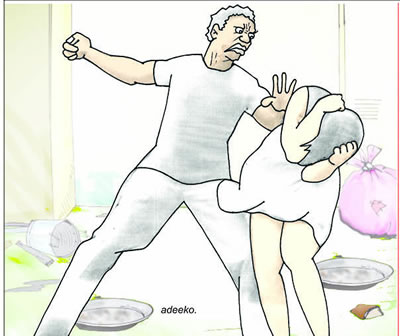
Violence against women, particularly intimate partner violence and sexual violence, according to World Health Organisation (WHO), are the major public health problems and violations of women’s human rights.
The November, 2016, global estimates published by WHO indicates that about 1 in 3 (35%) women worldwide have experienced either physical and/or sexual intimate partner violence or non-partner sexual violence in their lifetime.
WHO said most of this violence is intimate partner violence. Worldwide, almost one third (30%) of women who have been in a relationship report that they have experienced some form of physical and/or sexual violence by their intimate partner in their lifetime.
Globally, WHO said as many as 38% of murders of women are committed by a male intimate partner.
As a result, the world health body said violence can negatively affect women’s physical, mental, sexual and reproductive health, and may increase vulnerability to HIV.
Factors associated with increased risk of perpetration of violence include low education, child maltreatment or exposure to violence in the family, harmful use of alcohol, attitudes accepting of violence and gender inequality.
Factors associated with increased risk of experiencing intimate partner and sexual violence include low education, exposure to violence between parents, abuse during childhood, attitudes accepting violence and gender inequality.
For those who may be living with abuse or know someone who is, Lynn Fairweather, MSW, author of Stop Signs: Recognising, Avoiding, and Escaping Abusive Relationships, offers pieces of advice on how to overcome domestic violence:
- Knowledge is power: When it comes to preventing domestic abuse, learning to recognise the distinct patterns and behaviours associated with intimate partner violence can be lifesaving. Most abusive partners choose, test, and prime their future victims before they ever lay a hand on them. Learn their tactics, watch for red flags, and always follow your instincts, it serves to protect and guide you in potentially dangerous situations.
- Don’t compare: Abuse is abuse, even if you were assaulted but not physically injured, even if you hit back in self-defence, or even if it happened when there was alcohol involved. Abuse is not defined by the severity of injuries or by the number of police reports made. Avoid comparing your experience to that of other people, and instead ask: do you feel safe in your relationship?
- You are worthy: Believing yourself to be valuable, capable, and deserving of happiness may help give you the strength to leave a relationship that turns out to be dangerous. When we recognise ourselves as worthy of a healthy, respectful love we can better identify the partnerships that do not reflect that right.
- Don’t walk in unless you are willing to walk out: When searching for a romantic match, you must make up your mind beforehand that you are comfortable ending the relationship if your needs are not met. Decide early in the process that you will never be so attached to an outcome that you end up sacrificing your principles or your safety.
- Beware of isolation: One control tactic used to separate victims from supporters that might otherwise identify the abuse or assist the victim is isolation, which can be accomplished by physically moving the victim to a remote location, disabling their communication devices, or turning the victim against their connections.
- Assess threats: When assessing verbal threats from an abuser, consider context, purpose, ability, and content. As a general rule, the more detailed the threat, the more likely it is to be followed through with. Remember, too, that the absence of threat does not equal safety.
- Know if it’s high-risk: Some types of abuse are more highly correlated with intimate partner homicide than others. For example, strangulation, threats with weapons, and sexual abuse are all high-risk markers in a domestic violence situation. Use extra caution when exiting the relationship.
- The abuser is not your responsibility. An abuser’s job is made far easier when his victim believes they can stop the downward spiral of violence by being a better partner, fixing the abuser’s many problems, or making excuses for his behaviour. It’s not your responsibility to save a damaged partner.
- Develop a safety plan. If you have decided to leave an abusive relationship, the most important thing to do is make a personalised safety plan with an experienced advocate. Leaving ushers in the most dangerous time for many victims of abuse, and exiting without preparation can increase the chances that you will have to return out of fear or economic necessity.
- Use your resources: Understanding the roles of police, advocates, prosecutors, and judges can help prepare victims for the realities of working with the social service and criminal justice systems. A wide variety of resources exist to support people who are trying to escape domestic abuse, so identify and access your allies before making the final leap to safety.
- Create an emotional safety plan. For many victims, leaving does not stop the abuse or the psychological pain that comes with it. Plan with a professional around how to stay safe after the relationship ends, and create an ‘emotional safety plan’ that includes self-care goals and the support of close friends or an experienced therapist.
- Jealousy can be a destroyer: A Trojan horse of relationship abuse, jealousy may first feel like a welcome gift, displaying evidence of a lover’s strong feelings and his/her fear of losing you to another. But the possessiveness of an abusive individual is not about real love, but rather ownership and the assumption of impending betrayal.
WATCH TOP VIDEOS FROM NIGERIAN TRIBUNE TV
- Relationship Hangout: Public vs Private Proposals – Which Truly Wins in Love?
- “No” Is a Complete Sentence: Why You Should Stop Feeling Guilty
- Relationship Hangout: Friendship Talk 2025 – How to Be a Good Friend & Big Questions on Friendship
- Police Overpower Armed Robbers in Ibadan After Fierce Struggle


