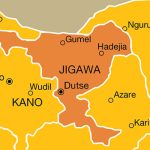
CULTURE has a way of shaping how societies understand responsibility. I grew up in Lagos in a family whose roots are in southeastern Nigeria. One phrase I heard repeatedly in Igbo whenever an adult man displayed a pattern of irresponsibility was, “Let’s find him a wife.” Let that sink. The inherent assumption was striking! Marriage was presented not as the union of two prepared adults, but as the solution to a man’s unfinished maturity. It was as though responsibility could be outsourced to an unsuspecting woman. I do not share that view today, but I have often reflected on what it reveals about the expectations we have placed on women for generations. Too often, we have expected wives to complete the work that families, communities, and society never did. Elsewhere in Nigeria, the conversation takes a different form but raises equally important questions. The recent mass wedding programme in Kano has once again placed marriage at the centre of public policy. This time, however, the question is not whether a wife can reform a man. It is a question of whether the government should be financing weddings. At the same time, millions of Nigerians continue to struggle with the far more fundamental challenges of poverty, education, healthcare, unemployment, and economic opportunity.
Let me be clear. There is nothing wrong with marriage. Strong marriages build strong families, and strong families strengthen society. There is also nothing wrong with helping vulnerable citizens. The real question is whether a wedding ceremony is the most effective public investment the government can make in the lives of young couples. Public policy should be judged not by how memorable a ceremony is, but by whether it leaves citizens better off years after the applause has faded. Reports indicate that approximately ₦1.5 billion was allocated to support 1,500 weddings. Broken down, that amounts to roughly ₦1 million per couple. Every naira the government spends is also a decision not to spend it elsewhere. Economists call this opportunity cost. Public policy is therefore not only about what we choose to fund, but also about what we choose to leave unfunded. That number deserves reflection. Imagine placing ₦1 million in front of a young couple and asking a simple question. Should it pay for one day? Or should it help build the next thirty years? The answer says everything about how we understand development. A wedding lasts a day. A marriage lasts a lifetime. Governments should certainly care about families. But governments strengthen families less by paying for ceremonies than by creating the conditions under which marriages can flourish. Decent jobs, affordable healthcare, quality education, safe communities, functional schools, access to credit, housing, reliable electricity, security, and opportunities for young couples to build stable lives together.
Weddings begin marriages. Institutions sustain them. The greatest investment the government could make is not in wedding ceremonies but in preparing young people for marriage itself. Financial literacy, conflict resolution, parenting education, reproductive health, vocational skills, and employment support are all investments that strengthen families long after the wedding celebration ends. A successful marriage depends on far more than a successful wedding. Nigeria remains home to one of the world’s largest populations of people living in multidimensional poverty. It also has one of the world’s largest populations of out-of-school children. Thousands of young people graduate each year into an economy unable to absorb their talents. Families struggle with inflation, rising food prices, inadequate healthcare, and uncertain livelihoods. Against that backdrop, governments must constantly ask themselves a difficult question. What public problem are we trying to solve? If the objective is poverty reduction, then the policy should reduce poverty. If the objective is youth empowerment, then policy should increase employability and entrepreneurship. If the objective is stronger families, then policy should strengthen the economic foundations upon which healthy families are built.
ALSO READ: Trump says he believes Iran’s supreme leader Khamenei is still alive
A government’s budget is more than a financial document. It is a moral document. It reveals what a government believes is urgent, what it values most, and what it is willing to postpone. Supporting marriage is a legitimate social goal. But supporting marriage is not the same as supporting married people. There is a difference. Helping a couple celebrate their wedding is one thing. Helping them survive their first five years of marriage is another. Which investment is more likely to reduce poverty? Which investment is more likely to improve child welfare? Which investment is more likely to create lasting economic stability? Those are the questions public policy should answer. There is another concern that deserves careful reflection. Images from the ceremony showed many of the groomsmen wearing clothing bearing a political party’s logo. Whatever the explanation, public welfare programmes should always avoid creating the perception that assistance is linked to partisan identity. Public resources belong to every citizen, irrespective of political affiliation.
Programmes funded with public money should strengthen confidence in government, not raise avoidable questions about political neutrality. This conversation is ultimately about something much bigger than a single programme in a single state. It is about the difference between relief and development. Relief responds to today’s problem. Development reduces tomorrow’s. Relief is important. Development is indispensable. No nation has ever escaped poverty by investing primarily in weddings/ceremonies. Countries transform themselves by organising themselves better and investing in people. By educating children. By creating jobs. By expanding opportunities. By supporting entrepreneurs. By strengthening healthcare. By building institutions. By preparing young people not merely for weddings, but for life. Imagine if every couple leaving that ceremony also received vocational training, business startup support, financial literacy education, health insurance, access to affordable housing, and ongoing mentorship for the first five years of marriage. Imagine if the celebration became the beginning of economic independence rather than a substitute for it. That would be a different conversation. That would be nation-building. The question, therefore, is not whether the government should support marriage. It should, the question is how. Because public policy should not simply produce beautiful wedding photographs. It should produce flourishing families.
One day, the decorations will come down. The music will stop. The guests will return home. The cameras will disappear. What will remain is the marriage itself. And that is where the real work begins. The government should be there too, not merely on the wedding day. But in the years that follow, we will create the conditions in which every family has the opportunity not merely to celebrate, but to thrive. Simply put, they should invest less in ceremonies and more in the conditions that make celebration sustainable. When history looks back on this moment, I hope it remembers not the number of government-funded weddings but the number of families it helped flourish. The true measure of public policy is not whether it creates memorable ceremonies, but whether it creates better lives.
•Ukoh, a PhD student, writes in from New York, United States.
WATCH TOP VIDEOS FROM NIGERIAN TRIBUNE TV
- Relationship Hangout: Public vs Private Proposals – Which Truly Wins in Love?
- “No” Is a Complete Sentence: Why You Should Stop Feeling Guilty
- Relationship Hangout: Friendship Talk 2025 – How to Be a Good Friend & Big Questions on Friendship
- Police Overpower Armed Robbers in Ibadan After Fierce Struggle