 In the 2007 election which was adjudged by both the internal and external observers to be massively rigged, for instance, the malpractices were underreported due to overbearing influence of governments and private proprietors, thus pushing the responsibility of reportage of massive electoral malpractices to the courts. It took the courts, for instance, to restore the mandates of Governors Adams Oshiomhole of Edo State and Dr. Olusegun Mimiko of Ondo State after the supposed winners, government candidates, had spent almost two years in office respectively. In these two scenarios, the media failed to hold governments accountable as they failed to expose the electoral malpractices and neglected to provide the right information to the people. Some private media whose proprietors are politicians were accomplices of the government media. The few private media that were able to provide a semblance of reportage of electoral malpractices were those whose proprietors were in the opposition and those who were apolitical.
Oboh (2014: 24) asserts, “The influence of the Nigerian newspaper proprietors on the editorial content of their newspapers was the problem why the Nigerian journalists were unable to take an objective position while reporting on the crises that trailed the 1964/65 Nigerian elections”. The situation has not changed till date as electoral irregularities of subsequent elections were not well reported, if reported at all, in government and most private media due to the overbearing interests of the proprietors. It is also the same reason governments in power used the media to tilt editorial contents in their own favour and oppress candidates in the opposition parties during campaigns. There seems to be a conspiracy between government in power and individual newspaper proprietors that are in their parties or have sympathy for them against the candidates in opposition and the people. From 1964/65 to date, governments in power, both at the federal, regional and state levels and their private media proprietor collaborators who are themselves politicians, dominate the electoral space and shortchange the opposition candidates in the areas of editorial content, editorial slant, airtime, prominence, frequency and space during campaigns and elections.
Journalists are hampered by the perceived editorial policies of their proprietors as they study and act in line with perceived body language of their proprietors in election news reportage. Again, the manner of appointment the electoral body the Independent National Electoral Commission (known variously in the past as FEDECO, NECO, NECON) and its funding have been fingered as a factor for unbalanced news coverage of elections in the country. The Federal and the state governments, owners media houses, appoint and funded the elections (national and states). Journalists working for these governments were, therefore, constrained to report election news that are favourable to their proprietors or employers. The Federal Government was perceived as having undue and pervasive influence on the electoral bodies that conducted the elections that took place before 2011. Until the National Assembly’s adoption of the recommendation of the Justice Muhammed Uwais’ Committee on the Nigerian Electoral Reform set up by the Federal Government to grant the electoral body a measure of autonomy, INEC operated as an arm of the ruling government. As expected, reportage of their anomalies was scanty because of government ownership of the media. The outcome of the National Assembly review gave birth to the 2010 Electoral Reform Act, the improved coverage by the media and the modicum of credibility the 2011 general election enjoyed.
Oboh (2014:93) noted that, “Prior to 2011 elections, Nigeria had an image of a country unable to conduct free and fair elections”. He, however, observed an improvement in the 2011 election, justifying his stance with the admission of the US Secretary of State, Senator Hillary Clinton, that the 2011 election was a historic event that marked a dramatic shift from the decades of failed elections and brought about an improvement over the 2007 presidential elections. This compliment notwithstanding, there was outbreak of violence in the northern part of the country in which 11 of the members of the National Youth Service Corps. Some experts affirm that the conflicting perception of the public of the election was because the media did not live up to its sensitization role during the election and has yet to do enough to educate the public on the ratings of candidates. Reportage of post-independence elections followed ethnic lines. While the north-controlled Federal Government used government media to fan the ember of ethnicity during the 1964/65 elections, the southern regional government used their media and the private media to champion the course of their own people. This development, among other factors, made the 1964/64 crisis inevitable.
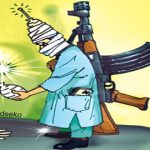
The deregulation and liberalisation of the press in the 1990s further worsened the negative impact of ethnicity on election coverage in Nigeria. From 2003 to date, the media, private (with the exception of a few) and government, indulged in election coverage along the ethnic affiliations of the owners. Journalists operated under intense pressure during the post-independence elections era as desperate politicians induced them with pecuniary offers. Some journalists threw ethics to the dogs by engaging in undue relationship with politicians and consulting for candidates and political parties. These situations created bias and unbalanced reportage. It also created a situation where journalists gave attention to major and richer political parties and candidates at the expense of perceived minor or poor ones. Journalists in the nation operate under severe economic conditions. Their salaries are poor and are not paid regularly. This made them vulnerable and susceptible to corrupt tendencies during the recent elections.
- Imoru is Head, Information, Protocol and Public Relations, Adekunle Ajasin University, Akungba Akoko, Ondo State.
WATCH TOP VIDEOS FROM NIGERIAN TRIBUNE TV
- Relationship Hangout: Public vs Private Proposals – Which Truly Wins in Love?
- “No” Is a Complete Sentence: Why You Should Stop Feeling Guilty
- Relationship Hangout: Friendship Talk 2025 – How to Be a Good Friend & Big Questions on Friendship
- Police Overpower Armed Robbers in Ibadan After Fierce Struggle