
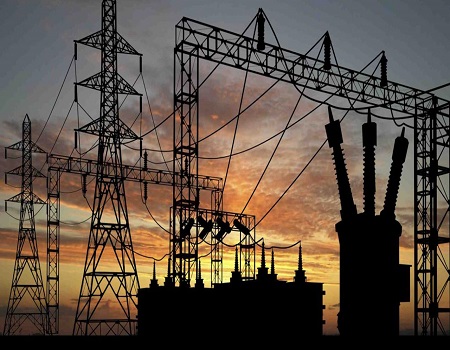
As part of an emergency approach to ensure the stability of the country’s grid and power system, the Central Bank of Nigeria (CBN), is currently providing about $250 million (N103b) for the rehabilitation of critical interfaces between Transmission and Distribution.
The project, which will strengthen the interface between the TCN and the DisCos is expected to increase and stabilize power delivery.
Minister of Power, Abubakar Aliyu had stated that the CBN intervention was in addition to the Siemens Presidential Power Initiative (PPI) that will bring in additional $2.0 billion or more to the Transmission Grid from the government.
While the grid has continued to fail with two system collapses last week, Aliyu said government, “is almost $4 billion secured by this administration to augment the Grid. It should be noted that many of these funds are being actively spent and the results will be felt over time.
According to him, the interface projects with others already being embarked upon by TCN brings the ongoing projects in the transmission segment alone to 135 ongoing projects with 30 completed key Substation Projects and 12 transmission Lines.
Similarly, the Market Operator at TCN, Edward Eje said the interface project is aimed at providing quick solutions at various transmission/distribution interfaces where there are challenges.
“This makes sense to me. It is a laudable measure to achieve a seamless and hitch-free power transmission from the Transmission Stations to the Distribution network.”
However, stakeholders have raised various concerns on the development stating that interventions were not an aberration but that the sector needed to operate optimally without support from the government.
President, Nigeria Consumer Protection Network, Mr Kunle Olubiyo, noted that the government’s continuous intervention in the power sector defeats the essence of privatisation.
ALSO READ FROM NIGERIAN TRIBUNE
- After 36 Years On The Queue, 79-Yr-Old Balogun Becomes 42nd Olubadan
- ASUU Strike May End This Week —FG
According to him, poor governance system, lack of monitoring, accountability and weak set-up of the market were responsible for the financial issues in the sector.
“At this point, we no longer need a prophet to tell us that things are not working. It is a supposedly privatized sector and the essence of it is that it is meant to be private-sector driven. That is not how it is,” Olubiyo stated.
On his part, another Expert in the sector, Bode Fadipe, identified liquidity as one of the fundamental issues in the power sector.
He said whilst it is true that one of the expectations of the privatisation programme is that the sector would be self-funding so the government would ultimately stop funding it, the benchmark has not been realised.
“It is in direct response to this liquidity challenge that the CBN was brought into the loop. There is therefore sense in the involvement of the CBN in the interface projects between DisCo and TCN,” Fadipe said.
According to him, the gains of the DisCo/TCN funded interface project is huge as it would help to bring more load into the grid and by so doing, more people will be able to receive electricity for their use.
How Workplace Sexual Harassment Forces Many Out Of Their Dream Jobs
Stakeholders divided over CBN’s N103bn intervention for TCN/DisCos interface
Marburg Virus: What You Need To Know About Disease Recently Detected In West Africa
Stakeholders divided over CBN’s N103bn intervention for TCN/DisCos interface
WATCH TOP VIDEOS FROM NIGERIAN TRIBUNE TV
- Relationship Hangout: Public vs Private Proposals – Which Truly Wins in Love?
- “No” Is a Complete Sentence: Why You Should Stop Feeling Guilty
- Relationship Hangout: Friendship Talk 2025 – How to Be a Good Friend & Big Questions on Friendship
- Police Overpower Armed Robbers in Ibadan After Fierce Struggle


