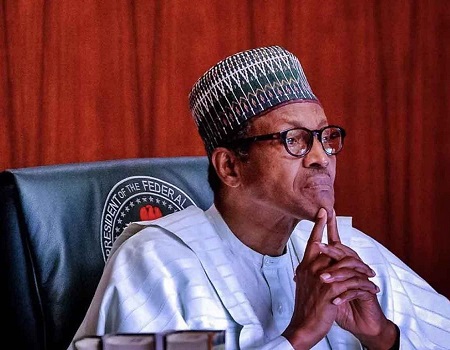
Recently, President Muhammadu Buhari signed into law the Appropriation Bill for 2020 effectively returning the budgeting cycle from January to December. The predictable cycle is in conformity with the provisions of sections 80, 81 and 82 of the constitution which maintain that budget cycle should commence from January to December.
This puts in context the difference between a fiscal year and calendar year of budget spending. What has been the common practice in Nigeria over the years is what could be described as calendar year of spending an income. Fiscal year is appropriately defined with specific goals for each quarter of that year. With the 2020 appropriation, there will be 12 months financial year, and that translates to a fiscal year.
In the past 20 years, the December-January budget cycle had only been achieved twice: 2001 and 2007. The passage of the 2020 appropriation enjoyed the collaboration between the executive and the legislature amidst the crystallising perception of the National Assembly as a rubber stamp.
What is at play here is the political will and general consensus by both arms of government in terms of serving national interest as reflected in the quick passage of the budget tagged ‘Budget of Sustaining Growth and Job Creation.’ This is an attempt at boosting job creation and diversifying the economy by strengthening non-oil sectors, including agriculture, solid minerals, manufacturing, among others. These are areas that will boost activities of the Small and Medium Enterprises (SMEs).
The 2020 budget is not a document on its own. For effectiveness, it is operating with other documents. Enabling environment seems to have been created to fast-track the amendment of these bills to allow for smooth running of the budget. It is one thing to have a budget; it is another to garner the revenue needed to fund it. What can be loosely referred to as complementary bills that will run concurrently with the budget are the Finance Bill and the Public Procurement Act.
The Finance Bill appears to sustain the critical sector of the country’s business enterprises by giving them the necessary support to be up and running. This suggests government’s readiness to look at alternative means of income beyond oil and gas, because non-oil exports will boost the country’s revenue. Another component of the Finance Bill is the Value Added Tax (VAT) has been increased from 5 per cent to 7.5 per cent even in the face of complaints of possible inflationary pressure.
Some MDAs are complaining about how issues surrounding procurement have been a major hindrance to the execution of projects. Public Procurement Act reform will correct some of the lapses in procurement. Part of the procurement act stipulates that all contract considerations should be completed within three weeks.
However, the objective of this budgeting system will not be fully realised if revenue-generating agencies are not sanitised and strengthened to operate efficiently. The National Assembly should strengthen their oversight instruments to make sure that revenue-earning agencies perform well in actualising their revenue targets.
It is important to evaluate the capacity of revenue agencies in shoring up revenue. What follows is monitoring and coordination to implement the contents of the budget to make it a robust fiscal year. The publicity given to budget presentation should also be granted to budget evaluation.
Abdulwarees Solanke,
Lagos.
WATCH TOP VIDEOS FROM NIGERIAN TRIBUNE TV
- Relationship Hangout: Public vs Private Proposals – Which Truly Wins in Love?
- “No” Is a Complete Sentence: Why You Should Stop Feeling Guilty
- Relationship Hangout: Friendship Talk 2025 – How to Be a Good Friend & Big Questions on Friendship
- Police Overpower Armed Robbers in Ibadan After Fierce Struggle