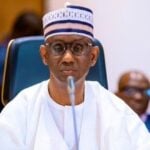
Last week, former President Goodluck Jonathan expressed concern over possible violence following Nigeria’s 2027 general election. Speaking at the third National Peace and Awareness Conference organised by his foundation in Abuja, he said: “People are worried all over the world. Rather than the confidence and optimism we should be inspiring, there is growing apprehension about the likelihood of crises that may follow our elections.” Jonathan decried rising political intolerance, thuggery, ethnic rivalry and the exploitation of youths as instruments of violence, cautioning against running political parties like rival cult groups.
Jonathan’s warning is both timely and warranted. On November 17, the Senate expressed concern over reported attacks on the convoys of President Bola Tinubu, Peter Obi and Atiku Abubakar. Equally disturbing are attacks on party secretariats, disruption of political gatherings and discriminatory denial of campaign venues to opposition parties. The scale of political intolerance is alarming. The National Peace Committee documented 109 breaches of peace commitments across 26 states and the Federal Capital Territory within ten weeks. Similarly, election monitoring reports recorded 70 election-related physical attacks resulting in 27 deaths between January 1 and October 27, 2026. More recently, on November 23, six persons reportedly died in political violence involving the campaign of former Deputy Senate President, Ovie Omo-Agege, in Ughelli North, Delta State. If campaigning is already claiming lives, what should Nigerians expect during and after the polls?
Nigerian politicians must remember that the country is preparing for an election, not a war. Political opponents are not enemies. Democracy recognises the right to seek political office, canvass support and persuade the electorate without fear of molestation. No politician has a monopoly on the right to govern, and no political party is entitled to the votes of any community or ethnic group. If the objective is to serve the people, why resort to violence to secure that opportunity? Equally troubling is the exploitation of unemployed and economically vulnerable youths to perpetrate violence. An idle hand is the devil’s workshop. Successive administrations have failed to create sufficient economic opportunities for the country’s burgeoning youth population. It is reprehensible that politicians seeking mandates to address unemployment and poverty exploit those very conditions to advance their ambitions. Young Nigerians must recognise the contradiction in endangering their lives for politicians whose children are often insulated from such violence. Beyond condemning political violence, Nigerians must interrogate the character of the electoral campaigns. When campaigns are devoid of substantive issues, ethnic and religious sentiments can fill the vacuum. Without serious engagement over competing programmes of governance, campaigns become fertile grounds for character assassination, misinformation and intimidation, all of which can fuel violence. Nigeria’s challenges in education, healthcare, electricity supply, security, unemployment and economic development provide sufficient material for rigorous political engagement.
READ ALSO: Nigeria expresses concern as over 121 die in Mozambique’s post-election violence
Electoral debates can redirect campaigns towards substantive issues. Unfortunately, the Nigerian press and intelligentsia have not sufficiently collaborated to institutionalise debates in Nigeria’s electoral culture. In the United States, universities have historically hosted presidential, vice-presidential, gubernatorial and senatorial debates, enabling candidates to articulate and defend their programmes. Nigerian universities could play a similar role. Presidential debates could be organised at Ahmadu Bello University, Zaria; Obafemi Awolowo University, Ile-Ife; and either Nnamdi Azikiwe University, Awka, or the University of Nigeria, Nsukka. Members of the Academic Staff Union of Universities (ASUU), particularly those in the humanities and social sciences, could work with university authorities, media organisations and professional bodies to coordinate such engagements as part of the universities’ community service mandate. Experts could interrogate the practicability, financial implications and expected outcomes of candidates’ proposals. ASUU members’ electoral contributions need not be confined to serving as INEC ad hoc personnel on election day; they could begin earlier by organising debates.
During the late Senator Abiola Ajimobi’s governorship of Oyo State, debates at the University of Ibadan enabled candidates to discuss their programmes. Regrettably, prominent politicians have demonstrated reluctance to participate. The late President Muhammadu Buhari did not attend the January 2019 presidential debate. His principal challenger, Atiku Abubakar, also declined to participate following Buhari’s absence. President Bola Tinubu similarly missed presidential debates ahead of the 2023 elections. Even when universities organise capacity-building programmes for political parties, smaller parties sometimes demonstrate greater willingness to participate than their larger counterparts. It is an unfortunate commentary on Nigeria’s democracy that politicians seeking to govern millions can decline opportunities to defend their programmes before the electorate. Electoral debates are not favours candidates confer on organisers but instruments of public accountability. The press and academic community must establish credible and impartial debate platforms, irrespective of the willingness of prominent candidates to participate. The country must cultivate a culture of electoral debates in which, over time, refusal to participate carries electoral consequences. Nevertheless, issue-based campaigns alone will not eliminate electoral violence. The government and security agencies must guarantee the safety of all political actors, irrespective of party affiliation. Those sponsoring, organising or perpetrating violence must be investigated and prosecuted. Peace accords will achieve little if violations attract no consequences. INEC must conduct elections transparently, while the judiciary must dispense electoral justice impartially and expeditiously. As Jonathan warned, diminishing confidence in the courts could encourage aggrieved citizens to resort to self-help.
We commend President Jonathan for consistently advocating peaceful elections. His decision to concede defeat in the 2015 presidential election while still in office remains an enduring contribution to Nigeria’s democratic development. Through that act and subsequent international peacebuilding engagements, he has become a worthy ambassador of Nigeria in promoting peaceful elections and democratic transitions. His example should remind Nigerian politicians that electoral defeat need not diminish a statesman.
Ultimately, preventing post-election violence begins well before election day, with the conduct of campaigns, the language of politicians and the impartiality of public institutions. Nigeria cannot afford an avoidable electoral crisis amid its security and socioeconomic challenges. Let us make the 2027 elections a contest of ideas, programmes and leadership capabilities, not of ethnic supremacy, intimidation or capacity for violence. Elections will come and go, but Nigeria must remain.
WATCH TOP VIDEOS FROM NIGERIAN TRIBUNE TV
- Relationship Hangout: Public vs Private Proposals – Which Truly Wins in Love?
- “No” Is a Complete Sentence: Why You Should Stop Feeling Guilty
- Relationship Hangout: Friendship Talk 2025 – How to Be a Good Friend & Big Questions on Friendship
- Police Overpower Armed Robbers in Ibadan After Fierce Struggle