
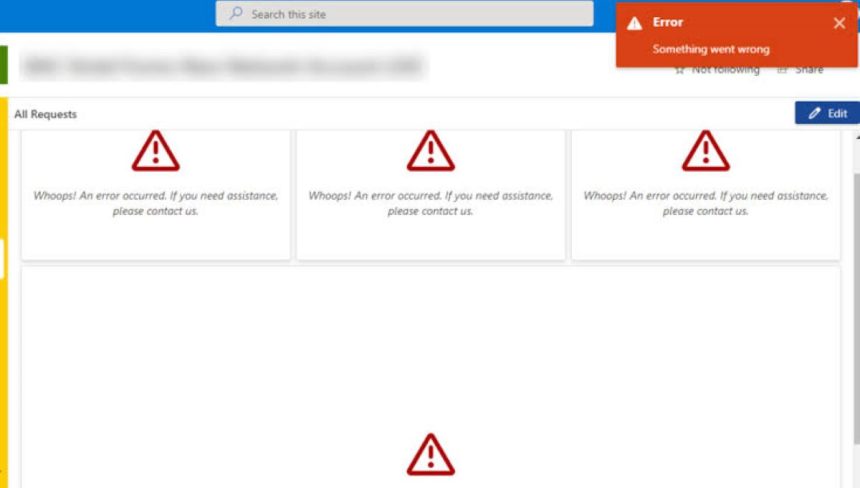
Automation has become a major part of the modern workplace. Businesses now use technology to handle tasks such as sending emails, processing invoices, preparing reports, managing customer requests and supporting business decisions.
- When Welcome Emails Become Overwhelming
- How simple spreadsheets become critical systems
- Making sure AI solves the right problem
- The hidden cost of multiple software subscriptions
- When dashboards tell only part of the story
- Five automation mistakes businesses should avoid
- 1. Automating a broken process
- 2. Setting vague objectives
- 3. Ignoring exceptions
- 4. Removing humans from important decisions
- 5. Treating automation as a set-and-forget solution
- Learning from automation mistakes
- Creating reliability through thoughtful design
- FAQs
The appeal is obvious. Software can complete repetitive tasks in seconds, saving employees hours of manual work.
But there is one important limitation: software does not understand what people mean. It only follows the instructions, rules and data it receives.
That is why an automation that looks perfect on paper can sometimes produce embarrassing, confusing or expensive results. The technology is usually doing exactly what it was designed to do. The problem is that the instructions may not have accounted for what happens in the real world.
When Welcome Emails Become Overwhelming
Imagine a company creates a simple automated process for sending welcome emails to new customers.
The process seems straightforward until the company moves 20,000 existing customers into a new database.
The system may interpret all 20,000 records as new customers and automatically send them welcome emails.
As a result, people who have been customers for years could suddenly receive a message saying:
“WELCOME! WE ARE SO GLAD YOU ARE HERE!”
The problem is not necessarily the email software. The missing element is context.
The system should have been able to determine whether the person was actually a new customer before sending the message.
This shows why automated processes need clear checks and conditions. A trigger should not automatically lead to another action without confirming that the situation meets the intended criteria.
How simple spreadsheets become critical systems
Some technology problems start with something as simple as a spreadsheet.
An employee may create a basic spreadsheet to prepare a report. It works well, so other employees begin adding information, formulas and columns.
Eventually, several departments may start depending on the same file to track sales, inventory or other important information.
The problem becomes clear when someone asks who is responsible for the spreadsheet.
Nobody knows.
Then someone asks where the backup is kept.
Again, there may be no clear answer.
Another person may ask who understands all the formulas. The answer could be just one employee.
What began as a temporary solution has quietly become an important business system.
This is why organisations need to know where critical information is stored, who manages it and what will happen if the person responsible leaves the company.
Spreadsheets remain useful, but businesses should be careful about allowing important operations to depend on undocumented files or the knowledge of a single employee.
ALSO READ: 5 simple hacks to fix sudden car breakdown on lonely roads
Making sure AI solves the right problem
Artificial intelligence offers businesses significant opportunities, but it also introduces new challenges.
Consider a company that asks an AI system to reduce the number of customer enquiries reaching its support team.
The system identifies common complaints and recommends ways to reduce the number of customers contacting support. Eventually, the number of enquiries drops significantly.
At first glance, this appears to be a success.
But what if customers stopped contacting the company because the support channels had become difficult to access?
The numbers improved, but the customer experience did not.
This is an important consideration as businesses increasingly adopt AI systems and agents. Achieving a numerical target does not always mean solving the actual problem.
AI tools need clear objectives, appropriate measurements and human oversight. Without these, a system can successfully improve a particular metric while failing to address the reason the project was created in the first place.
The hidden cost of multiple software subscriptions
Another common problem is the gradual accumulation of software tools.
One department may choose one project management platform, while another adopts a different service. A third department may subscribe to another tool offering similar features.
Months later, the company may discover that it is paying for several platforms that perform almost the same functions.
Unused licences can add to the problem. Accounts belonging to former employees may remain active, while free trials can automatically become paid subscriptions.
Each individual payment may seem small, but the total cost can become significant over time.
Regular software reviews can help organisations control these expenses. Instead of asking only whether a tool is being used, businesses should also consider whether the software is still the right fit for their goals.
When dashboards tell only part of the story
A well-designed dashboard can make information appear highly reliable. However, attractive charts do not guarantee accurate data.
For example, a management team may see a dashboard showing revenue of ₦250 million.
The figure may look impressive, but further investigation could reveal that two different systems recorded the same revenue separately, causing the money to be counted twice.
The problem is not the dashboard itself. The real issue is how the data was collected, defined and combined.
This is why organisations need to understand where their data comes from and the assumptions behind their calculations.
Five automation mistakes businesses should avoid
1. Automating a broken process
Technology can make a process faster, but it cannot automatically make a bad process better.
If a workflow is confusing, automating it may simply make the confusion happen more quickly.
Businesses should first understand and improve a process before deciding which parts should be automated.
2. Setting vague objectives
Automation works best when the desired outcome is clearly defined.
A goal such as “improve customer service” can be difficult to measure. A specific objective gives the team a clearer way to determine whether the system is actually delivering results.
3. Ignoring exceptions
Many automated processes are designed around the assumption that everything will go according to plan.
Real life rarely works that way.
Payments can fail. Information can be incomplete. Customers can behave unexpectedly.
Effective systems should account for these situations and provide appropriate ways to handle them.
4. Removing humans from important decisions
Automation should support human decision-making rather than eliminate human judgment completely.
Decisions involving legal, financial, ethical or reputational consequences may still require human review.
5. Treating automation as a set-and-forget solution
A system that works well today may become unsuitable as a company grows or changes direction.
Automation requires regular monitoring, testing and updates to remain effective.
Learning from automation mistakes
Technical failures can sometimes reveal an important lesson: the system was simply following its instructions.
An invoice may be sent to the wrong person. A customer may receive the same email twice. A database may create duplicate records.
Behind these mistakes, there is often a logical explanation, such as a missing condition, an incorrect field, poor documentation or an assumption that did not match reality.
Instead of simply blaming the technology, organisations should examine the process that produced the error.
These incidents can expose weaknesses that might otherwise remain hidden.
Creating reliability through thoughtful design
The purpose of automation is to make work more efficient and useful.
Sometimes the best solution is to automate a repetitive task. In other situations, the better approach may be to redesign the process before introducing any technology.
This distinction becomes increasingly important as organisations adopt more sophisticated software and AI systems.
The most valuable technology professionals are not necessarily those who automate the largest number of tasks. They are often the people who can examine a complicated workflow, identify what actually needs to change and determine where technology can provide the most value.
Ultimately, successful automation depends on more than connecting software and creating automated tasks. It requires a clear understanding of the people, processes and goals behind the technology.
That human understanding is what turns automation from a source of problems into a reliable tool for better work.
FAQs
Why do business automation systems fail?
Failures often stem from unclear processes, data quality issues, or missing plans for exceptions. Automation follows the rules it is given, even if those rules don’t quite match the intended human outcome.
Can automation make a business less efficient?
It can. Automating an unnecessary or confusing step just makes it happen more often. Success usually begins with a friendly review of the process itself first.
Should businesses completely automate customer service?
Many teams find a balance. Simple questions can be automated, while more sensitive or unique situations are often best handled by a helpful person who can provide extra care and judgment.
How often should businesses review their automated workflows?
Reviews are helpful whenever there is a shift in the workplace, such as new software, team changes, or new goals. Regular check-ins help keep everything running smoothly as the organization grows.
What is the biggest mistake companies make when adopting automation?
A common mistake is seeing automation only as a tech task. Since tools can only do what they are told, focusing on a well-designed process ensures the technology can be truly helpful.
WATCH TOP VIDEOS FROM NIGERIAN TRIBUNE TV
- Relationship Hangout: Public vs Private Proposals – Which Truly Wins in Love?
- “No” Is a Complete Sentence: Why You Should Stop Feeling Guilty
- Relationship Hangout: Friendship Talk 2025 – How to Be a Good Friend & Big Questions on Friendship
- Police Overpower Armed Robbers in Ibadan After Fierce Struggle


