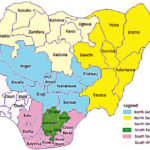
Since the return to democracy in 1999, Nigeria has been grappling with diverse security challenges, chief among them are insurgency, election violence, kidnapping and most recently, the herder-farmer conflicts among others. The north central states of Benue, Plateau and Nasarawa and other states have experienced conflicts which led to the deaths and displacements of many as a result of clashes between pastoralists (herders) and local farmers in several communities. In January 2018 alone, Amnesty International reports indicate that 168 people were killed as a result of herdsmen-farmer clashes.
Struggle over grazing land and scarce resources have over the years resulted in perennial and growing violent conflicts in terms of frequency, intensity and geographic scope. Underpinning the escalation in frequency of conflicts in Nigeria is a confluence of environmental and demographic forces, especially desertification caused by climate change and population explosion.
Expectedly, with the depletion of arable land for subsistence farming largely as a result of increasing urbanisation and the adverse effect of climate change, especially along the Lake Chad basin, there is increased struggle between herdsmen and farmers leading to violent confrontations and conflicts, deaths and forced displacement, as well as the destruction of agriculture and livestock. The persistent attacks in Benue State have had a spill-over effect on the neighbouring state of Nasarawa. In January 2018, the News Agency of Nigeria reported that over 18,000 internally displaced persons (IDPs) were in 11 camps in Nasarawa State. Dozens of internally displaced persons (IDPs) form a circle at the IDP camp, occupied largely by women and children, affected by the herders and farmers violent clashes on the outskirts of Makurdi, Benue State.
A major cause of the escalating intensity of the conflict is the increasing proliferation of small arms and light weapons in Nigeria. Given that host communities (including farmers) also have access to sophisticated weapons, minor disagreement or provocation often degenerates into violent clashes, resulting in widespread destruction of property and human casualties. The movement of herdsmen and subsequent clashes with farmers and host communities in recent times has heightened insecurity in Nigeria, particularly in the North Central region and by extension in other parts of the country.
The driving force of the clashes is the competition for available resources, especially grazing land. It seems that the government has abandoned the grazing reserve system created by the northern region government in 1965. Then, the government created over 417 grazing reserves in the North. Under the grazing reserve system, the government provided space, water and vaccinations for the livestock while the herdsmen paid taxes to the government in return. However, the discovery of oil and subsequent exploration and export made Nigeria an oil economy, particularly in the 1970s and 1980s.
Subsequently, the grazing reserve system was abandoned due to the neglect of the agricultural sector as the mainstay of the country’s economy. Consequently, grazing reserves which were under a neglected agricultural sector could not be sustained. It received little or no attention from succeeding administrations. As a fall-back, herdsmen began to resort to their traditional and seasonal grazing routes which had been interrupted or interfered with by industrialisation, urbanisation, demographic and other natural factors. This then led to clashes and conflict with farmers and host communities. These conflicts have been on the increase in recent times and now constitute one of the major threats to Nigeria’s national security.
Addressing these challenges, the Federal Government in June 2015 constituted a Strategic Action Committee to look into the issue and make recommendations that would help the government address the problem. A major stakeholder in this effort, the umbrella body in the cattle rearing business, the Miyetti Allah Cattle Breeders Association (MACBAN), agreed that the effect of climate change and desertification was a major causal factor leading to trans-human movement from North to the South annually. Since climate change and other associated factors are beyond what farmers or herders could address, there is a need for concerted efforts by the government, private sector, regional bodies and the international community at large to come together to address these challenges. Desert encroachment and other climate changes affect the livelihood of herdsmen as they push further south in search of available space and land.
There are a number of factors that combine to escalate the conflict among the identified actors. Some of these include climate change and environmental degradation, depleting arable land for farming and lack of political will to tackle the challenges. Climate is a critical factor in the activities of herdsmen and farmers. The changing climatic condition, generally referred to as global warming, is no doubt taking a toll on the survival of herdsmen and farmers business. The desert encroachment from the Sahara towards the Sahel region and other associated climatic conditions have continued to affect the livelihood of herdsmen as they push further south in search of available space, pitching them against farmers and host communities. This global phenomenon is currently affecting many parts of the world with attendant consequences – including the herdsmen-farmer conflict.
The government at all levels has demonstrated a near absence of needed political will to proffer lasting solutions to the conflicting claims of different actors in the ongoing conflict between the herdsmen and farmers. Political leaders have failed to invoke appropriate legislation to be backed by action that would define rules and limits for parties involved in the conflict. At the regional level, the Economic Community of West African States (ECOWAS) has a Protocol on Trans-human Movement, though the framework is yet to be fully implemented at national levels. Lack of political will remains a hindering factor among member states. Political will to implement this protocol and other frameworks remains an enabler to the conflict.
The Federal Government, in the past, has made efforts to regulate and control pastoral activities, but it appears that adequate political will is needed to enforce laws. For instance, the government is perceived from some quarters, especially by opposition parties, as being sympathetic to the activities of the herdsmen. This perception is likely due to the fact that the president is Fulani, the same ethnic group that dominates the cattle business. Citizens, especially from the most affected states, have expected the Federal Government to deal with the herdsmen-farmer conflicts in all parts of the state with the same vigour and determination it showed in similar internal security issues in other parts of the country.
The Federal Government of Nigeria should deploy a joint task force comprising military, police, paramilitary and civil institutions to all the affected states as an immediate response to the conflict. This will help restore law and order and build confidence of the general populace in the ability of the government to respond to threats. The military could be deployed to the conflict zones to create safe and secure environments peaceful enough to inject long-term strategies for ending the conflict and engaging in peace building. There is a need to encourage community policing leveraging on the already existing vigilance system in most states. Community policing will help in intelligence gathering about the conflict while civil police would respond to such threats. This will help address the challenges of waiting for the Federal Government to deploy security to states when there is conflict.
The herder-farmer conflict has become more significant in the last four years. Although the government had in the past taken some measures to address this phenomenon, the increasing desertification and the effects of climate change have further increased the drive for the herdsmen to move further south in search of grazing land and pasture for their livestock. These southward movements always pitch them against farmers and the host community whose crops are regularly invaded and destroyed by the cattle during this seasonal movement. The result of this is increased conflict, death, displacement and the total destruction of properties. However, because the phenomenon is a human security issue, there is a need for a concerted effort at state, national, regional and international levels to address the challenges, especially since there is no specific legislation that is dedicated to addressing the peculiar needs of herders and farmers in the country.
Òrúnbon, a public affairs analyst, sent this piece from the Federal Housing Estate, Olomore, Abeokuta, Ogun State.
YOU SHOULD NOT MISS THESE HEADLINES FROM NIGERIAN TRIBUNE
We Have Not Had Water Supply In Months ― Abeokuta Residents
In spite of the huge investment in the water sector by the government and international organisations, water scarcity has grown to become a perennial nightmare for residents of Abeokuta, the Ogun State capital. This report x-rays the lives and experiences of residents in getting clean, potable and affordable water amidst the surge of COVID-19 cases in the state.
WATCH TOP VIDEOS FROM NIGERIAN TRIBUNE TV
- Relationship Hangout: Public vs Private Proposals – Which Truly Wins in Love?
- “No” Is a Complete Sentence: Why You Should Stop Feeling Guilty
- Relationship Hangout: Friendship Talk 2025 – How to Be a Good Friend & Big Questions on Friendship
- Police Overpower Armed Robbers in Ibadan After Fierce Struggle