
 Nigerian oil and gas sector is very crucial to the survival of the nation because it provides for 95 per cent of Nigeria’s foreign exchange earnings and 80 per cent of its budgetary revenues.
Although, the sector is regarded as one of the most corrupt and least transparent sectors in the world, no thanks to opaque nature of the activities of the Nigerian National Petroleum Corporation (NNPC) which successive governments have used to siphoned funds. Or how else can one describe a corporation which became sole importer of Premium Motor Spirit (PMS) otherwise called petrol since October 2017 and unilaterally began to pay itself subsidy on imported petroleum without recourse to the National Assembly which has the constitutional mandate to make such provision?
Repositioning the upstream sector
The entire oil and gas sector is being governed largely by the Petroleum Act 1969 and its subsidiary legislation, including the Petroleum (Drilling and Production) Regulations, the Petroleum Regulations and the Petroleum Refining Regulations; The Oil Pipelines Act and the Oil and Gas Pipelines Regulations; The Deep Offshore and Inland Basin Production Sharing Contracts (PSC) Act; The Nigerian National Petroleum Corporation (NNPC) Act and the Nigerian Oil and Gas Industry Content Development Act.
The quest to re-position the all important sector led to the drafting of Petroleum Industry Bill (PIB) over 17 years ago. The PIB has also been split into four major bills namely: the Petroleum Industry Governance Bill, the Petroleum Industry Fiscal Bill and Petroleum Host Community Bill, the Upstream and Midstream Administration Bill and the Petroleum Revenue Bill.
Having passed the Petroleum Industry Governance Bill (PIGB), both the upper and the lower chambers of the National Assembly are expected to shift focus to passing the remaining portion of the PIB. This includes the Petroleum Industry Fiscal Bill and Petroleum Host Community Bill, the Upstream and Midstream Administration Bill and the Petroleum Revenue Bill.
There is no gainsaying about the fact that the laws used to administer the sector are begging for review.
The Production Sharing Contract (PSC), which was introduced in 1993 to address some of the issues faced by the Joint Operating Agreement (JOA) and also to provide a suitable agreement structure for encouraging foreign investment in offshore acreage, is due for a review. Under these arrangement, the NNPC is the holder of the concession while the International Oil Company (IOC) is the contractor.
Industry stakeholders have argued that the 1993 PSC is skewed in favour of the IOCs but not in favour of the Nigerian Nation.
However, while the Federal Government started with eight IOCs in 1993, in 2000, eight new deepwater licenses were offered, of which the terms of the PSC were considered to be tougher for IOCs. The reduced risks involved in finding larger deepwater reserves was the main reason for tougher profit oil splits in the 2000 PSC terms.
Moreover, it was reported that 14 deepwater licenses were offered, of which certain alterations were again made to the PSC model contract, in 2005.
By implications, it means there are different legislation for different projects which may affect the interest of the nation as an entity.
Passage of the remaining parts of the PIB will also provide harmonised and clearer fiscal regime for prospective investments that are expected to flow into the country and make Nigeria a destination of choice for foreign investors.
Repositioning the downstream sector
Industry stakeholders have equally argued that deregulation of the downstream sector will unlock its potentials which have been locked up due to non-existence of a level playing ground for players in the sector.
Nigeria has been bedevilled by incessant fuel shortages since December 2017 and it has remained so till date.
The shortage has been attributed to the decision of the NNPC to assume the role of a sole importer of petrol. Experts believe that NNPC lacks the capacity to play this role satisfactorily and unless the refineries are rehabilitated and running at 100 per cent installed capacity to augment the activities of the NNPC, the country will continue to run in endless circle of fuel shortages.
With the three refineries working at full capacity, they said they cannot meet daily petrol consumption by Nigerians which is put at about 55 million litres daily. They said the three refineries namely: Port Harcourt Refinery with capacity of 210,00bpd; Warri refinery with 125,000bpd capacity and Kaduna refinery with 110,000bpd capacity, totalling 445,000bpd; can only cater for 30 per cent of the country’s daily consumption working at full capacity.
That is why experts are championing the calls for full deregulation of the downstream sector which will attract the much needed investment in the refining business and allows more players in product importation.
One of the reasons to re-position the downstream sector is arresting the striving business of petrol smuggling through the Nigerian porous land borders. Currently, because the Federal Government, through the NNPC, is subsidising price of petrol, it is more attractive to smuggle the product to neighbouring countries including Benin Republic, Togo, Mali and Senegal where it is sold at deregulated price. By implications, it means it is cheaper in Nigeria at N145 per litre while it is sold at about N200 per litre in neighbouring countries.
Last week, the Group Managing Director of NNPC, Dr. Maikanti Baru, raised the alarm over the sustained nefarious activities of some cross-border fuel smuggling syndicates and hoarders, which have so far impeded efforts by the corporation to sanitise the fuel supply and distribution matrix across the country.
The alarm raised by Baru coincided with the arrest by men of the Niger State Command of the Nigeria Security and Civil Defence Corps (NSCDC) of eight trucks laden with a total of 469,000 litres of petrol and their drivers in Mokwa, Niger State, on their way to Babana, a border town between Nigeria and Republic of Benin.
Baru had told the Joint National Assembly Committee on Petroleum Downstream that if the activities of the fuel truck diverters and smugglers were left unchecked, it would be absolutely difficult to guarantee round-the-clock availability of petrol throughout the country due to the massive leakages wrought on the fuel supply and distribution network by the smugglers.
In his presentation to the Joint Committee, the NNPC boss stated that the sudden and unnatural shock in fuel consumption to record levels has over-stretched the DSDP crude for product supply arrangement, which was originally based on 35 million per day petrol consumption pattern.
He lamented that with the current unprecedented average daily fuel evacuation of 55 million litres since December 1, 2017 to date, it was imperative for security agencies to close-in on the smuggling syndicates who were cashing in on the obvious petrol price differentials between Nigeria and neighbouring countries to make illicit profit.
Conclusion
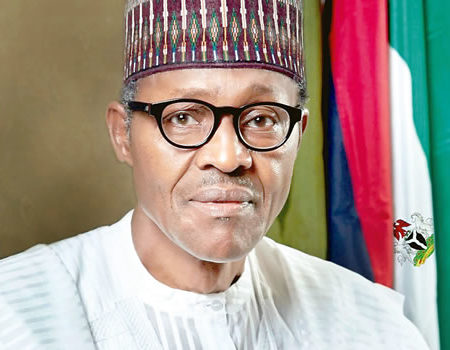
President Muhammadu Buhari is urged to assent his signature to the recently passed PIGB by the National Assembly as a way to commence repositioning the entire oil and gas value chain. The National Assembly should also ensure speedy passage of the fiscal bill and other related part of the PIB in order to repositioning the sector.
On his part, the Head of Energy Desk, Ecobank, Dolapo Oni, stated that “Deregulate the petrol market and allow the market to regulate prices. If you look at the market, you will see that it is not economical and realistic that we will be buying at N171 and sell at N145 per litre. Especially when it was realised that we were selling at N145 when crude prices were well below $60 per barrel. Oil price has risen above $60 per barrel and we haven’t adjusted our fuel prices. Our exchange rate hasn’t been adjusted either.
“Something has to give way at some point. And the ultimate solution would be full deregulation of the market. Allow marketers to sell at competitive prices and I can assure you that competition in the market would ensure the prices will eventually come down.”
WATCH TOP VIDEOS FROM NIGERIAN TRIBUNE TV
- Relationship Hangout: Public vs Private Proposals – Which Truly Wins in Love?
- “No” Is a Complete Sentence: Why You Should Stop Feeling Guilty
- Relationship Hangout: Friendship Talk 2025 – How to Be a Good Friend & Big Questions on Friendship
- Police Overpower Armed Robbers in Ibadan After Fierce Struggle


