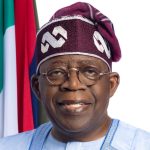
In an article published by the Nigerian Tribune on Wednesday, April 8, an admirer of President Bola Ahmed Tinubu attempted to place him in the rank of immortals by specifically rating his political philosophy, tagged “Financialism,” as one of the philosophies that stand out in the trajectory of Nigeria’s nationhood.
In the article, written by Dave Agboola, an aide of the Speaker of the Lagos State House of Assembly, the writer compares Chief Obafemi Awolowo’s Awoism with Tinubu’s Financialism. Awoism is an ideology named after the first Premier of the Western Region, the Sage, Chief Obafemi Awolowo, who directly ruled the Western Region of Nigeria for eight years in the immediate pre-independence years and whose political party, the Unity Party of Nigeria (UPN), governed the Western part of the country between 1979 and 1983. Tinubu’s Financialism, however, relates to the governance model the former Lagos State governor enunciated when he ruled the state.
Agboola said that while Awoism was rooted in the Nigerian political thought of the mid-20th-century struggle for social justice, Tinubu’s Financialism is a 21st-century ideology, which he said, seeks to battle financial dominance and economic stagnation.
He wrote: “Awolowo’s Awoism was a philosophy of welfarism, anchored on free education, healthcare, and regional autonomy. It was a vision that sought to democratise opportunity, ensuring that the poorest Nigerian child could aspire to greatness through access to knowledge. Tinubu’s financialism, articulated in his co-authored paper “Financialism: Water from an Empty Well”, is a critique of speculative finance and its corrosive effect on democracy and development. He argues that true wealth lies not in the manipulation of money but in productive enterprise, innovation, and human capital.”
He further stated that Tinubu’s financialism shone brightly in Lagos State, when he ruled as governor between 1999 and 2007, where he revolutionized the tax system and shot the internally generated revenue up from N600 million monthly in 1999 to N7 billion monthly by 2007, adding that the feat gave Lagos the financial freedom with which it could undertake landmark projects.
With Tinubu’s birthday put at 1952, it is clear that he had not grown to adulthood when Chief Awolowo directly took charge of governance in the Western Region. So, he would have read about the great feats of that administration in the books, just like the people of my age. By 1979, however, Tinubu was a fully grown adult who could easily appreciate the service delivery progression of the UPN, which Chief Awolowo founded and which oversaw Lagos and the Western states, including today’s Edo and Delta States. Yours truly was also a witness to the four-year rule of the UPN between 1979 and 1983, and was a beneficiary of the free education fee health policy during the life more abundant era of that party. In fact, at one point, I was made the library prefect for my school, and I recall always having several classmates and those from lower classes thronging my house to plead for a replacement of their mutilated or lost textbooks. The library always had excess copies of all textbooks donated freely by the Ondo State government at the time. It was the same in all the UPN-controlled states.
With the little I saw in the Second Republic, when I was a secondary school boy, and what we are seeing as adults today, I can weigh the difference between an ideology rooted in social justice and welfarism and the one described as financialism.
Though, not many will contest Agboola’s claim that Tinubu’s financialism laid the foundation for the financial independence, which “allowed Lagos to invest in infrastructure, healthcare, and education, echoing Awolowo’s welfarist ideals,” and making the state “a model of subnational governance, a city-state that could stand on its own feet,” there should be no debate on the fact that the proponents of pragmatic financialism still has a lot to learn from welfarist Awoism, especially as they seek to translate the ideology to national platform.
READ ALSO: Bola Ahmed Tinubu: Financialism rooted in productive enterprise
As undergraduates in a Public Relations class, a lecturer asked us to distinguish between two maxims: one says, “the business of business is business,” and the other says, “the business of business is America.” As learners, we struggled to make the distinction, and we had to wait for the lecturer’s intervention to fully grasp the intent of the two ideas. “The business of business is business” is frequently attributed to Milton Friedman (an American economist) and sometimes to Theodore Levitt, a former editor of Harvard Business Review. The maxim indicates that the primary (or sole) purpose of a business is to pursue its own commercial success and be less concerned about social, charitable, or political roles. Its target is shareholder welfare rather than corporate social responsibility (CSR).
The second maxim, “The business of Business is America,” is often used in a U.S. political or patriotic context and has been linked to the speeches of former President Ronald Reagan, who specifically said in a 1982 speech that “The business of business is America,” in promoting his enterprise zones and economic policy. This maxim emphasises CSR and shifts the focus of businesses from an ardent search for profits to the promotion of human and national interests, such as
strengthening the economy, creating jobs, fostering prosperity, and supporting the country on different fronts. This maxim intends to ensure businesses (governments in the case of Nigeria) serve the people, rather than simply pursuing growing financial figures or what some would call undiluted capitalism.
In the Nigerian experience, “the business of business is America” aligns more with the people-centred welfarist policies embedded in Awosim, while we can say that financialism is susceptible to the vagaries of the maxim, which says, “the business of business is business,” except it is deliberately tinkered with. This is what operators of financialism, otherwise called Tinubunomics, need to watch out for, because some observers would contend that only a thin line separates financialism from unbridled capitalism.
But the technocrats behind Tinubu’s financialism would argue that Tinubu met an ‘empty well’ and that since he took over in Abuja, the vault of the states has expanded in quadruple terms, with the FAAC sharing trillions as we speak, following the removal of petroleum subsidy and the collapse of the multiple exchange rates. They would also argue that with more money in the pockets of the states, financial freedom should be guaranteed, while the states should be embarking on welfarist measures that would give the needed human face to financialism.
While it is also true that the Federal Government embarks on conditional cash transfers through its agencies, the fact remains that these transfers are breeding poverty rather than pulling people out of poverty. World Bank reports have indicated that no fewer than 139 million Nigerians (61% of the population) are living below the poverty line as of 2025 and that the figure could rise further to 141 million or 62 per cent of the population in 2026. This shows that the conditional cash transfer policy started under the Muhammadu Buhari administration has achieved nothing positive. Rather than giving handouts to Nigerians, the key could lie in sharpening their productive abilities to enhance value addition and all-around productivity.
For instance, when I served in the government of Oyo State, I was made to understand that the state inherited nine farm settlements from the defunct Western Region. The story is the same for all eight states that make up the region. The government of Chief Awolowo set up farms in line with the competitive advantage of each location and put people there to produce cash and food crops, depending on the local capability. Those were production centres that fed not just the people but the nation and parts of the world. The financial gains derived from such production centres were then used to power iconic structures such as Cocoa House, University of Ife (now Obafemi Awolowo University), among other first-class infrastructure brought to bear through Awoism.
Yes, financialists can argue that each of the states is free to design its programmes in a federalism, but we also saw that under Awo, the then five states of Lagos, Ogun, Oyo, Bendel, Ondo States, (now Oyo, Osun, Ogun, Ondo, Ekiti, Edo, Delta and Lagos) ruled by the UPN were free to implement their programmes, but once they came under the leadership of the UPN, the party’s programme took precedent and each religiously followed Awo’s book of governance. With 32 states under the control of Tinubu, there should be no difficulty in showcasing the humanitarian component of financialism.
Why, for instance, should we continue to hear members of the Academic Staff Union of Nigerian Universities (ASUU) and other university unions lament non-payment of their salaries after the 12th day of the new month? The same pervades the health sector and the civil service generally. Whoever oversees salary payment should know that prompt payment of salaries is the first antidote against corruption. Health workers recently went on an 82-day strike; you can imagine the toll that must have taken on the health system, and so many untimely deaths, while we escaped another indefinite strike by the National Association of Resident Doctors (NARD) only by the whiskers. You want to wonder why the government cannot prioritise salary payment, as we had it under President Goodluck Jonathan, when the 25th was set aside as the sacrosanct day for payment of salaries. The Ministry of Finance can even borrow a leave from construction companies, which usually have a date set aside for payment of their casual workers. Whenever you drive around any such company on the chosen day, you will discover a bend down market has sprung up near the fence, as the marketers await patronage once the staff gets paid. That tells you the salutary effect salaries have on the human psyche. For Tinubu’s Financialism to make positive impact on the people, salaries must be promptly paid by all MDAs, the Federal Government must hold tightly to security and welfare of the people, while the state governments should, through party policy be compelled to invest in expansion of productive capacity of the people rather than bogus or tokenistic projects that make little or no meaning in their lives.
WATCH TOP VIDEOS FROM NIGERIAN TRIBUNE TV
- Relationship Hangout: Public vs Private Proposals – Which Truly Wins in Love?
- “No” Is a Complete Sentence: Why You Should Stop Feeling Guilty
- Relationship Hangout: Friendship Talk 2025 – How to Be a Good Friend & Big Questions on Friendship
- Police Overpower Armed Robbers in Ibadan After Fierce Struggle