Prior to the announcement of fuel subsidy removal by the federal government in May, Nigerians were experiencing the worst fuel scarcity in its history. Marketers were selling premium motor spirit (PMS) otherwise called petrol between N150 and N400 per liter depending on your area of location. Only few marketers were selling at the government controlled price of N86.5 per liter.
For the very first time in history of the country too, Nigerians were practically begging the government to remove fuel subsidy if only availability of the products could be guaranteed.
The urged for fuel subsidy removal was necessitated by the wasted man-hours motorists spent at filling stations to get fuel; the avoidable wasted man-hours during traffic congestion and the attendant high cost of transportation, which also led to increase in food prices and the resultant high rate of inflation.
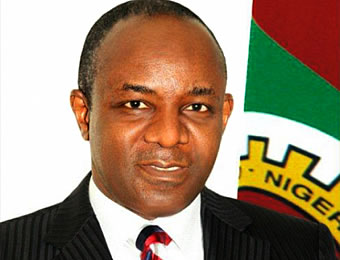
However, in the evening of May 11, 2016, Minister of State for Petroleum Resources and the Group Managing Director (GMD), Nigerian National Petroleum Corporation (NNPC), Dr Ibe Kachikwu, announced removal of fuel subsidy and all marketers complied immediately and adjusted pump price of petrol to N145 per liter.
According to Kachikwu, “We have just finished a meeting of various stakeholders presided over by His Excellency, the Vice-President of the Federal Republic of Nigeria. The meeting had in attendance the leadership of the Senate, House of Representatives, the governors’ forum and labour unions (NLC, TUC, NUPENG and PENGASSAN).
“The meeting reviewed the current fuel scarcity, supply difficulties in the country and the exorbitant prices paid by Nigerians for the product. These prices range on average from N150 to N250 per litre currently.”
Kachikwu revealed that the meeting also noted that the main reason for the problem was the inability of importers of petroleum products to source foreign exchange at the official rate due to the massive decline of foreign exchange earnings resulting from low oil prices.
“As a result, private marketers have been unable to meet their approximate 50 per cent portion of total national supply of petrol. Following a detailed presentation by the Minister of State for Petroleum Resources, it has now become obvious that the only option and course of action now open to the government is to take the following decisions:
“In order to increase and stabilise the supply of the product, any Nigerian entity is now free to import the product, subject to existing quality specifications and other guidelines issued by the regulatory agencies.
“All oil marketers will be allowed to import petrol on the basis of forex procured from secondary sources and accordingly, the Petroleum Products Pricing Regulatory Agency (PPPRA) template will reflect this in the pricing of the product.”
“Pursuant to this, PPPRA has informed me that it will be announcing a new price band effective today, 11th May, 2016 and that the new price for petrol will not be above N145 per litre. We expect that this new policy will lead to improved supply and competition and eventually drive down pump prices, as we have experienced with diesel.
“In addition, this will also lead to increased product availability and encourage investments in refineries and other parts of the downstream sector.
“It will also prevent diversion of petroleum products and set a stable environment for the downstream sector in Nigeria,” he said.
Rationale behind price wars among marketers
In less than two months, after subsidy removal was announced by the Federal Government, marketers have been engaging in one form of price war or the other in other to maximise profit.
In Lagos for instance, marketers, especially the independent marketers sell petrol between N130-N143 per liter depending on the area and the marketers you are patronising.
Some marketers like NIPCo, BOVAS, Bunkers, Technoil and others sell between N140 and N143 per litre. At NNPC Retail stations, it was observed that their prices also vary depending on the location. NNPC Retail stations at Oregun sell at N140 per litre, at Sango-Ota road sells at N142 per litre while at Idimu it sells at N138 per litre.
It was actually observed that members of Major Oil Marketers Association of Nigeria (MOMAN) were selling at N145 per litre across the country. These include MRS, TOTAL, CONOIL, FORTE, OANDO and MOBIL.
In a telephone conversation with the Nigerian Tribune, the Public Relations Officer, Independent Petroleum Marketers Association of Nigeria (IPMAN), Western Zone, Alhaji Abdul Lateef Jaiyeola, stated that “firstly, that is the outcome of deregulation whereby competition will force down the price. Secondly, our members are recording low consumption and patronage from motorists. Those who used to sell 100,000 litres, an equivalent of three trucks daily are now finding it difficult to sell 33,000 litres daily.”
He, however, stated that products from private depot owners are now cheaper and available than products from the Nigerian National Petroleum Corporation (NNPC).
“We buy products from other private depots in Lagos and I’m sure that you will confirm our members are selling below N145 per liter in Lagos. From private depot owners, we buy at between N130 and 135 per liter as ex-depot price. If you add other cost, we arrive at N138-143. The business is not encouraging anymore because we don’t have enough margins. But competition drives the price down. Maybe because NNPC has stake or interest in private depot, they are giving them at cheaper rate,” he said.
The spokesman of NIPCO Plc, Alhaji Taofeek Lawal disclosed to Nigerian Tribune , “that is what deregulation brings to the sector. We sell at N134 per litre from the depot at Apapa. Any of our dealers can add N6 and N7 per litre as margin after adding transportation cost of let’s say N2 per litre. The one at Fadeyi bus stop can decide to sell below N143 per litre, if he considers turnover because we deal in volume.
“In fact, all things being equal, Nigerians may see further drop in pump price soon especially in Lagos where several depots are situated. The filling station at Fadeyi bus-stop is our flagship, where we are trying to test run the possibility of selling below N145 per litre across the country.”
Are Nigerians getting value for money?
After products availability, the real question now is ‘Are Nigerians getting value for money spent on petroleum products?
It would be recalled that when the Federal Government removed fuel subsidy in January 2012, pump price of petrol was N140 per litre while exchange rate was about N180 to $1 and crude oil price was above $100 per barrel.
As at May 11, 2016, when the Federal Government of Nigeria removed fuel subsidy, pump price of petrol was allowed to fluctuate between N135 and N145 per litre. It is noteworthy to state that crude oil price was about $35 per barrel while exchange rate at the parallel market was about N350 to $1. It is important to use the parallel market rate because the Federal Government also admitted that marketers did not have access to official rate at N197 to $1.
According to the pricing template of the Petroleum Products Pricing Regulatory Agency (PPPRA), for the month of May 2016 (23 April to 23 May}, landing of petrol stood at N140.40 per litre.
The new template for the month of May-June was not released while the one for June-July is still being expected. This is very important because in a deregulated market, prices fluctuate as crude prices and exchange rates fluctuate. The government has introduced a floating exchange rate regime and it has brought about stability in the exchange rates while crude prices have been steady around $50 per barrel for weeks now.
Conclusion
The Federal Government should do more to attract the much needed investment in the downstream sector in other to turn the country into net exporter of refined petroleum products. More so, it should ensure adequate regulatory framework to protect Nigerians against the sharp practices from marketers by ensuring that the pumps are dispensing correctly while also ensuring that the imported petroleum products are of highest standards.
WATCH TOP VIDEOS FROM NIGERIAN TRIBUNE TV
- Relationship Hangout: Public vs Private Proposals – Which Truly Wins in Love?
- “No” Is a Complete Sentence: Why You Should Stop Feeling Guilty
- Relationship Hangout: Friendship Talk 2025 – How to Be a Good Friend & Big Questions on Friendship
- Police Overpower Armed Robbers in Ibadan After Fierce Struggle