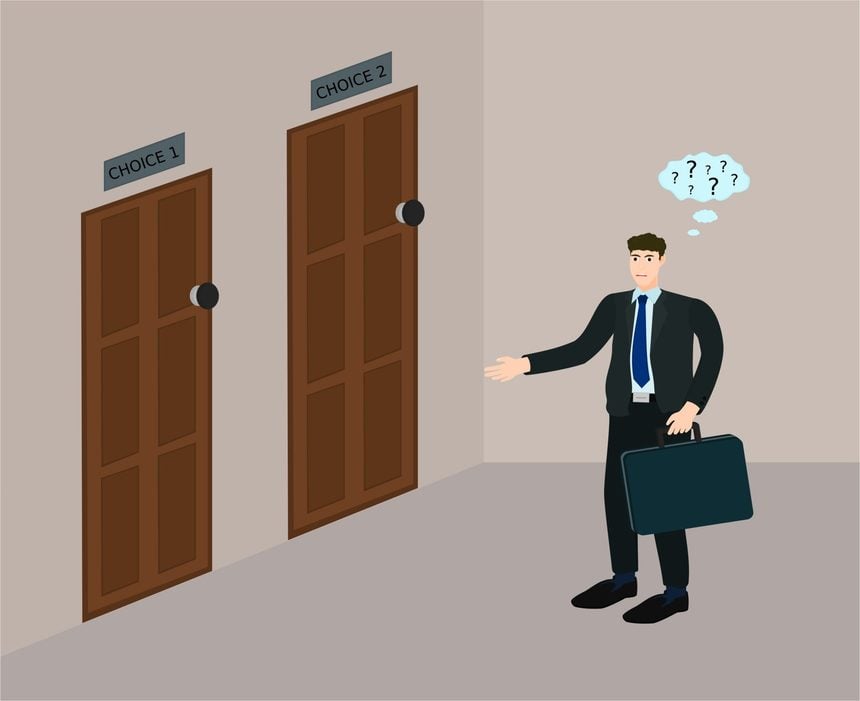
Almost everyone on earth has experienced that sudden, baffling moment of standing in the middle of the kitchen or bedroom with zero idea why they walked in. You were completely focused on your mission just three seconds earlier, yet crossing that threshold wiped your mind clean.
Many people immediately worry that this momentary blankness is an early sign of memory decline or brain fatigue. In reality, cognitive scientists confirm that this phenomenon is a normal, built-in efficiency feature of a healthy human brain.
Researchers call this experience the Doorway Effect, or the Location Updating Effect. Rather than indicating a broken memory, it proves your brain is actively organizing the world around you into manageable chapters so you do not get overwhelmed by clutter.
Passing through a boundary forces the brain to file away old information to make room for new surroundings. Even walking through a virtual doorway on a computer screen triggers the exact same memory reset.
In this article, Tribune Online examines four distinct things your brain does the exact moment you enter a room and forget why you went there, along with the step-by-step techniques to recover your lost thought.
It creates a new event boundary
Your brain does not record your life like one continuous, unbroken movie reel. Instead, it slices your day into separate episodes or chapters based on where you are and what you are doing at any given moment.
When you leave your bedroom and walk through a doorway into the hallway, your mind treats that physical threshold as the end of one chapter and the start of another. Psychologists call this transition an event boundary.
Because the brain assumes that rules, objects, and dangers in the new room are different from the previous one, it closes the mental file from the old room. Your original intention gets tucked away in storage so your mind can focus completely on the fresh environment ahead of you.
It flushes your working memory
Human working memory acts like a small mental notepad where you temporarily hold immediate tasks, such as remembering to grab your car keys or fetch a glass of water. This notepad has a very strict size limit and holds information for only a few seconds without active repetition.
Crossing into a new space floods your senses with brand-new visual details, lighting changes, smells, and sounds. Your brain automatically prioritizes processing this incoming sensory data to make sure your new surroundings are safe.
To free up space for these fresh details, your brain clears out the temporary notes sitting at the top of your working memory. Your original reason for walking into the room gets pushed off the notepad before it ever gets saved into long-term storage.
ALSO READ: 5 texting habits that people misread as cold or passive-aggressive
It shifts attention to environmental scanning
Every time you step into a different physical space, your brain activates an ancient survival instinct designed to scan unfamiliar territory. Even inside your own home, entering a different room triggers a subconscious check of everything inside it.
If you walk into your living room intending to pick up your phone charger, your eyes might immediately spot an unwashed mug on the table, a blinking television light, or an open window. Each of those visual cues competes for your immediate attention.
Within milliseconds, your focus fractures across multiple new targets in the room. That rapid shift in visual scanning breaks the fragile mental thread connecting you to your original purpose, leaving you staring blankly at the floor.
It drops context-dependent retrieval cues
Human memory relies heavily on environmental anchors, meaning the objects around you help remind you of what you were thinking. When you first decided to get a pair of scissors while sitting at your desk, the paper on your desk served as the visual trigger for that thought.
Once you stand up and walk down the corridor into another room, you leave behind the exact physical cues that birthed the idea in the first place. Without those surrounding objects reinforcing the thought, the memory loses its anchor.
Because the new room contains completely different furniture and visual signals, your brain lacks the matching triggers needed to pull your original intention back to the surface.
Step-by-Step: How to recover a forgotten thought
When the doorway effect strikes, standing frozen in the middle of the new room rarely brings the memory back. Using targeted cognitive retrieval tricks works much faster.
First, physically walk back into the exact room where you originally had the thought. Returning to the previous environment restores the original visual cues and spatial context, which often triggers your brain to reopen the closed mental chapter instantly.
Second, retrace your physical posture and eye line from moments earlier. Sit back down in the same chair or look at the same object you were holding before you stood up, as physical positioning strongly reinforces memory recall.
Third, prevent future blanks by anchoring your intention before crossing any doorway. Say your task out loud in two or three words, such as “fetch blue notebook,” or hold a related object in your hand while walking so your working memory keeps the task active across the threshold.
WATCH TOP VIDEOS FROM NIGERIAN TRIBUNE TV
- Relationship Hangout: Public vs Private Proposals – Which Truly Wins in Love?
- “No” Is a Complete Sentence: Why You Should Stop Feeling Guilty
- Relationship Hangout: Friendship Talk 2025 – How to Be a Good Friend & Big Questions on Friendship
- Police Overpower Armed Robbers in Ibadan After Fierce Struggle