The Nigeria Labour Congress (NLC) has reaffirmed its commitment to supporting the Academic Staff Union of Universities (ASUU) in its ongoing dispute with the Federal Government over the long-standing crises that have continued to threaten the foundation of public university education in the country.
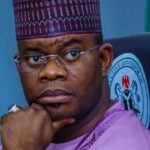
The National President of the NLC, Joe Ajaero, made this known on Sunday night during The Toyin Falola Interviews, themed “A Conversation with the ASUU President”, held via Zoom and streamed across various social media platforms.
No fewer than 1.2 million people from 27 countries joined the conversation, which was hosted by Prof. Toyin Falola and featured four other distinguished individuals: the National President of ASUU, Prof. Christopher Piwuna; Prof. Sheriffdeen Tella; Prof. Francis Egbokhare; and Mrs. Grace Edema of The Punch.
According to Ajaero, ASUU’s struggles are in the interest of all Nigerians and the country at large, not just its members.
He stated, “ASUU members are workers, but beyond that, they are character moulders and shapers of society. Their role in nation-building is critical, and as one of NLC’s affiliates, their struggle is legitimate and deserving of full support.”
Ajaero noted that, “History has shown that the struggles of ASUU have always been tough, and I don’t pity the current ASUU president as he is fully prepared for the role demanded by his position.”
He further declared that while ASUU’s cause goes beyond the interest of its members, it also has the right, as a trade union, to fight for their welfare and interests.
Recalling a similar experience, Ajaero referenced the NLC’s past interactions with the Nigerian Union of Journalists (NUJ), saying, “I once faced a similar debate on whether the NUJ should operate as a trade union or a professional body. That confusion is partly why the NUJ is where it is today.
ALSO READ: FG has redoubled efforts to curb insecurity — Remi Tinubu
“You can’t claim to be a purely professional organization when about 90 per cent of your members are in paid employment. Unlike doctors who can turn their homes into clinics or lawyers who can convert their rooms into chambers, journalists—and lecturers—depend on their institutions for survival.”
The NLC president further explained that beyond the issue of university academic autonomy, which ASUU has long agitated for, there is a need to broaden the ongoing conversation about Nigeria’s public university system.
He said the country must answer certain fundamental questions, including whether Nigeria is truly approaching education the right way, and whether focusing only on universities while neglecting primary and secondary education is sustainable.
He argued, “If the country fails to get the foundation right, excellence at the tertiary level will remain impossible. That is why I commend Prof. Toyin Falola for initiating this conversation. It is important because it goes beyond ASUU’s problems—it reflects the overall crisis in Nigeria’s education sector.
“I don’t understand how an agreement signed as far back as 2009 can still be unresolved 16 years after. It shows a lack of seriousness on the part of those in authority. The issue of poor wages is central to the problem. University lecturers don’t live in isolation. In some cases, a month’s salary cannot even cover the cost of a single flight ticket. We must take a holistic look at the entire system—beyond autonomy—and see how to restore dignity to education in Nigeria.”
Ajaero emphasized that the issues affecting ASUU and other affiliated unions in the public university system are central to the NLC’s mission, hence its resolve to ensure policymakers give ASUU’s concerns the utmost priority.
He noted, “The NLC recently agreed with ASUU to suspend its strike action and extend discussions with the Federal Government for a few more weeks. Now, we hope to hear from the ASUU President about the clear progress made with the Federal Government towards lasting solutions.”
Also speaking, Prof. Francis Egbokhare of the University of Ibadan, economist Prof. Sheriffdeen Tella, and The Punch journalist Grace Edema condemned the prolonged ASUU–Federal Government face-off, stressing that it was high time the matter was resolved in the interest of national development.
Earlier, Prof. Toyin Falola, a renowned historian and the Jacob and Sanger Mossiker Chair in the Humanities at the University of Texas at Austin, gave an overview of ASUU’s historical struggles with the Federal Government and the recurring industrial actions that have disrupted academic calendars for decades.
He said the aim of the conversation was to find a workable and permanent solution to the recurring problems in Nigeria’s public education system and those of other African countries. Falola noted that nations such as South Africa and Kenya also face similar challenges in their university systems, calling for urgent collective efforts to change the narrative across the continent.
WATCH TOP VIDEOS FROM NIGERIAN TRIBUNE TV
- Relationship Hangout: Public vs Private Proposals – Which Truly Wins in Love?
- “No” Is a Complete Sentence: Why You Should Stop Feeling Guilty
- Relationship Hangout: Friendship Talk 2025 – How to Be a Good Friend & Big Questions on Friendship
- Police Overpower Armed Robbers in Ibadan After Fierce Struggle