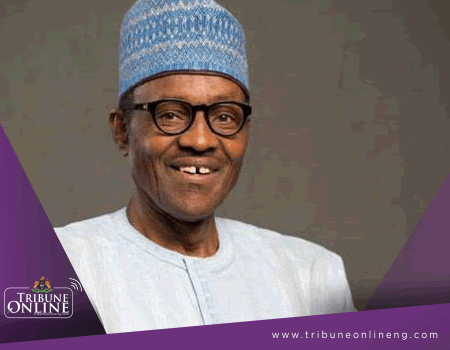
Exactly two years ago, President Muhammadu Buhari took over the reins of power in Nigeria’s capital, Abuja. While he is not a new face in the Nigerian polity, he is certainly on a brand new terrain as a democrat. Group Politics Editor, Taiwo Adisa examines the politics of Buhari in the past two years.
When President Muhammadu Buhari took over as Nigeria’s democratically elected leader on May 29, 2015, not a few were apprehensive of the nature of governance he would institute. Despite the fact that he is coming under the tenets of democracy with its in-built power of checks and balances, many were still tentative about the character of government Buhari would lead. This stemmed from his attitude to power the first time he came on board as Military ruler when his regime was credited with iron rule and draconian laws.
Two years on, the nature and character of the Buhari politics have come into the open. There appears a consensus that the character of politics instituted by the Katsina born General has not deviated from what the country has seen before, especially under the leadership of another General, Olusegun Obasanjo who was president between 1999 and 2007.
To military Generals, politics is another warfront and opposition is an aberration. Obasanjo displayed this much in his eight years of governance. While not engaging the brutal tactics of war on the political turf, they still exhibit traits of winner takes all. Under Obasanjo, the nation watched as he toyed and maneuvered his way through the then Alliance for Democracy (AD) and the All Peoples Party (APP) which later became the All Nigeria Peoples Party (ANPP). He befriended the leadership of the opposition, pretended to institute a unity government and eventually lured many of their brightest minds to his party. At each election, only a weakened opposition was out there to tackle Obasanjo. Even when more parties were registered at the 2003 and 2007 elections, which he supervised the tactics worked and Obasanjo was able to produce a successor from his own party.
So far, what is seen of the Buhari politics has shown proclivity to the Obasanjo strategies. Listening to the spokesmen of the Buhari government, Alhaji Lai Muhammed and Mallam Garba Shehu at the beginning of the administration in 2015, the direction of politics that evolved afterwards did not come as a surprise. In separate interviews granted by the duo in 2015, they asked Nigerians to await what would become of the leading opposition party, the Peoples Democratic Party (PDP) in the years to come. By the time we finish with the PDP, it will not be worth a rag before Nigerians, these spokesmen had said in separate interviews on a Channels Television programme.
In the months that followed, the PDP has conveniently fallen into a sleeping giant, more like an elephant pushed into a huge pit. The leadership tussle that enveloped the party since 2016 has threatened its very soul and a legal battle is already at its peak at the Supreme Court.
HOW IT ALL STARTED
Strategists of the Buhari government were able to see early in the day that leaving the PDP intact as a vibrant opposition party could create too much for the new government to contend with especially following the failure of the leaders of the ruling All Progressives Congress (APC) to foster a coherent party structure before the takeover of government.
Perhaps as a result of the lack of firm agreements as to the nature of government to constitute, the Buhari government could not hit the ground running. It took six months to constitute the Federal Cabinet, while many of the top appointments even remain in acting capacity till date.
Investigations showed that to ensure the main opposition structure is placed on the mute, key elements in the APC sold dummies to the most vocal figures in the PDP, assuring them that they should approach the former Governor of Borno State, Senator Ali Modu Sheriff to lead the party. The assurances according to insiders were to the effect that a number of APC stalwarts were ready to quit the party and join the PDP but that they would be more comfortable with someone like Sheriff who is not a thoroughbred PDP man.
It was revealed that the two most vocal PDP Governors, Ayo Fayose of Ekiti State and Nyesom Wike of Rivers took it upon themselves to sell the candidature of Sheriff to the PDP Governors Forum and the larger party caucus. Despite strong objection by members of the party in the National Assembly and a number of Governors, including the immediate past Ondo state Governor, Dr. Olusegun Mimiko, the duo of Wike and Fayose pushed through the deal and Sheriff was brought in to complete the three months remaining on the tenure of the North East.
To outsiders, it should look ridiculous for a chairman to be elected only for a three man tenure, but the PDP leaders believed they were playing the politics that would lead to an early breakup of the ruling APC. The emergence of Sheriff is however seen as a good omen by the
Buhari strategists immediately exploited the links between the former Borno governor and the President. In no time, it became obvious that the PDP had sold its soul to a man with his own agenda. The same leaders who sold his candidature to the party took up arms and the battle between Sheriff and the Senator Ahmed Makarfi-led National Caretaker Committee to which the mainstream of the party belongs is very fierce. Right now, both factions of the party are hanging on to the hope of a favourable ruling in the case before the Supreme Court.
APC Profits, as PDP flounders
With the leadership of the main opposition party, the PDP in apparent disarray, the APC was able to secure some breather. The weekly tackles the Action Congress of Nigeria (ACN) which metamorphosed into the ruling APC heaped on the administration of former President Goodluck Jonathan through relentless questions on governance issues are lacking as two contending voices continue to emerge from the opposition party at a time. Though the Sheriff faction of the party had denied its links with the ruling APC, members of the party have continued to highlight its actions as only favourable to the survival of the ruling party, APC.
The cracks in the PDP has therefore paved the way for a floodgate of party faithful jumping ship to the ruling party. In the South East for instance, the zone that gave bulk votes to PDP’s Goodluck Jonathan in the 2015 election, many of the key political actors have defected to the ruling party. The likes of former Senate President Ken Nnamani, former governors of Enugu and Ebonyi states, Chief Sullivan Chime and Martin Elechi, Jonathan’s Chief Campaigner in 2015, Ifeanyi Ubah as well as former Abia Governor, Orji Uzor Kalu and Senator Andy Uba have all teamed up with the APC. Five Senators of the PDP have also defected to the ruling party, leaving the party which started with 49 Senators with only 43 with Anambra Central seat still vacant. The PDP has also lost some ten members of the House of Representatives to the APC, in what appears a no ending free fall.
Across the zones, the fear of a one party state emerging at the end of the day is fast growing with the relentless defections by members of the PDP to the ruling party each passing day.
Buhari and the Legislature
One area many expect Buhari to falter is in the management of the legislature, which is the critical pain in the ass in a democracy. And to many he started badly in this area. The President showed early in the day that he was not interested in whoever emerged the leader of the legislature and that he was ready to work with any of the leaders.
The slight shift from that commitment when it became practical on June 9, 2015 however caused another slowdown for the government to the extent that right now, the executive and the legislature are only patching up their relationships.
Kaduna state Governor, Mallam Nasiru el-Rufai said recently at a retreat for Management Staff of the National Assembly that the legislature, the senate especially is seen as opposed to the anti-graft war of the President. His statement was borne out of the fact that the executive and the legislature have hardly maintained similar lines of thought on issues. The failure of the Senate so far to confirm the Chairman of Economic and Financial Crimes Commission (EFCC), Mallam Ibrahim Magu has devolved into a sort of dogfight.
While the Senate has so far refused to confirm Magu, the executive, which has forwarded his name to the chamber three times has also refused to relieve Magu of his appointment pending his confirmation by the Senate.
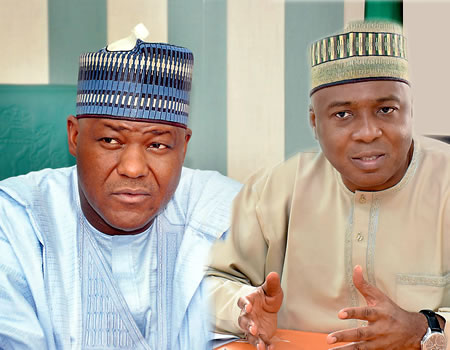
But Buhari brought a combative legislature upon himself. Having agreed to work with any of the lawmakers who emerged leaders of the Senate and the House, and having endorsed the emergence of Senate President Bukola Saraki and Speaker Yakubu Dogara in a statement which indicated that a somewhat constitutional process has taken place, the President refused to welcome Saraki into the Presidential Villa for the first four months. A number of stories were allowed to fester at the time with indications that the Presidency and the ruling party were opposed to the choice of Saraki as made by the Senators.
That the Presidency did not welcome the Senate President into the Villa four months into his tenure was a unique development of the Buhari administration. Since the restart of democratic rule in 1999, the emergence of leaders of the legislature has always been greeted with some fanfare in the Villa; even where the choice didn’t go the Villa’s way. The Presidency of Obasanjo welcome the emergence of Senator Chuba Okadigbo, which was seen as an attack on its interest. It only went ahead to plot the fall of that Senate Presidency. The Presidency of Goodluck Jonathan and the PDP equally accepted the apologies offered by the duo of Hons Aminu Waziri Tambuwal and Emeka Ihedioha after they obstructed the party’s zoning formula and got elected as Speaker and Deputy Speaker respectively in the 7th Assembly. The decision of the APC and the Presidency to also back the Senate Unity Forum (SUF), the crop of Senators opposed to Senate President Bukola Saraki only toughened a majority of the lawmakers, who insisted that the party and the Villa cannot dictate their choice of leader. It meant then that a cat and mouse situation was afoot and the executive/legislature relationship was the victim.
For the first time since 1999, the Senate threatened and indeed practically downed tools as a result of what it saw as undue disregard of the chamber by the executive. It suspended the screening of Resident Electoral Commissioner (REC) nominees, due to the continued retention of Ibrahim Magu in office as Acting EFCC chairman, after his rejection by the chamber.
Right now, the executive is seeking a way to bypass the confirmation process at the Senate for Magu, with the insistence of some lawyers that Section 171 of the 1999 Constitution empowers the President to appoint him without confirmation. Even at that, it appears the Senate is not buying such argument as it ordered the immediate removal of a nominee to the position of Director General of the National Lottery Commission who has assumed office without senate confirmation.
Whatever it comes up with at the end of the day, the Buhari government will go down in history of this democracy as one with the least number of executive bills, a result of its spartan engagement of the legislature thus far.
In two years, as much as the Buhari administration has been able to mute the opposition, it has also had to contend with internal complications inherent in its own political vehicle. Much of such contradictions have combined to slow down the politics of the administration in key areas.
WATCH TOP VIDEOS FROM NIGERIAN TRIBUNE TV
- Relationship Hangout: Public vs Private Proposals – Which Truly Wins in Love?
- “No” Is a Complete Sentence: Why You Should Stop Feeling Guilty
- Relationship Hangout: Friendship Talk 2025 – How to Be a Good Friend & Big Questions on Friendship
- Police Overpower Armed Robbers in Ibadan After Fierce Struggle