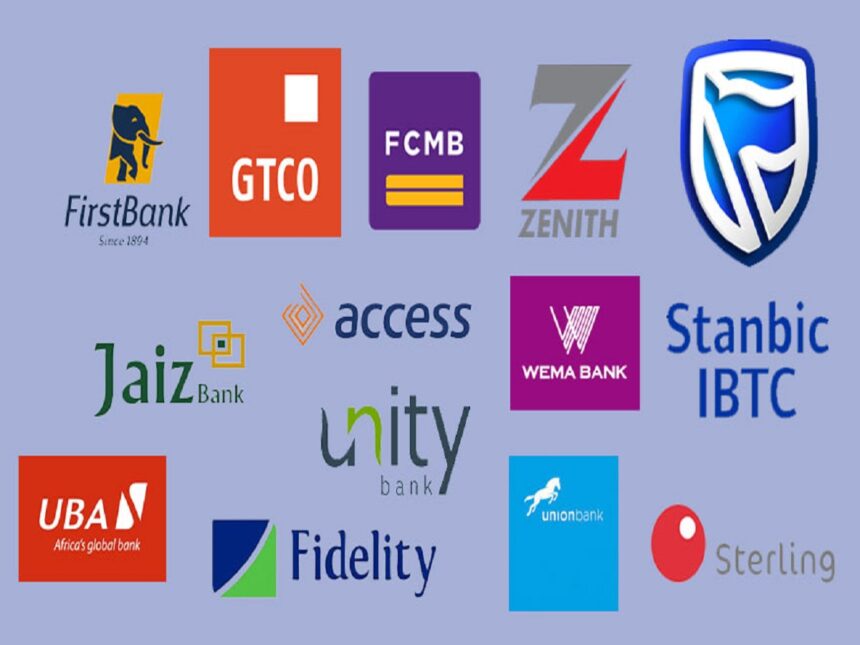
As Nigeria approaches 2026, a pre-election year, the banking sector faces a complex mix of risks and opportunities that could reshape performance after two years of reform-driven gains.
At the Fitch on Nigeria 2025 forum in Lagos last week, industry experts highlighted several key trends and risks—including pre-election and inflation pressures, operational and cybersecurity vulnerabilities, regulatory uncertainty, recapitalisation challenges, lending strategies, and technology-driven innovation—that investors and market participants should watch closely.
This year marked a shift for the sector as many Tier-1 banks reported declining profits. After two years of bumper gains largely fueled by naira devaluations and aggressive monetary tightening, earnings began to normalise as the currency stabilised and interest rates softened.
Data from the Central Bank of Nigeria (CBN) shows the official exchange rate rose to N1,450/$ in 2024 from N645.10/$ in 2023, while in 2025 the naira traded between ₦1,500–N1,600/$ before firming to N1,480/$ in late September and closing at N1,455.5/$ on November 19.
The CBN’s tightening cycle, which raised the Monetary Policy Rate (MPR) by 875 basis points to 27.5 per cent between July 2023 and May 2025, initially boosted interest income.
However, a policy pivot—including the first MPR cut since September 2020 to 27 percent in September 2025—coincided with a slowdown in earnings for Tier-1 banks. Combined after-tax profits of GTCO, Zenith, First HoldCo, and Access Holdings fell to N2.49 trillion ($1.64 billion) in the first nine months of 2025 from N3.07 trillion ($1.94 billion) in the same period last year.
Smaller banks, including Wema, Stanbic IBTC, and Sterling Holdings, reported a 159.9 percent surge in profits to N541.6 billion, reflecting targeted growth and operational efficiency.
Pre-election years often come with increased government spending, adding pressure on public finances and banks’ exposure.
Although inflation fell for the seventh consecutive month to 16.1 percent in October 2025, it remains among Africa’s highest, posing risks to operating costs and asset quality.
Operational risks continue to weigh on capital adequacy, while cyber threats are intensifying. Banks are investing heavily in digital security and data protection to counter increasingly sophisticated attacks.
Banks face potential shifts in regulatory policies, including cash reserve ratios, loan-to-deposit ratios, and FX loan provisioning.
With less than five months to meet the March 31, 2026 recapitalisation deadline, institutions are racing to meet new capital thresholds. Fourteen banks have already met requirements, raising a combined N2.5 trillion ($1.67 billion) since 2024.
Despite perceptions of cautious lending, banks continue to support SMEs and the real sector. Digital innovation—from real-time settlements to tokenised issuance—remains transformative, with technology spending rising 74.5 per cent in 2024 to N268.7 billion ($171.5 million).
Dapo Olagunju, Managing Director, West Africa, JPMorgan, said global investors remain impressed by Nigeria’s resilient financial system. “Capital adequacy remains strong, profitability is robust, and risk management continues to evolve,” he said.
As 2026 approaches, Nigerian banks are entering a year defined by political risk, regulatory shifts, and operational vulnerabilities—but opportunities in capital deployment, regional expansion, and technology adoption remain significant.
WATCH TOP VIDEOS FROM NIGERIAN TRIBUNE TV
- Relationship Hangout: Public vs Private Proposals – Which Truly Wins in Love?
- “No” Is a Complete Sentence: Why You Should Stop Feeling Guilty
- Relationship Hangout: Friendship Talk 2025 – How to Be a Good Friend & Big Questions on Friendship
- Police Overpower Armed Robbers in Ibadan After Fierce Struggle