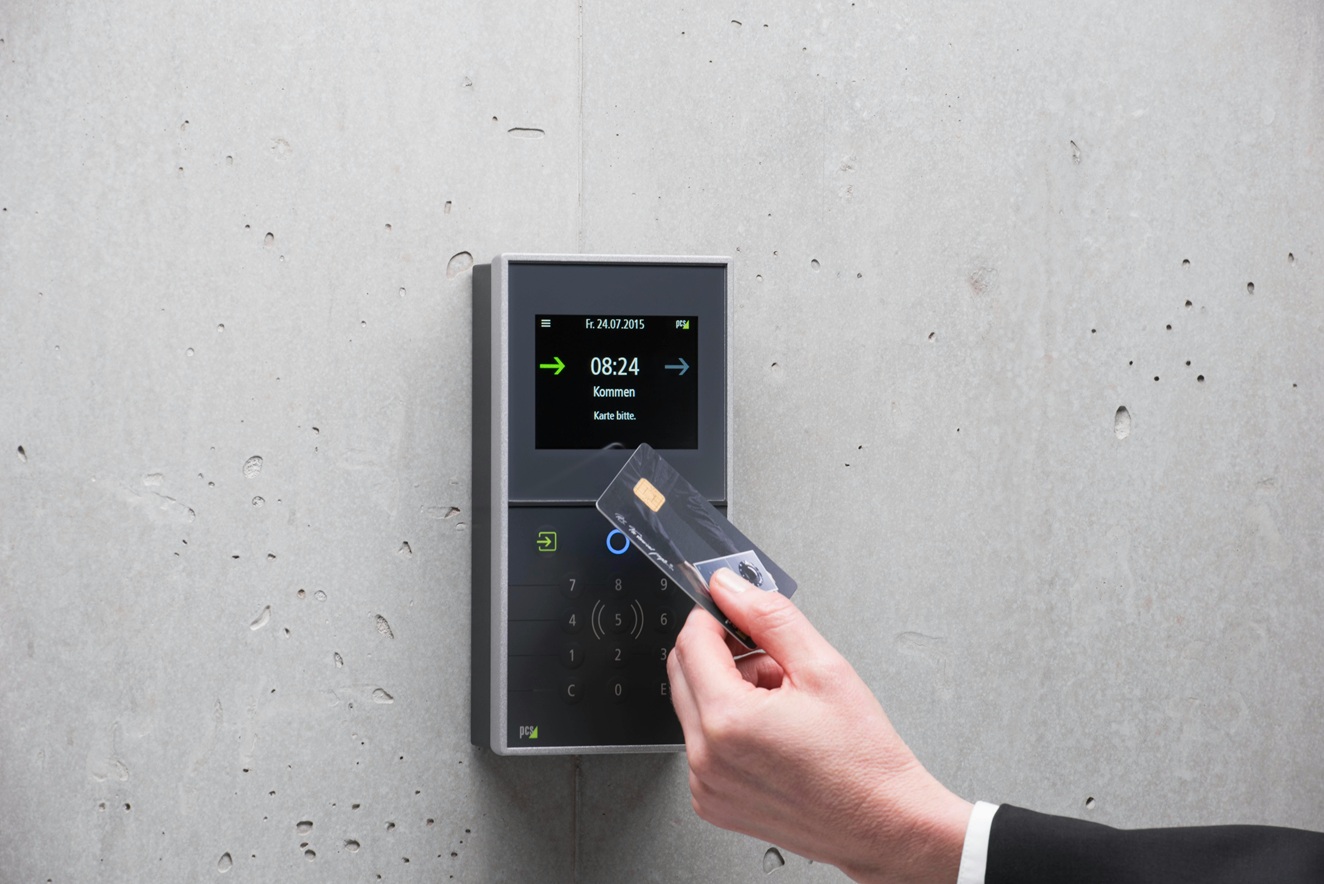
Imagine arriving at an international airport where your passport is scanned within seconds, verifying your identity instantly. This seamless process is made possible by RFID-chipped passports, standardized by the International Civil Aviation Organization (ICAO) in 2006.
RFID technology plays a crucial role in electronic identity documents, enhancing security and streamlining verification. This article explores the fundamentals of RFID in identity documents and its authentication methods, along with Regula’s approach to RFID verification.
What is RFID technology?
RFID, or Radio Frequency Identification, is a technology that uses radio waves to transfer data and identify objects. RFID chips store data that can be retrieved remotely using an RFID reader or scanner.
The technology is widely used across various industries, including:
- Retail – for inventory tracking and product management.
- Logistics – to monitor supply chain movement.
- Access control – in key cards and security passes.
- Identity verification – in passports, ID cards, and driver’s licenses.
In identity documents, RFID chips securely store personal and biometric data, allowing for rapid and reliable verification at borders, banks, and other regulated environments.
How does RFID work?
RFID operates by embedding a small microchip inside an item, which interacts with an RFID reader via radio waves. The process follows these steps:
- The RFID reader emits an electromagnetic signal.
- The RFID chip receives this signal and activates.
- The chip transmits stored data back to the reader.
- The reader processes and verifies the received data.
RFID Frequency Types and Their Uses
The communication between an RFID chip and a reader occurs at different frequencies, each suited for specific applications:
- Low frequency (125 KHz): Used in access control systems and animal tracking.
- High frequency (13.56 MHz): Found in electronic IDs, passports, and payment systems.
- Ultra-high frequency (840-960 MHz): Used for logistics, retail, and toll collection systems.
What are the main types of RFID chip authentication?
To ensure security, RFID chips undergo several authentication methods. These include:
- Passive Authentication (PA)
This method verifies the integrity of stored data by checking cryptographic signatures against digital certificates. It ensures that the data has not been altered or tampered with.
- Active Authentication (AA)
Active Authentication prevents chip cloning. The RFID chip must generate a cryptographic response to a random challenge issued by the reader, proving its authenticity.
- Chip Authentication (CA)
Chip Authentication replaces Active Authentication by using more advanced encryption. Both the reader and the chip establish a secure communication channel, preventing fraud and cloning.
- Terminal Authentication (TA)
Terminal Authentication ensures that only authorized readers can access sensitive biometric data on an RFID chip. This is commonly used at border control and law enforcement agencies.
What is the difference between NFC and RFID?
RFID and NFC (Near Field Communication) are often confused, but they have key differences:
- RFID operates over a broader range of frequencies and is designed for one-way communication between a reader and a chip.
- NFC is a subset of RFID technology that allows two-way communication between devices, typically within a short range (1-10 cm).
NFC verification is widely used in contactless payments and smartphone-based access control, while RFID is commonly found in identity verification and logistics applications.
How does Regula use RFID verification?
Regula employs server-side RFID verification to enhance security in identity authentication processes. The “zero-trust to mobile” approach ensures that mobile devices used for verification do not introduce vulnerabilities.
How Regula’s RFID Verification Works:
- The RFID chip is read using an NFC-enabled mobile device.
- The extracted data is securely transmitted to a server-side verification system.
- Cryptographic methods verify the chip’s authenticity and check for data tampering.
- The system validates the chip against ICAO’s Public Key Directory (PKD) and other trusted sources.
By processing verification on a secure server rather than relying solely on mobile device authentication, Regula eliminates risks associated with mobile-based fraud attempts.
Key Takeaways
- RFID technology enhances identity verification by enabling secure, contactless authentication.
- Different RFID authentication methods ensure that data remains protected and cannot be altered or cloned.
- NFC vs. RFID: While NFC is a subset of RFID, it allows two-way communication, whereas RFID primarily enables one-way identification.
- Regula’s approach to RFID verification employs server-side validation to provide an extra layer of security against fraudulent manipulations.
As electronic identity verification continues to evolve, the integration of RFID authentication, advanced encryption, and biometric security measures will be crucial in safeguarding personal data and ensuring seamless identification processes worldwide.
WATCH TOP VIDEOS FROM NIGERIAN TRIBUNE TV
- Relationship Hangout: Public vs Private Proposals – Which Truly Wins in Love?
- “No” Is a Complete Sentence: Why You Should Stop Feeling Guilty
- Relationship Hangout: Friendship Talk 2025 – How to Be a Good Friend & Big Questions on Friendship
- Police Overpower Armed Robbers in Ibadan After Fierce Struggle