Tribune OnlineTribune OnlineTribune Online
  • Home
  • News
  • Columns
  • Editorial
  • VIDEOS
  • Entertainment
  • Politics
  • Health
  • Opinions
  • SPORTING TRIBUNE
Reading: Preserving the uniqueness of wooden artworks
Share
Notification Show More
Font ResizerAa
Tribune OnlineTribune Online
Font ResizerAa
  • Home
  • News
  • Columns
  • Editorial
  • VIDEOS
  • Entertainment
  • Politics
  • Health
  • Opinions
  • SPORTING TRIBUNE
  • About Us
  • Contact us
  • Disclaimer
  • Privacy Policy
  • Advertise
Have an existing account? Sign In
Follow US
© 2026 African Newspapers of Nigeria Plc. All Rights Reserved. | Disclaimer | Privacy Policy | Editorial Policy | Corrections Policy | Terms & Conditions
Home » Preserving the uniqueness of wooden artworks
Arts and Reviews

Preserving the uniqueness of wooden artworks

TribuneWeb
May 11, 2017
Share
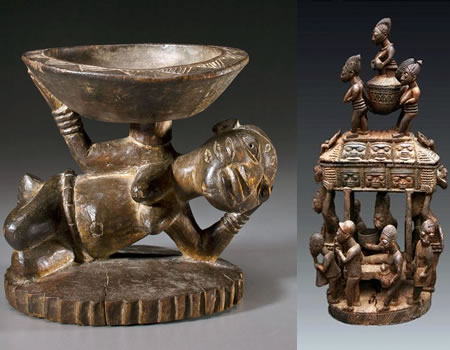
Cultural essence of African traditional arts arts craft
Add as a preferred source

ONE of the biggest problems facing wooden artworks is that, over time, they are attacked by pests, thereby destroying the wood’s uniqueness.

Pests can mean big trouble for wooden objects, and these can be from three categories of pests, which are: Microorganisms, such as mould and mildew; insects such as moths, beetles and silver fish, and vertebrates, such as birds and mammals. However, in order not to lose valuable wooden work of arts, the best preservation is a combination of prevention and constant vigilance. Organisms which destroy wood have been found in virtually every environment. Unfortunately, the optimum temperature range of 24°c-32°c is one that humans are comfortable in, so temperature is not a practical way to control the organisms.

There are two main types of wood destroying organisms — fungi and insects, and infestation by either one can lead to complete destruction of a wooden artwork.  In fact, infestation by one usually leads to infestation by the other. Fungi, including moulds and mildews, are everywhere in the environment. Fungi are simple plant-like organisms which do not have chlorophyll to provide their own food. In essence, they have a parasitic relationship with their host. They rapidly multiply in a supportive environment and send seed-like spores out (sometimes air-borne) to extend their range.

Some fungi do not affect the strength of wood by their activity, and they may only stain the wood. However, some can completely destroy the wood cellulose and lignin.

Ultimately, the wood residue crumbles to a powder form. There is almost no point trying to eradicate or exclude fungi since they are commonly found everywhere. However, artists can successfully control their consumption of wooden objects, simply put, if the relative humidity is kept moderate (less than 60%), there will be virtually no problem with fungi, but insects, such as beetles in their larval stage, are among the most destructive.

These insects lay eggs in wood, and the maturing larvae eat continuously, only emerging to mate and continue the cycle. The emerging adult will leave a small exit or flight hole about 1.5mm in diameter.

Termites can pose a threat to furniture, but are usually common in the wooden building surrounding collections in the museum. Other insects present a special problem since they may not even use wood for food. Some ants and bees tunnel through wood, creating galleries for shelter. They may not usually pose a problem to furniture, but can be a major destructive agent in historic buildings or monuments.

It follows then that removal of one or more of the favourable growth conditions is sufficient to arrest the spread of biological deterioration. The simplest method to deter fungal and insect damage is to maintain and monitor a moderate environment (that is, a properly-regulated environment), since the most controllable factor is the moisture content, good collection care will include maintenance of a 40 – 60 per cent relative humidity.

Naturally, some special objects may require other conditions, but most will do well in this range. Wood has variable degrees of natural resistance to decay.

Overtime, craftsmen have selected wood for use in adverse environments. Some woods last for years, but others decay in one season. Woods with long resistance can be treated with preservatives. Insects and fungi show little interest in penetrating paints and varnishes to consume wood. So those objects, which are or can be coated, will be better off.

  • Alli is of the National Museum of Unity, Ibadan.


WATCH TOP VIDEOS FROM NIGERIAN TRIBUNE TV

  • Back to School, Back to Business A Fresh Start

  • Relationship Hangout: Public vs Private Proposals – Which Truly Wins in Love?

  • “No” Is a Complete Sentence: Why You Should Stop Feeling Guilty

  • Relationship Hangout: Friendship Talk 2025 – How to Be a Good Friend & Big Questions on Friendship

  • Police Overpower Armed Robbers in Ibadan After Fierce Struggle


    Get real-time news updates from Tribune Online! Follow us on WhatsApp for breaking news, exclusive stories and interviews, and much more.
    Join our WhatsApp Channel now


Previous Article NIFESTEENA: Setting the right path for teenage writing talents
Next Article IDP The state of IDP camps

Most Read

  • FG fixes Jan 5 for payments of YEIDEP beneficiary, directs banks to issue ATM cards
    FG fixes Jan 5 for payments of YEIDEP beneficiary, directs banks to issue ATM cards
  • Beggar found to possess three houses, cars, other businesses acquired from proceeds of begging
    Beggar found to possess three houses, cars, other businesses acquired from proceeds of begging
  • How to apply for FG's N100,000 family grant
    How to apply for FG's N100,000 family grant
  • Oduduwa varsity graduates 1477 students at combined convocation ceremony
    Oduduwa varsity graduates 1477 students at combined convocation ceremony
  • How to Apply: FG opens N5m business support programme for tailors
    How to Apply: FG opens N5m business support programme for tailors
  • ASUU-Yola seeks Tinubu’s intervention over 3½ months’ unpaid salaries
    ASUU-Yola seeks Tinubu’s intervention over 3½ months’ unpaid salaries
  • 2027: OK Movement withdraws support for Peter Obi, NDC
    2027: OK Movement withdraws support for Peter Obi, NDC
  • Adeleke takes oath for second term, unveils power, industrialisation blueprint
    Adeleke takes oath for second term, unveils power, industrialisation blueprint
  • Oyo-owned tertiary institutions to begin indefinite strike on Monday
    Oyo-owned tertiary institutions to begin indefinite strike on Monday
  • Tinubu will provide security for credible 2027 polls —Ribadu
    Tinubu will provide security for credible 2027 polls —Ribadu

Frontpage Today

Subscribe to e-Paper

E-Vending, e paper, pdf, e-paper, Tribune
QUICK LINKS

About Us
Advertise with Us
Contact Us
Privacy Policy
Disclaimer
Editorial Policy
Corrections Policy
Terms & Conditions
COLUMNS

Aplomb
Ask The Doctor
Autoclinic With The Mechanic
Awo's Thought
Empowered For Life
Festus Adedayo's Flickers
Tuesday Flat Out
Gibbers
Intimacy
Language & Style
Leadership & Management
Lynx Eye
Monday Lines
Mum & Child
Natural Health
Notes from Atlanta with Farooq Kperogi
On The Lord's Day
Your Life Counts

ENTERTAINMENT

Entertainment

RELIGION

Tribune Church
Church News
Muslim Sermon
Eye of Islam
Islamic News

EDITORIAL

Editorial
Opinion
Letters
News Extra

BUSINESS

Capital Market
Money Market

REGIONS

Niger Delta
Arewa
MORE

Sexuality & Health
Special Report
Sports
Tourism
Travelpulse & MICE
Weekend Lagos
Book Review
Education
Event Digest
Crime & Court
Ecoscope
Energy
Maritime
Aviation
Brands & Marketing
Agriculture
Info Tech
Labour
Leadership & Management
Arts & Culture
Arts & Reviews
Politics
Health News
© 2026 African Newspapers of Nigeria Plc. All Rights Reserved. | Disclaimer | Privacy Policy | Editorial Policy | Corrections Policy | Terms & Conditions

Add Tribune Online to your Homescreen!

Add
Welcome Back!

Sign in to your account

Username or Email Address
Password

Lost your password?