TAIWO AMODU writes on the twists and turns in the life of the parliament, an integral part in the three arms of government, over the years in the country.
AS Nigeria celebrates its six decades as an independent nation recently, the generation that experienced British rule looked back to the old days of British imperialism with nostalgia: the era when there was a decent civil service; when public utilities worked and the security agencies were proactive in combating crime. A few years after independence, the political class were engaged in war of attrition. In a macabre move to subjugate the main opposition party and turned the nation into a one-party state, the ruling Northern Peoples Congress (NPC), in alliance with the National Council of Nigerian Citizens (NCNC), the ruling party in the northern and eastern regions, respectively declared a state of emergency in the Western Region, the stronghold of the opposite Action Group (AG) and foisted a sole administrator in person of Moses Majekodunmi on the region on June 1962.
The attendant imprisonment of leader of the AG and incidentally leader of opposition in the federal parliament, Chief Obafemi Awolowo for alleged treasonable felony in 1962, the pervading unrest in the region in the aftermath of the unpopular victory by the Nigerian National Alliance (NNA), the product of a political marriage with the Nigerian National Democratic Party (NNDP) and the NPC in the 1964-65 general election, culminated in the first coup of January 15,1966 led by the trio of Majors Chukuwma Nzeogwu, Adewale Ademoyega and Emmanuel Ifeajuna. While the nation got a ‘temporary relief’ as a result of the coup, owing to cessation of a bloodbath in the Western Region, the leader of the military government, General Aguiyi Ironsi, having successfully displaced the leaders of the coup, instituted “reforms “ that wreaked the nation: the Unification Decree No 34 of 1966 and the Constitution (Suspension and Modification) Decree No. 1 of 1966.
The former dissolved the then existing regions. In a nationwide broadcast to bewildered Nigerians on January 28, 1966, General Ironsi claimed that it was the intention of his military government to preserve Nigeria as one strong nation. He had said: “All Nigerians want an end to regionalism. Tribal loyalties and activities which promote tribal consciousness and sectional interests must give way to the urgent task of national reconstruction. The Federal Military Government will preserve Nigeria as one strong nation.»
Discerning Nigerians, however, saw through his motive to exchange one oligarchy for the other.” All the “federal” appointments he made were Nigerians of his South-East extraction, reinforcing the speculation that the January 15, 1966 coup was an Igbo orchestrated insurrection. General Ironsi appointed a three-man advisory team that comprised Chief Francis Nwokedi, a permanent secretary, Dr Pius Charles Nwabafor Okigbo and Colonel Patrick Anwunah, who later became Chairman and Head of the Orientation Committee at that time. He replaced the then Minister of Justice and Attorney-General, Dr. Taslim Olawale Elias with Chief Gabriel Chike Michael Onyiuke (SAN), former Director, Public Prosecution, Eastern Nigeria (1960-1965) from Nimo in the present Anambra State.
Rather than retraced his steps in the heat of the open condemnation of the unification decrees by Hassan Katsina and David Ejoor, military governors of Northern Nigeria and Midwest Regions, respectively, General Ironsi, in another national broadcast on February 21, 1966, insisted that abolition of regionalism was the best way to run an amalgam like Nigeria. He said: “On the question of the political future of the country, the experiences and mistakes of the previous governments in the Federation have clearly indicated that far-reaching constitutional reforms are badly needed for peaceful and orderly progress towards the realization of our objectives. I have already touched on some of the major issues involved in recent broadcast to the nation. It has become apparent to all Nigerians that rigid adherence to ‘regionalism’, was the bane of the last regime and one of the main factors which contributed to its downfall. No doubt, the country would welcome a clean break with the deficiencies of the system of government to which the country has been subjected in the recent past. A solution suitable to our national needs must be found. The existing boundaries of governmental control will need to be re-adjusted to make for less cumbersome administration.”
Despite disaffection from three regional military governors except Colonel Chukwuemeka Odumegwu Ojukwu, who held sway in the East, an intransigent General Ironsi refused to yield grounds. His Supreme Military Council (SMC) issued another statement on June 8, 1966 to justify its unification decree and suspension of the constitution. «The public must not be led to confuse the Military Government with government by a civilian regime under a Constitution approved by the people. Nobody will expect the present Military Government to cease to function until new constitution has been approved or to be compelled to operate the old system of government with its obvious weakness. It cannot be too seriously emphasized that the Military Government while in office can only run the government as a military government under a unified command. It cannot afford to run five separate governments and separate services as if it were a civilian regime. Final decisions on the territorial structure of the country and the public services will be matters for the Constituent Assembly and the referendum.”
General Ironsi successor, General Yakubu Gowon following the ouster of the former in a counter-coup on July 29, 1967 by the military officers from the North, did not, however, redress the damage to the nation architecture by his predecessor. While General Gown repealed the Decree 34 on August 31, 1966 through Decree 9, his administration did not return Nigeria to its regional arrangements bequeathed by the British. Rather, it promulgated Decree 14 of 1967, which split Nigeria into 12 states and provided for military governors for each state.
1979 Constitution
After 13 years of military rule (1966-79), soldiers returned to their barracks on October 1, 1979 after an election that produced the presidential candidate of the defunct National Party of Nigeria (NPN), Alhaji Shehu Shagari as winner. Prior to the transition to civil rule programme, the Supreme Military Council led by General Murtala Mohammed (later succeeded by General Olusegun Obasanjo after the former lost his life to a botched military insurrection in February 13, 1976), inaugurated a Constitution Drafting Committee in 1975 led by a foremost legal icon, the late Chief Rotimi Williams. In 1977, a Constituent Assembly (CA) composed of elected and appointed officials examined and ratified the draft constitution. After its final ratification by the SMC, the Constitution was promulgated in 1979. That document did not, however, assuage the fears of the federating states as it left 67 items on the exclusive federal list.
Reforms
The military adventurers took the political space again in the country for another 14 years ( 1984-1988) during which it had the military regimes of Generals Muhammadu Buhari, Ibrahim Babangida, Sani Abacha and Abdulsalami Abubakar — a decade and four years of scorched earth socio-economic policies in which the constitution was subordinated to decrees. There were legislations with ouster clauses in which no court could sit on judgment on the military legislations. The return to civilian rule in 1999 brought a big relief to Nigerians. But political parties and various human rights group have consistently canvased for a review of the 1999 Constitution bequeathed the nation by the Abubakar regime. It is instructive to note that while the 1979 document had 67 items on the exclusive list, the 1999 Constitution had 68 items. The Obasanjo administration never bothered to assuage the feelings of insecurity and mutual distrust among the ethnic units as its plot to amend the document was motivated by amotive of tenure elongation. The Jonathan administration actually constituted a Constitution Review Committee with Justice Idris Kutigi and Professor Bolaji Akinyemi as chairman and secretary, respectively. But its recommendations could not be implemented as the document was examined on the eve of the 2015 general elections.
Ninth NASS: Any hope?
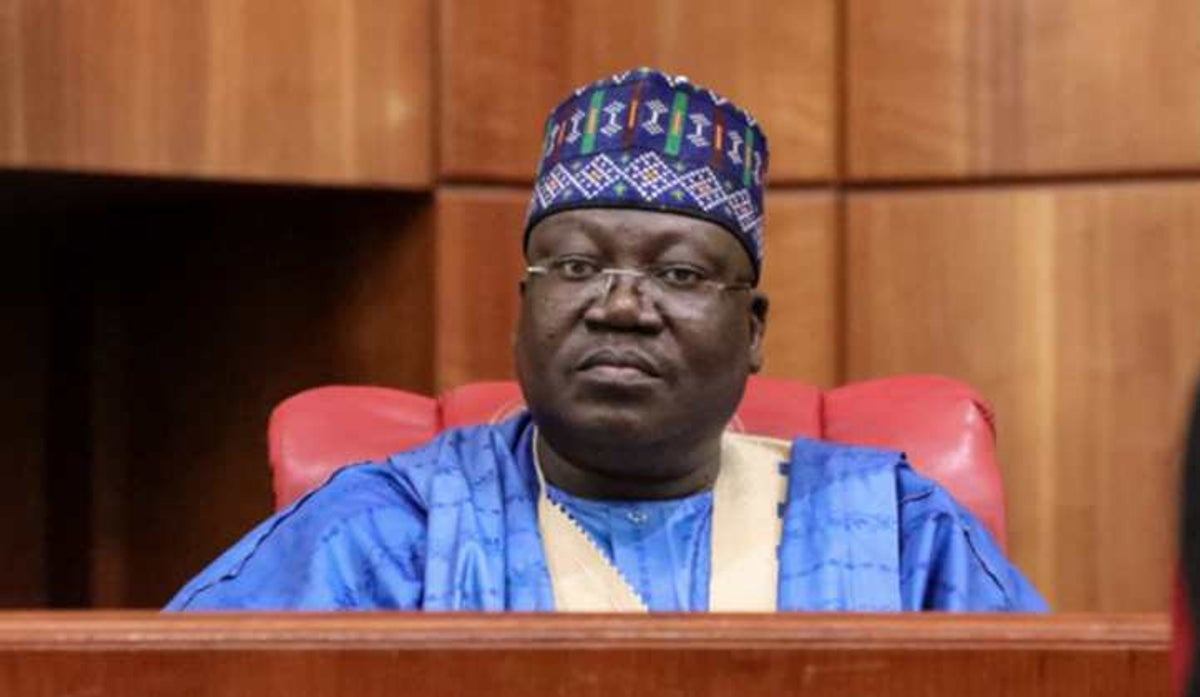
President of the Senate, Ahmad Lawan had since inaugurated a Constitution Review Committee with the deputy president of the Senate, Ovie Omo-Agege to take the views of Nigerians towards an amendment of the document. Despite the cynicisms of eminent groups and stakeholders that presentations to the team and its recommendations would be jettisoned by President Muhammadu Buhari, Senator Omo Agege had since assured Nigerians that no bill sent to his ad-hoc committee would be discarded. Indeed, the nation is on the march again on the quest to have an enduring constitutional framework, as well as a vibrant, independent and effective parliament.
YOU SHOULD NOT MISS THESE HEADLINES FROM NIGERIAN TRIBUNE
The All Progressives Congress (APC) has told a Federal High Court in Abuja, that the Comrade Adams Oshiomhole-led National Working Committee (NWC) was sacked to solve the internal leadership crises rocking the party. The party also said that immediately the Caretaker/Extraordinary Convention Planning Committee was put in place after the NWC’s dissolution, the crises that had characterised its affairs were laid to rest…
The Emir of Zazzau, in Kaduna State, Alhaji Shehu Idris has died in his palace at the age of 84. His son, Aminu Shehu Idris, confirmed in an interview with the Tribune Online that his late father who was appointed on 15th February, 1975 and spent 45 years in the throne died on Sunday after a protracted illness…
Post COVID-19: Kano based industrialist tasks FG on economy
A Kano based industrialist, Chief Kalu Ogbonnaya, has advised the Federal Government to take necessary steps to stimulate the nation’s economy to prevent a recession post COVID-19…
WATCH TOP VIDEOS FROM NIGERIAN TRIBUNE TV
- Relationship Hangout: Public vs Private Proposals – Which Truly Wins in Love?
- “No” Is a Complete Sentence: Why You Should Stop Feeling Guilty
- Relationship Hangout: Friendship Talk 2025 – How to Be a Good Friend & Big Questions on Friendship
- Police Overpower Armed Robbers in Ibadan After Fierce Struggle