 In this report Jacob Segun Olatunji and Kolawole Daniel write on the passage of (PIB) split Petroleum Industry Bill by the House of Representatives.
The Petroleum Industry Bill (PIB) is one of the controversial bills that has been around in the National Assembly since 2008 and has such attracted attention from the industry players, oil producing states and as well as International Oil Companies (IOCs).
The previous PIB was just one bulk document, but this time around, the PIB has been segmented into three aspects which comprised of the governance, fiscal framework and the host community. They are: “A bill for an act to provide for the establishment of the legal and regulatory framework, institutions and regulatory authorities as well as guidelines for the operation of the upstream and downstream sectors of the Nigerian petroleum industry”. “A bill for an act to establish a fiscal framework that encourages further investment in the petroleum industry whilst increasing accruable revenues to the federal government. “A bill for an act to provide for a framework relating to petroleum producing host community’s participants cost and benefits sharing amongst the government, petroleum exploration companies and petroleum host communities and for related matters.”
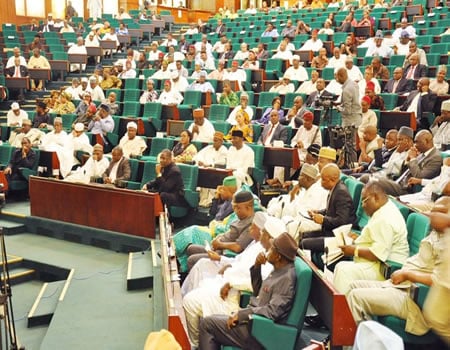
The first aspect of the bill tagged PIGB, which was Senate version tagged Petroleum Industry Governance Bill was read on the floor of the House by the Acting House Leader, Honourable Mohammed Monguno, who said that, the bill was set to establish a fiscal framework that encourages further investment in the petroleum industry whilst increasing accruable revenue to the Federal Government.
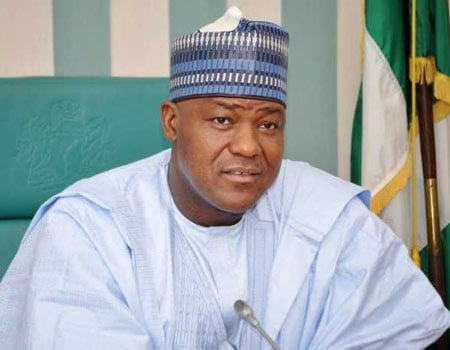
Before the passage of the bill, there was argument from the minority leader, Honourable Leo Ogor and Daniel Reyenieju on the need to consolidate all the bills on petroleum industry, but the Speaker, Honourable Yakubu Dogara said that the House would run into trouble because the Senate had passed PIGB, saying that, “we have agreed with the Senate that we will pass the PIGB.”
Honourable Monguno, in his lead debate said that the proposed bill would unbundle the NNPC and as well repeal the law governing the petroleum industry.
However, during debate, most members agreed that the bill will help to provide for a framework relating to oil producing communities’ participation, cost and benefit sharing among government, petroleum exploration companies and host communities and for related matters.
The Chairman, House Committee on Petroleum Upstream, Honourable Victor Nwokolo said that the bill, if passed, would restrict the power of the Minister of Petroleum to drive the polices for the oil and gas industry, adding that the office of the minister would be separated from regulation.
He also hinted that the bill seeks to create efficient and effective independent regulatory agency and promote effective policy making, regulation and commercial undertakings.
Honourable Nwokolo emphasised that the bill does not only seek to reform the Nigeria National Petroleum Corporation (NNPC), but also deregulate and liberalise the downstream petroleum sector.
The lawmaker pointed out that if passed into law, the bill will promote host community participation, create a conducive business environment and establish a progressive fiscal framework that promotes investment and enhances government revenue.
He explained that the bill also seeks to restrict the function of the minister to mainly policy making, diplomatic roles and general supervision.
He added that the oil sector is responsible for 80 per cent of government’s revenues shared by federal, states and local governments; 90 per cent of Nigeria’s foreign exchange earnings and 30 per cent of the GDP of the most populated African country.
According to him, Nigeria is endowed with about 37 billion barrels of crude oil and 187 trillion cubic feet of gas and currently rated as the sixth largest exporter of crude among OPEC members and seventh largest gas reserve in the world.
For Nigeria to maximise the huge reserve base/resource endowment as a major player among its peers, the lawmaker expressed optimism that the new legal framework will help to address issues bothering on extant obsolete legal framework, institutional decay/inefficient regulatory entities, decline revenue, Niger Delta crisis, among others.
He added that the bills, when passed into law, will bring government’s aspiration towards four million barrels per day (bpd) oil production, 40 billion crude oil reserve, power road map delivery, gas master plan delivery and robust, long term revenue stream to fruition.
On his part, the chairman, House Committee on Petroleum Downstream, Honourable Joseph Akinlaja said that, “the minister will be the general supervisor to drive the policies in the oil and gas sector,” adding, “this bill is to create institutions that will lead to efficiency in the oil industry.”
Honourable Akinlaja argued that time had indeed come for NNPC to be unbundled for optimal result.
Speaking on the governance aspect of the bill, the lawmaker stressed that there was need to create institutions in the oil and gas sector to drive the desired change.
On the aspect of the host community, Akinlaja expressed concern that the host community had been subjected to all manner of degradation and pollution as a result of gas flaring since the discovery of oil.
In his contribution, the House Minority Leader, Honourable Leo Ogor expressed delight that the bill captured all aspects of PIB and appealed to his colleagues to support it.
He noted that the bills provide deep analysis on how best to address the endemic challenges in the Nigeria’s oil and gas industry stressing that, that the bills specifically addresses issues on structural, governance, management and operational arrangements, control of oil blocks, decline and leakage of revenue accrued to government and provide enabling environment for investors and operators.
Speaking on the bill for memorandum on legal and regulatory framework, institutions and regulatory authorities for the Nigerian petroleum industry, to establish guidelines for the operation of the upstream and downstream sectors and for purposes connected with the same, Honourable Reyenieju observed that the unbundling of NNPC will provide opportunities for Nigerians to participate in the ownership of the new entities to be established.
On his part, Honourable Abiodun Adeola said history would not forgive them if they failed to pass the bill. He noted that a situation whereby NNPC remains the regulator and operator will not augur well for the oil industry.
The three bills scaled through second reading and was referred to House ad hoc committee on the PIB to be chaired by, the chief whip, Honourable Alhassan Ado Doguwa and other lawmakers representing different zones.
The chairman, House Committee on Financial Crimes, Honourable Kayode Oladele, who applauded the objectives of the bills, assured that the new laws which seek to unbundle NNPC will provide employment for teeming Nigerians and reduce the influx of expatriates who are currently employed to do jobs that average Nigerian experts can do as well as enhance technology transfer and industrial development of Nigeria.
Speaking with newsmen, during a pre-workshop before the passage of the split PIB, Honourable Nwokolo had said that, should the House pass its version of the PIB, it would be a major departure from the PIGB passed by the senate.
WATCH TOP VIDEOS FROM NIGERIAN TRIBUNE TV
- Relationship Hangout: Public vs Private Proposals – Which Truly Wins in Love?
- “No” Is a Complete Sentence: Why You Should Stop Feeling Guilty
- Relationship Hangout: Friendship Talk 2025 – How to Be a Good Friend & Big Questions on Friendship
- Police Overpower Armed Robbers in Ibadan After Fierce Struggle