
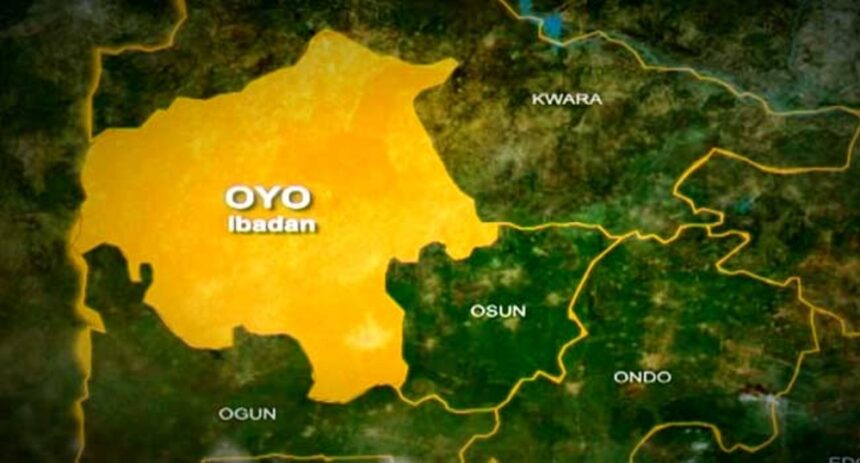
Executive Secretary of the Oyo State Primary Health Care Board (OYOPHCB), Dr Muideen Olatunji, said community involvement is one of the essential pillars of basic health care, and therefore the Primary Health Care (PHC) system cannot be fully effective or sustainable without people’s active participation.
Dr Olatunji spoke at the citizen’s townhall meeting on strengthening primary healthcare, organized by the National Primary Health Care Development Agency (NPHCDA) and the Centre for Communication and Social Impact (CCSI) in collaboration with the Oyo State Primary Health Care Board.
Olatunji, represented by Dr. Oluyemi Oshoko, the Health Board’s Director for Disease Control and Immunisation, stated that the government purposefully established a number of organisations, such as the Social Mobilisation Committee and Ward Development Committees (WDCs), to guarantee community participation in health governance.
“The WDCs are not mere observers; they participate in planning and decision-making. The WDC Chairman is a member of the Facility Management Committee that sits on the business plan of each health facility. This ensures that government resources are used to meet community needs,” he said.
According to Dr Olatunji, this structure has significantly improved service uptake because communities now see health projects as their and actively contribute to their success.
He declared the state’s resolve to further reduce maternal and infant mortality rates, noting that effective community engagement, coupled with quality service delivery, remains key to achieving this goal.
According to Olatunji, the state government has made large investments in health infrastructure under Governor Seyi Makinde’s leadership, including the revitalisation of 106 basic health care facilities to Level 2 and Level 3 PHCs to provide essential primary health care services throughout the state.
Dr Olatunji, however, urged community members to take ownership of health initiatives, adding, “These investments belong to the people. The government has made health services available, but it is the responsibility of the community to use them. Together, we can change the story of health and disease in Oyo State,” he said.
Representative of NPHCDA, Mrs Halima Yusuf said that stronger collaboration between government, communities, and stakeholders was vital to strengthen Nigeria’s primary health care system and ensure universal access to essential health services.
She called on community leaders, religious institutions, civil society organizations, and individuals to use their platforms to educate and mobilize Nigerians on the importance of utilizing available health services.
According to Yusuf, “Let us use our positions, our offices, and any space we occupy to educate others. Let people know that these services are available and free, and that using them benefits us all.
“A lot of people in our country do not have access to secondary or tertiary health facilities. If we do not strengthen primary health care, these people will have no access to health at all—and that would be a disaster,” she warned.
According to Ms. Ayomide Ladipo, a programmes officer at CCSI for Policy Advocacy and Communications Support for Primary Healthcare in Nigeria, the partnership’s goal is to increase citizens’ confidence and involvement in health care reforms by making sure that they accurately represent their needs and difficulties.
“One of the reasons why we are having this town hall today is to ensure that citizens are fully aware of the government’s efforts in improving primary health care delivery and to give them the platform to provide feedback on their experiences at health facilities,” she said.
Speaking at the event, Mr Olaoye Olarinde, the State Health Promotion Officer for OYOPHCB, said the meeting was convened to provide a platform for citizens and community representatives to share their experiences, concerns, and expectations regarding the state’s health system.
According to him, one of the main subjects under investigation is the consequences of recent expenditures in the health sector, including staff and infrastructure.
Olarinde said the feedback gathered will also help the government determine which areas need more funding, which facilities require additional personnel, and what kind of training the health workers might need.
WATCH TOP VIDEOS FROM NIGERIAN TRIBUNE TV
- Relationship Hangout: Public vs Private Proposals – Which Truly Wins in Love?
- “No” Is a Complete Sentence: Why You Should Stop Feeling Guilty
- Relationship Hangout: Friendship Talk 2025 – How to Be a Good Friend & Big Questions on Friendship
- Police Overpower Armed Robbers in Ibadan After Fierce Struggle


