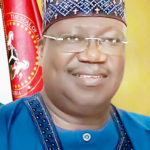
PRECISELY, on December 23, 2001, the nation lost one of its brightest and charismatic politicians, Chief Bola Ige. He fell to the bullets of suspected assassins that invaded his private residence in Bodija, Ibadan, the Oyo State capital. His assassination shook the whole country and beyond, entire world, having been the number one law officer of Nigeria.
A man highly gifted with a sense of humour, Ige was a lawyer, teacher, administrator, politician and speaker who communicated in flawless English Hausa and his native Yoruba language. A crowd-puller with a powerful oratory power, his presence at most gatherings, not necessarily political, always made a difference, as he often held audience spellbound. Ige, otherwise called the Kaduna Boy, was ever blunt on issues but refined in character, polished in language and excellent in the deploying epigram and anecdotes.
As one of the core disciples of the late chief Obafemi Awolowo, he featured prominently in the then Action Group and the Unity Party of Nigeria (UPN), ably led by Awo. Called the Cicero of Esa-Oke, because of his cerebral prowess Ige was governor of the old Oyo State, deputy national leader of Afenifere and sought the presidential ticket of the once vibrant Alliance for Democracy (AD) which he led others to form at the last minute after they rejected association with the Peoples democratic party (PDP) and the All Peoples Party (APP). He is believed to have played a leading role in writing the constitutions of all the three major parties that eventually dictated the political scene at the inception of civil rule in 1999.
His assassination and investigation
The scope of the theories behind his assassination has continued to expand over the years, ostensibly because of the perceived inaction of the appropriate authorities. One of the hypotheses is that he may have stepped on toes in his deliberate moves to end the era of business as usual in the country, which a cabal deeply entrenched in the establishment could not tolerate. The other theory is that some powerful forces perceived a few progressive ideas, policies and programmes Ige introduced in form of reforms in the judiciary and power sector as an affront. The success of such reforms will bring an end to general impunity. There was yet the theory that a few elements that usually held the then presidency hostage felt threatened by a non-member of the clique perceived as becoming too close to the seat of power. The belief in a few circles was also that Ige was a victim of the powerful power play in the ruling party, who believed he wielded an awesome influence and control in the PDP presidency, though Ige was among the arrow heads that birthed the party in 1998 prior to party registration. .
In the opinion of most concerned individuals and groups over the endless search for the killers of Ige, the theories almost lend credence the manner the investigations into his assassination was carried out. This is because in spite of repeated assurances, the government has moved in circles over its promises to track those who killed the Cicero of Esa Oke. The lackadaisical attitude has crystalised in the serious allegation of official complicity in the gruesome murder of the number law officer of the country and under a civilian administration.
Another factor that many usually cite as lending credence to the theory of complicity is the shoddiness in the investigation of his assassination. Both local and international bodies have continued to question the way it was conducted and raised sundry questions on why it is ridden with puzzles and loose ends. Relatedly, there is the assumption that the government lacked the political will to go the full hog of getting to the root of the case.
In the wake of heightened public expectations on the search for the suspected killers of the former minister, Wikileaks had reported that poor investigations by team assigned by the Nigeria Police to handle the matter. Quoting a cable reportedly forwarded by the then United States Ambassador to Nigeria, Howard Jeter, the investigators were described as being ill-equipped and under-trained to handle such a high-tech crime. .The cable read, inter alia, “There has been little progress in solving the December 23 murder of Attorney General Bola Ige. A frank meeting with the head of the police investigation found a group of under-trained and ill-equipped investigators struggling with a complex criminal investigation.”
Public concern
Nobel Laureate, Professor Wole Soyinka had spoken for the umpteenth time on the lacklustre attitude of the authorities on the imperative of fishing out the killers of Bola Ige, as well as other victims of assassinations in the country. Such casualities include Dele Giwa (1986); Alfred Rewane (1995); Bagauda Kaltho (1996); Kudirat Abiola (1996); MKO Abiola (1998); Barnabas Igwe and Abigail, his wife (2002); Marshall Harry (2003); Aminosari Dikibo (2004); Hassan Olajoku (2005); Ayodeji Daramola (2006); Funsho Williams (2006); Dipo Dina (2010); Olaitan Oyerinde (2012) and recently, Mrs Funke Olakunri (2019). “If we do not solve some of these murders, we cannot get into the heart, into the core of the corruption in this country and this involves also the authorised and constitutional agency of open society such as the judiciary,” Soyinka said.
Similarly, a former Secretary to the Government of the Federation, Chief Olu Falae, once expressed concern that there was no headway yet on the killers of the former minister, describing his own abduction by suspected herders some time ago as an affront to the nation. “I am sad that Ige’s killers have yet to be found. He was the Minister of Justice and up till today his death has yet to be resolved. The Federal Government should intensify efforts at resolving the mysteries behind this murder and, most importantly, bring the murderers to book. This is the only way we can forestall further political murders,” Chief Falae said.
A former governor of Kaduna State, Balarabe Musa, is equally awed by the official inaction over the murder of Ige and contends that most political crimes in Nigeria were unresolved because of corruption, coupled with complicity by some government officials.
The opinion of Balarabe resonated with the view expressed by the radical politician and lawyer, Dr. Tunji Braithwaite, shortly before he passed on, on the killing of Ige. He had warned that, “Unless we break that chain and introduce drastic punishments, political crimes would continue to be perpetrated.”
An expert on international relations, Bola Akinterinwa, had also then cautioned: ‘’If Bola Ige, the nation’s chief law officer, could be killed that way, then there is a serious problem in this country, which the government urgently needs to tackle.’’ On his part, a former Minister of Foreign Affairs, Professor Bolaji Akinyemi has echoed a similar fear on the state of insecurity. He had quipped: ‘’If Bola Ige can be killed like that, who then is safe?’’
A Senior Advocate of Nigeria (SAN), Prince Lateef Fagbemi (SAN), was a close associate of Ige. He led the legal battle to unravel the riddle over the murder of the former minister. According to Fagbemi, the judiciary should not be blamed for the way the matter concerning the quest to fish out the killers of Ige had been handled. “When you talk of criminal justice system and prosecution of accused persons, it is like a relay race. The judiciary is at the last leg of that relay race. If the first two or three legs have spoilt the relay, there is very little that the fourth man can do. Before you go to court, you must have conducted investigation, do forensic analysis where necessary, marshal your witnesses. It is all these that you put before the court,” he said an interview some time ago.
The present Minister of State for the Niger Delta, Festus Keyamo played a crucial role in the eraly struggle to unveil the suspected killers of Ige. During one of the events to drive home the need to track the killers of ige, he canvassed for an independent body to be in charge of appointing police chiefs in order to avoid undue political interference, while the office of the Attorney General should be separated from the Minister of Justice so that the fromer could be independent to investigate and prosecute any case.
Outspoken politician, Senator Shehu Sani also accused the authorities of paying lip service to the search for the killers of Ige. His words: “There is a strong evidence of state’s participation in the murder of Bola Ige based on the fact that the suspects were shielded and promoted.”
Issue of patriotism
The perceived levity with which the government has handled the killing of ige in particular has culminated in an intense discourse on the issue of patriotism, with a number people wondering if Nigeria is worth dying for. Ige was among the few leaders that openly confronted the military establishment for annulling Nigeria’s freest and fairest presidential poll. He was not cowed by the Machiavellian antics of the military, which incarcerated him during the struggle he and other handful politicians in the National Democratic Coalition (NADECO), Afenifere, other prodemocracy and rights groups led. He staked all his fundamental freedoms, professional expertise, and indeed, his entire life in the struggle for the emancipation of the people from injustice and subjugation and neocolonialism.
WATCH TOP VIDEOS FROM NIGERIAN TRIBUNE TV
- Relationship Hangout: Public vs Private Proposals – Which Truly Wins in Love?
- “No” Is a Complete Sentence: Why You Should Stop Feeling Guilty
- Relationship Hangout: Friendship Talk 2025 – How to Be a Good Friend & Big Questions on Friendship
- Police Overpower Armed Robbers in Ibadan After Fierce Struggle