In this piece, JOHN AMEH examines the ongoing moves by the National Assembly to establish development commissions for the six geopolitical zones and the implications for the age-long agitation for restructuring and regionalism.
ON February, 22, the Senate performed one of its primary duties –lawmaking. It considered and approved in the Committee of the Whole, the South East Development Commission (SEDC) Bill, 2024. Ordinarily, that step would have gone unnoticed as a routine work of the legislature, which every other day, passes one piece of legislation or another. But, not this one. Why?
There are wider implications for the entity called Nigeria. The bill, upon securing a presidential assent, will create a commission to take charge of the rehabilitation and provision of infrastructure in the South-East geopolitical zone of the country. The zone is the enclosure of Anambra, Abia, Imo, Enugu and Ebonyi States, or better still, the former Eastern Region.
The action of the Senate was a concurrence, to give its nod to the bill and thereby fulfilling the constitutional requirement of receiving the blessing of both chambers of the National Assembly. It was originally a House of Representatives bill, the House having long passed it, forwarded it to the upper arm of the bi-camera legislature for concurrence, a role the Senate performed on February, 22.
This time round, the lead sponsor was the Deputy Speaker of the House, Hon. Benjamin Kalu. But, there were others before him, who also initiated and pushed for this bill. In the Ninth Assembly (2015-2019), Honourable Chukwuka Onyema, then representing Ogbaru Federal Constituency of Anambra State, and others, co-sponsored the bill, but it suffered hiccups and later got truncated.
The background to this bill and the supporting argument, remains the same today as it was in the earlier version -that the Nigerian Civil War (1967-1970), left in its aftermath, devastation in the South-East as could be seen in the loss of not just human lives but also nearly every notable infrastructure. That a special vehicle or some organ like the proposed commission, should be set up by the Federal Government to fully rebuild or reconstruct the region and give its people a sense of belonging and oneness with the rest of Nigeria.
This agitation was fuelled more by the fact that the North-East, which came under the claws of Boko Haram terrorists, worsening from around 2014, a more recent development, quickly got a North East Development Commission to oversee its rehabilitation and resettlement of displaced communities. Questions then began to be asked how the South-East, which presumably suffered heavier losses decades earlier, did not have any such government organ established to oversee its rebuilding? So, with sustained pressure and using the reason aforementioned, a commission birthed for the south-east, at least from the angle of the National Assembly for now.
Also Read: FG to establish 24 skills, innovative centres
The proposed commission, according to the bill, will perform functions, including “conceive, plan and implement, in accordance with the set rules and regulations, projects and programmes for the sustainable development of the South East States in the field of transportation including roads, health, education, employment, agriculture, industrialization, housing and urban development, water supply, electricity and telecommunications; cause the South-East States to be surveyed in order to ascertain measures which are necessary to promote its physical and socio-economic development.
“Implement all the measures approved for the development of the South East States by the Federal Government and the member States of the Commission; identify factors inhibiting the development of the South East States and assist the member States in the formulation and implementation of policies to ensure sound and efficient management of the resources of the South East states; assess and report on any project being funded or carried out in the South-East States by mineral extracting and mining companies, oil and gas producing companies, and any other company including non-governmental organisations and ensure that funds released for such projects are properly utilised.”
It is also to “tackle ecological and environmental problems that arise from the extraction and mining of solid mineral, exploration of oil mineral in the South-East States and advise the Federal Government and the member states on the prevention and control of oil spillages, gas flaring and environmental pollution; liaise with the various solid mineral extraction and mining companies and oil and gas prospecting and producing companies on all matters of pollution prevention and control; and execute such other works and perform such other functions which, in the opinion of the Commission, are required for the sustainable development of the South-East states and its peoples.”
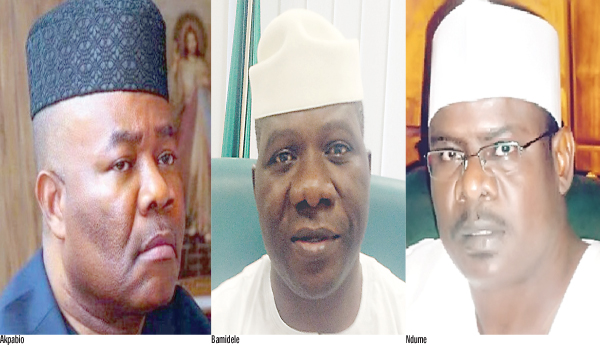
Speaking after passing the bill, the President of the Senate, Senator Godswill Akpabio, said, “It’s a very important bill passed by this 10th Senate, this bill addresses all the fears of our brothers and sisters from the South-East. I want to say congratulations. I pray this commission will bring a lot of development to Sout- East and we will assist you to stop any form of agitation and bring peace to your region. When harmonised, it will address the fears of the south-east.”
Yet, there are interesting twists. In the same week, the Senate also passed for second reading, two other similar bills -South-West Development Commission Bill, 2024; and North-Central Development Commission Bill, 2024. On the same date that the South-East bill was approved, the Senate equally did the first reading of the South-South Development Commission Bill, 2024! Recall that since 2000, there has also been in existence, the Niger Delta Development Commission (NDDC).
The promoters of the South-South Development Commission argue that while the NDDC takes care of the development of the nine oil-producing states, the former will oversee the provision of infrastructure strictly in the South-South states of Rivers, Edo, Delta, Akwa Ibom, Cross River and Bayelsa. It got merrier when North-West lawmakers also pushed for a North-West Development Commission Bill!
What does all this mean for Nigeria? Is this a reversal to regionalism? Or, has the agitation for restructuring finally got listening ears in the right quarters? Before the General Yakubu Gowon administration dissolved them and created 12 states, Nigeria had four regions – Northern Region; Western Region; Eastern Region; and Mid-Western Region -with strong governments, while the federal or central government took care of the centre, dishing out policies of general outlook, defence, among others.
By the definition of their composition and functions, all the commissions will be doing the same work as spelt out in the case of the SEDC Bill above. From the defunct four regions, will Nigeria now revert to six regions with each of the six geopolitical zones having a commission to take care of its growth and development? Looking at the elaborate roles spelt out for the SEDC, which is replicated by the legislation of all other commissions (both proposed and existing), what other responsibilities will be left for the states and governments in the zones as well as the federal government? Is this a way of admitting indirectly that Nigeria’s unitary federalism is no longer useful or not adequately meeting the yearnings and aspirations of her people?
Incidentally, between May and June 2021, the 9th House of Representatives under the leadership of the indefatigable Rep. Femi Gbajabiamila, held a National Security Summit at the height of the attacks by Boko Haram insurgents and widespread security challenges in the country while former President Muhammadu Buhari was in charge. The lawmakers, at the end of deliberations, actually recommended development commissions for Nigeria in its geopolitical zones to fast-track development by rapidly addressing poverty, unemployment, poor infrastructure, healthcare reforms, provision of educational services, among others. Thus, these commissions have been long in preparation to sprout.
According to Chief Moshood Erubami, what is happening at the National Assembly in the name of development commissions, if it pulls through, is “restructuring in disguise, in style.” Erubami, who is the president of the Nigerian Voters’ Assembly, observed that after many years of opposing restructuring, it was now being embraced through the back door. He explains: “The agitation for restructuring, which has been rejected over the years, is what they are now bringing in style, using development commissions all over the zones, even though we have not legally accepted that we have zonal arrangement in Nigeria.
“Now that they are coming by way of development commissions, all the zones will stand to benefit. There is nobody in the National Assembly who will be against citing one in their own zone.
“Once it becomes acceptable to all, restructuring is coming in gradually. Agitation for restructuring has been on for many years in the present democratic dispensations from the national conferences held under former President Olusegun Obasanjo up to the time of former President Goodluck Jonathan in 2014, restructuring has been on the front burner. It failed before now because certain elements in the North were against it.”
He further held the view that even the North had realised how much it had suffered by being lethargic in the past. He adds: “In 2014, the Jonathan conference gave the country the best in terms of restructuring, but unfortunately he left it in the cupboard and never implemented the report. What is happening now is good for the country; for example, state police has been part of the agitation for restructuring, even though it will not wholly solve the problem of insecurity.
“The North too has now realised that their opposition over the years to some of these important changes has made the zone to suffer the consequences more.”
But, a development expert, Dr. Rabiu Sarajo, warns of the implications of setting up five or more development commissions as a “contraction of the government’s acclaimed commitment to reducing the cost of governance.”
“Creating commissions is another opening for more budget heads through which public funds will be frittered away and corruption entrenched.
“It’s going to be another behemoth existing side-by-side with the federal government and the state governments in the zones.
“We are aware of the issues of accountability and transparency with the NDDC and similar agencies,” he said
Sarajo advised President Bola Tinubu, not to append his signature to the bills if they finally reached his desks, as the commissions would merely expand public expenditure and push Nigeria further down the debt drain. He stated: “What Nigeria needs more is efficient management of scarce resources and a leadership that is sincere to the people by initiating and implementing policies that will tackle unemployment, poverty, insecurity and place the economy on the path to recovery. I will advise Mr President not to sign these bills.”
The bills are still work in progress. When passed by both chambers of the National Assembly, presidential assent is a mandatory requirement of the constitution for the commissions to be created, except of course if the Legislature opts to override the President’s refusal to append his signature to the bills as was the case with the NDDC in 2000.
WATCH TOP VIDEOS FROM NIGERIAN TRIBUNE TV
- Relationship Hangout: Public vs Private Proposals – Which Truly Wins in Love?
- “No” Is a Complete Sentence: Why You Should Stop Feeling Guilty
- Relationship Hangout: Friendship Talk 2025 – How to Be a Good Friend & Big Questions on Friendship
- Police Overpower Armed Robbers in Ibadan After Fierce Struggle