
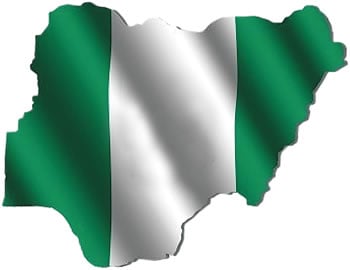
Nigeria kicked off as a country of high promise with great expectations at independence from Britain in October 1960. That was eons ago. The imperialist British parliamentary system soon whirled the young nation on its axis from tumult to civil war in just the first seven years. Since then, the American presidential system has proved unwieldy in the hands of vacuous Nigerian politicians.
The merging of three major ethnic nations with 350 other ethnic minorities has continued to dog the national spirit. The primordial regional lines have today become burning fault lines, with Boko Haram savages scorching the North, separatist movements in the South East broiling the federation on the Biafra grill, self-destruct militias ruthlessly torching the restive crude oil laden deltaic swamps of the South South and relentless cacophony for regional autonomy sweltering in the South West. Fifty-six years later, Nigeria is chin deep in the quicksand of self-determination. Nothing works, as the country continues to dangle precipitously from one cliff to another, on bated breath.
Members of the American Republican Party would go into seizures at the sight of the government size in Nigeria. In spite of its high population density, the Nigerian political structure has become thoughtlessly over-engineered, going from four regions at independence, to 36 states and a federal capital territory. A puny country about the size of Texas runs the world’s most expensive political system with 36 state governors plus staff and full cabinet of about 40 state commissioners and special advisers in each state, varying number of parastatals (government institutions) on top of the ministries in each of 36 states (Lagos State has 89 parastatals) plus staff, 36 state deputy governors plus staff, some 35-member lawmakers assembly in each of 36 states plus staff, 360 federal house of representatives plus staff, 109 federal senators plus staff, 774 local government chairmen plus staff, one executive president plus staff and cabinet of about 50 federal ministers and special advisers, one executive vice president plus staff, one US Washington DC type federal capital territory with its staff and institutions, ad infinitum.
Outside of this senseless administrative pyramid are millions of village heads, hundreds of thousands of district heads and thousands of city kings, all equally biting a good slice off of the GDP in annual salaries but functioning as lame duck subordinates in running the nation state. Village heads, district heads and kings used to be the administrators of our system before the Europeans came to Africa. Somehow, we missed incorporating them into our post-colonial systems at independence. Now, they just exist as rudiments of past civilisations within a new order. The results are systemic waste, incompetence and arrested development.
Oil is only 13 percent of Nigeria’s GDP, but it accounts for 70 percent of government revenue and 95 percent of export income. The remaining 87 percent of the GDP, which is more stable and under local control, remains treacherously abandoned and non-contributory to national income. It is worse than that. Nigeria did not make hay while the sun shone. When crude was $110 a barrel, Nigeria did not save, Nigeria borrowed. When the crude drum tanked to $28, Nigeria plunged into a $7 billion budget deficit and borrowed more.
The Federal Government takes 52 percent of total national revenue and shares the remaining 48 percent among the states. Beyond that, there is no synergy between the two levels of government. Governance is typically a one man show by whims and caprices of the governor in the state, but the FG has neither oversight nor control over how the monthly disbursements to the states are spent.
The Nigerian political leadership at both the federal and state governments recklessly spend a majority of the country’s national revenue on recurrent expenditures (salaries, allowances, traveling, training, food, among others, which consume. They spend less than 10 percent on capital infrastructures (roads, power, rail, housing, among others, which actually create jobs and grow the economy. Now in the second year of its first four-year term, the current government is struggling to raise capital spending to 30 percent.
Most of the states are not viable. A total of 27 of the 36 states are unable to pay salaries, leading to arrears of up to 14 months in some. Even the FG spends upwards of N165 billion on payroll every month. Both FG and state governments borrow and sell junk bonds just to pay salaries. As expected, the civil service work force is mindlessly over bloated. In a country that imports everything from crayon to refined petrol, the government is the number one employer. The private sector is primarily floated and fed by largess from corrupt government patronage, so its work force is largely unreliably a dot-com economic sector.
Education, the main plank for development is in shambles, the street unemployment figure hovers near 90 percent. Access to good healthcare is near zero to most citizens, and Nigeria, as it is, is not working out. It has proved incapable of exploiting the enormous assets of its rich diversity, it is sinking carrying the weight of its variety and unable to make genuine progress. What a shame!
- Dr Salako, a frontline social critic and commentator, lives in Boston, USA.
WATCH TOP VIDEOS FROM NIGERIAN TRIBUNE TV
- Relationship Hangout: Public vs Private Proposals – Which Truly Wins in Love?
- “No” Is a Complete Sentence: Why You Should Stop Feeling Guilty
- Relationship Hangout: Friendship Talk 2025 – How to Be a Good Friend & Big Questions on Friendship
- Police Overpower Armed Robbers in Ibadan After Fierce Struggle


