Tribune OnlineTribune OnlineTribune Online
  • Home
  • News
  • Columns
  • Editorial
  • VIDEOS
  • Entertainment
  • Politics
  • Health
  • Opinions
  • SPORTING TRIBUNE
Reading: How NATO 2% debate misses key factor – Study
Share
Notification Show More
Font ResizerAa
Tribune OnlineTribune Online
Font ResizerAa
  • Home
  • News
  • Columns
  • Editorial
  • VIDEOS
  • Entertainment
  • Politics
  • Health
  • Opinions
  • SPORTING TRIBUNE
  • About Us
  • Contact us
  • Disclaimer
  • Privacy Policy
  • Advertise
Have an existing account? Sign In
Follow US
© 2026 African Newspapers of Nigeria Plc. All Rights Reserved. | Disclaimer | Privacy Policy | Editorial Policy | Corrections Policy | Terms & Conditions
Home » How NATO 2% debate misses key factor – Study
Latest News

How NATO 2% debate misses key factor – Study

Bioluwatife Akinyemi
January 12, 2026
Share
Russian lawmaker suggests kidnapping,
Add as a preferred source

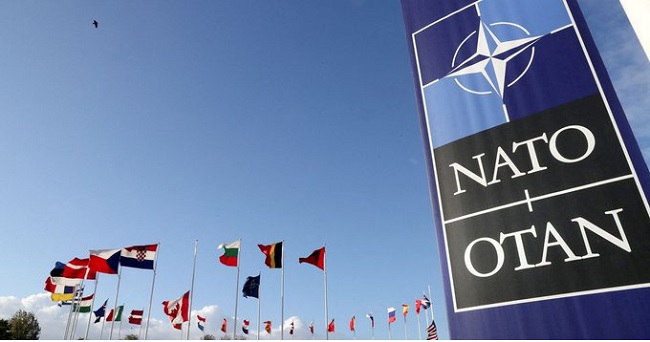
As security pressures rise across Europe, the North Atlantic Treaty Organization’s (NATO) defence spending debate has returned to the spotlight. Russia’s war in Ukraine and renewed allied pressure have brought defence commitments back into sharper focus.

A recent study by researcher Fidelis David offers a different explanation for why NATO member states vary widely in defence spending levels. Published in Contemporary Security Policy, the co-authored research argues that the long-running debate over NATO’s 2% benchmark may not be fully explained by threat exposure or economic capacity alone.

The study comes at a time when disagreements over alliance burden-sharing continue to shape transatlantic politics. In recent months, the United States has again urged European allies to increase their defence contributions amid the continuing war in Ukraine and broader strategic competition. Within that debate, the research suggests that focusing only on the 2% target may overlook the wider political logic influencing how allied governments make spending decisions.

The article examines defence spending patterns across NATO member states in the years following the 2014 Wales Summit, where allies formally pledged to move toward spending 2% of GDP on defence. Although the pledge was intended to strengthen burden-sharing, many allies remained below the benchmark even as the security environment became more challenging. The study argues that this variation cannot be fully understood through threat perception and economic strength alone.

Instead, the research suggests that defence spending also performs a signaling function within the alliance. According to the study, allied governments do not allocate resources solely in response to external threats or domestic economic conditions. They may also use defence budgets to communicate commitment, reliability, and political alignment to fellow alliance members and important external audiences.

Drawing on panel data from NATO member states between 2014 and 2022, the study finds that allies receiving greater material support from the United States tended to increase defence spending, partly as a way of signaling loyalty and commitment to the alliance’s central security partner. It also suggests that states embedded in denser international institutional networks often face stronger reputational incentives to demonstrate reliability through visible fiscal effort. In addition, allies with deeper and longer-standing positions inside NATO may experience greater internal pressure to show commitment through defence spending.

The study therefore questions conventional burden-sharing arguments that treat defence expenditure mainly as a product of wealth, threat, or free-riding incentives. Rather than viewing military spending purely as a strategic response to danger, the research presents it as part of a broader political process in which alliance members use spending decisions to manage credibility and relationships within the alliance.

The findings also speak to a wider policy question facing governments participating in security partnerships while balancing domestic spending pressures. In that sense, the research suggests that defence spending is not only about military preparedness. It may also reflect how states position themselves politically within alliances and how they seek to be perceived by allies, strategic partners, and the broader international system.


WATCH TOP VIDEOS FROM NIGERIAN TRIBUNE TV

  • Back to School, Back to Business A Fresh Start

  • Relationship Hangout: Public vs Private Proposals – Which Truly Wins in Love?

  • “No” Is a Complete Sentence: Why You Should Stop Feeling Guilty

  • Relationship Hangout: Friendship Talk 2025 – How to Be a Good Friend & Big Questions on Friendship

  • Police Overpower Armed Robbers in Ibadan After Fierce Struggle


    Get real-time news updates from Tribune Online! Follow us on WhatsApp for breaking news, exclusive stories and interviews, and much more.
    Join our WhatsApp Channel now


Previous Article Fayose’s aide tackles Ekiti PDP Current PDP situation embarrassing, Ekiti PDP strategising, Fayose money laundering 2027: What will happen if ADC fails to field Obi as flagbearer – Ayo Fayose
Next Article Carter Efe, baby mama clash over relationship, career claims

Most Read

  • Opay to customers: How to check eligibility for FG’s N50,000 cash support
    Opay to customers: How to check eligibility for FG’s N50,000 cash support
  • FULL LIST: Nigerian-Americans who won US mid-term elections
    FULL LIST: Nigerian-Americans who won US mid-term elections
  • FULL LIST: Identities of nine victims killed in Florida jet crash revealed
    FULL LIST: Identities of nine victims killed in Florida jet crash revealed
  • We must give our children confidence, capability to be part of digital future — Awolowo Dosumu
    We must give our children confidence, capability to be part of digital future — Awolowo Dosumu
  • UPDATED: Trump blames Iran for US midterm election results
    UPDATED: Trump blames Iran for US midterm election results
  • DEVELOPING: Trump's party suffers defeat as Democrats take control of US Congress
    DEVELOPING: Trump's party suffers defeat as Democrats take control of US Congress
  • Elon Musk jokes about Republican’s midterm election loss
    Elon Musk jokes about Republican’s midterm election loss
  • 2027 and the electoral fortunes of Nigeria (1)
    2027 and the electoral fortunes of Nigeria (1)
  • Nigeria registers 3,500 firms, 20,000 products under ETLS — Minister
    Nigeria registers 3,500 firms, 20,000 products under ETLS — Minister
  • Emir Sanusi X-rays Tinubu’s govt
    Emir Sanusi X-rays Tinubu’s govt

Frontpage Today

Subscribe to e-Paper

E-Vending, e paper, pdf, e-paper, Tribune
QUICK LINKS

About Us
Advertise with Us
Contact Us
Privacy Policy
Disclaimer
Editorial Policy
Corrections Policy
Terms & Conditions
COLUMNS

Aplomb
Ask The Doctor
Autoclinic With The Mechanic
Awo's Thought
Empowered For Life
Festus Adebayo's Flickers
Gibbers
Intimacy
Language & Style
Leadership & Management
Lynx Eye
Monday Lines
Mum & Child
Natural Health
Notes from Atlanta with Farooq Kperogi
On The Lord's Day
Your Life Counts

ENTERTAINMENT

Entertainment

RELIGION

Tribune Church
Church News
Muslim Sermon
Eye of Islam
Islamic News

EDITORIAL

Editorial
Opinion
Letters
News Extra

BUSINESS

Capital Market
Money Market

REGIONS

Niger Delta
Arewa
MORE

Sexuality & Health
Special Report
Sports
Tourism
Travelpulse & MICE
Weekend Lagos
Book Review
Education
Event Digest
Crime & Court
Ecoscope
Energy
Maritime
Aviation
Brands & Marketing
Agriculture
Info Tech
Labour
Leadership & Management
Arts & Culture
Arts & Reviews
Politics
Health News
© 2026 African Newspapers of Nigeria Plc. All Rights Reserved. | Disclaimer | Privacy Policy | Editorial Policy | Corrections Policy | Terms & Conditions

Add Tribune Online to your Homescreen!

Add
Welcome Back!

Sign in to your account

Username or Email Address
Password

Lost your password?