
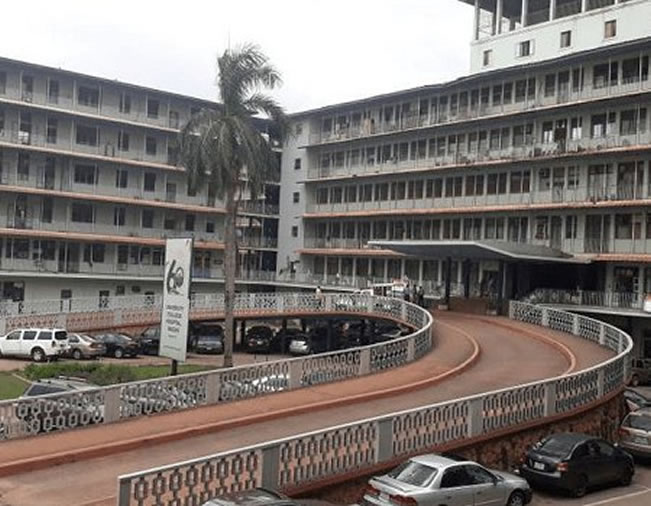
THE Association of Moremi Women of Southern California has donated a 10.2 kVA solar inverter system to the School of Nursing at the University College Hospital.
Speaking at its commissioning at the School, President of the Association of Moremi Women, Southern California, Mrs Taiwo Fanu, explained that the decision to support UCH was driven by its long-standing role in serving ordinary Nigerians, particularly underserved populations.
“UCH has been here forever, and it serves the people who need care the most. Not everyone has equal access to quality healthcare,” she noted.
She encouraged greater participation in community-driven initiatives, stressing that sustainable progress requires collective effort.
The Solar Project Advocate, Mrs Victoria Arigbabu, called on alumni and stakeholders to take greater responsibility in supporting healthcare education, recounting how a simple idea grew into a major solar energy project for the institution.
Arigbabu, who also serves as a past president of the Association of Moremi Women, described the project as a personal mission rooted in gratitude and giving back. She urged individuals not to ignore institutional needs but to act where they can make a difference.
“The government cannot do it alone. The administration cannot do it alone. Alumni must step in,” she said.
Arigbabu explained that the idea for the solar project emerged from her regular visits to the school and her desire to contribute.
She challenged both alumni and current students to remain committed to the institution, stating that no contribution is too small to make a difference.
The Chief Medical Director of University College Hospital (UCH), Professor Jesse Otegbayo, described the development as “a significant milestone” in improving the learning environment through sustainable energy solutions.
In a blunt assessment, the UCH boss underscored the severity of electricity shortages, stating: “Electricity is our number one challenge. The second is energy. The third is power. The fourth is light.”
He explained that while the repetition may sound rhetorical, it reflects the critical dependence of modern healthcare on reliable electricity.
READ ALSO: Insecurity, enemy of development — Tinubu
According to him, the situation is not unique to UCH but affects all tertiary hospitals nationwide, although the scale is larger in Ibadan due to the hospital’s size and legacy infrastructure.
Otegbayo revealed that much of UCH’s electrical infrastructure dates back to its commissioning in 1957, with some systems installed as early as 1952. He cited the deterioration of underground cables and frequent faults disrupting power distribution.
“The bigger the institution, the bigger the challenge,” he said, stressing that government funding alone is insufficient to address the scale of required upgrades.
The CMD commended the contribution of the Association of Moremi Women of Southern California and the School of Nursing alumni for funding the project.
He explained that alumni-driven development is the backbone of leading global institutions, citing examples such as Harvard University and Johns Hopkins University.
Otegbayo urged a shift from reactive fundraising to long-term endowment strategies, where funds are invested and returns used for institutional development.
Looking ahead, the CMD disclosed that UCH requires about 2.5 megawatts of power to fully support its clinical and academic operations.
WATCH TOP VIDEOS FROM NIGERIAN TRIBUNE TV
- Relationship Hangout: Public vs Private Proposals – Which Truly Wins in Love?
- “No” Is a Complete Sentence: Why You Should Stop Feeling Guilty
- Relationship Hangout: Friendship Talk 2025 – How to Be a Good Friend & Big Questions on Friendship
- Police Overpower Armed Robbers in Ibadan After Fierce Struggle


