
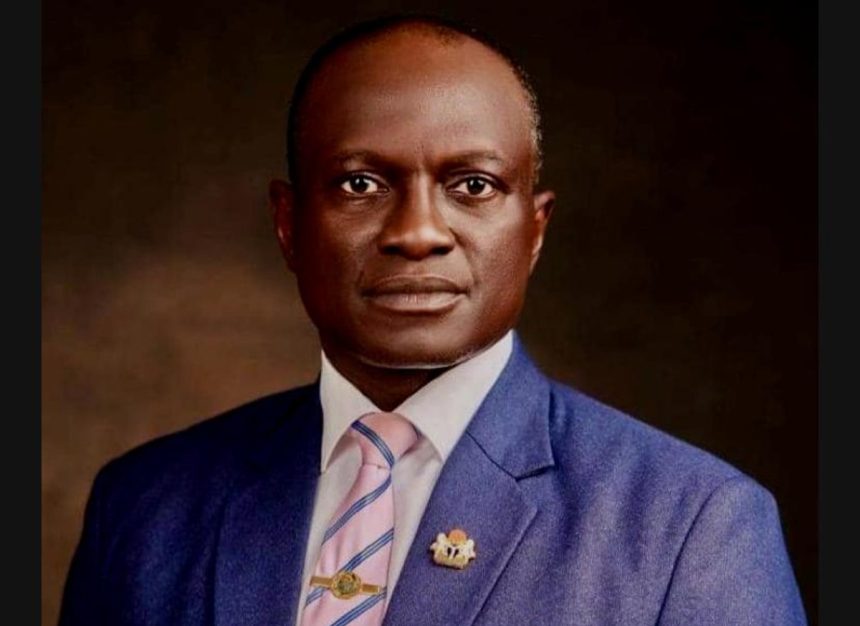
The Federal Government has secured 2,512 convictions in terrorism-related trials since the commencement of mass prosecutions in 2017, with 791 convictions recorded during the latest phase, the National Coordinator of the National Counter Terrorism Centre (NCTC), Maj.-Gen. Garba Adamu Laka, has said.
Laka disclosed this in Abuja on Tuesday while briefing journalists on the outcome of the 11th phase of terrorism trials conducted at the Federal High Court between October 15 and 24.
He said the latest phase handled 1,069 cases across 10 courts, resulting in 791 convictions, seven acquittals, 41 discharges, four cases struck out, and three withdrawn.
According to him, 211 cases were adjourned, 11 remained pending, while one was classified under another category.
He explained that the first 10 phases had produced 1,721 convictions, bringing the cumulative number to 2,512.
Laka described the outcome as evidence of the government’s commitment to accountability for terrorism-related offences and strengthening the administration of criminal justice.
ALSO READ: Senate seeks renegotiation of Nigeria-China BASA to allow direct flights into China
He cited the conviction and death sentence imposed on Suleiman Abu for membership of Boko Haram and participation in attacks on military facilities and civilians as one of the significant outcomes of the latest phase.
He said the attacks resulted in deaths and serious injuries, adding that the judgment demonstrated that perpetrators of terrorism would be held accountable where their guilt was established beyond reasonable doubt.
Nigeria has battled the Boko Haram insurgency for more than 15 years, resulting in thousands of deaths, widespread displacement and the destruction of property worth billions of naira.
In response, the Federal Government has combined military operations, intelligence gathering, arrests and prosecutions to weaken terrorist networks, recover territories and bring suspects to justice.
The government commenced mass trials of terrorism suspects in October 2017 as part of efforts to ensure accountability.
Laka, however, stressed the importance of judicial independence, constitutional rights and due process in determining and enforcing court decisions.
He disclosed that 201 terrorism financing cases were also handled during the latest phase, describing the disruption of financial networks supporting terrorist activities as central to the country’s counterterrorism strategy.
According to him, such networks provide resources for weapons procurement, recruitment, movement and other operational activities of terrorist groups.
He said the government would strengthen cooperation among investigative, prosecutorial, financial intelligence and other relevant institutions to identify and dismantle the networks.
The NCTC coordinator also called for sustained support for victims and survivors of terrorism through rehabilitation, psychological assistance, access to justice and the restoration of affected communities.
He said witnesses and victims required adequate protection against intimidation, threats and reprisals to enable them to participate safely in investigations and prosecutions.
Speaking on the prosecution of terrorist collaborators, the Director of Legal Services, Office of the National Security Adviser (ONSA), Zakari Mijinyawa, said the Terrorism Prevention and Prohibition Act, 2022, provided for a broad range of offences beyond direct participation in terrorist attacks.
He explained that the law covered preparatory offences, providing support to terrorism, financing, facilitating terrorist activities, and other forms of collaboration.
Mijinyawa said individuals and organisations could face prosecution for knowingly supporting terrorists, even where such assistance did not directly result in an attack.
He cited the prohibition of support for terrorism, which attracts a minimum 20-year prison sentence, as well as the offence of renting property to terrorists.
On the rights of defendants, the Director of Public Prosecution at the Federal Ministry of Justice, Rotimi Oyedepo, said the government would not prosecute anyone without sufficient evidence establishing a case to answer.
Oyedepo explained that the prosecution process involved collaboration among investigative agencies, arresting authorities, prosecutors, security institutions and the judiciary.
He disclosed that about 1,047 charges were filed during the latest phase, describing the exercise as evidence of the capacity of relevant institutions to handle complex terrorism-related cases.
He said cases lacking sufficient evidence were subjected to legal review, with appropriate recommendations made to investigating agencies.
According to him, persons not indicted after investigations were recommended for release, rehabilitation and safe reintegration into society.
He added that such individuals might require psychological support and community-based rehabilitation to overcome trauma and avoid exposure to further security risks.
Oyedepo also said defendants were not taken to court without legal representation, explaining that the prosecution transmitted relevant information to the Legal Aid Council of Nigeria to facilitate legal support.
He said private legal practitioners were equally allowed to represent defendants, while international organisations, non-governmental organisations and diplomatic missions were invited to observe the proceedings.
He maintained that the judiciary independently assessed the evidence presented by the prosecution to determine whether it met the required legal threshold, stressing that the process was guided by the constitutional rights of defendants and the principle of fair hearing.
On compensation for persons wrongly accused or whose rights were violated, Oyedepo said the Constitution provided legal remedies, including damages and apologies where ordered by competent courts.
He assured that genuine cases of wrongful prosecution or violations of rights would receive appropriate attention in accordance with the law.
Also speaking, the Technical Assistant to the Director-General of the Legal Aid Council of Nigeria, Hassan Dauda, said defendants were given opportunities to interact with their legal representatives before being brought to trial.
Dauda disclosed that legal teams visited detention facilities in Kainji and Maiduguri to interview defendants and assess their cases in a conducive environment.
He said the arrangement formed part of efforts by government institutions to guarantee defendants’ constitutional right to legal representation, particularly in capital cases.
He added that defendants who wished to engage private lawyers were also allowed to do so through the appropriate procedures.
Earlier, Laka attributed the trial outcomes to institutional cooperation, effective case preparation, evidence management and the timely production of defendants and witnesses.
He commended the Federal High Court, the Attorney-General of the Federation and Minister of Justice, prosecuting counsel, the Legal Aid Council, defence lawyers and security agencies for their contributions.
He also acknowledged the support of President Bola Tinubu and the National Security Adviser, Malam Nuhu Ribadu, for the country’s counterterrorism efforts.
WATCH TOP VIDEOS FROM NIGERIAN TRIBUNE TV
- Relationship Hangout: Public vs Private Proposals – Which Truly Wins in Love?
- “No” Is a Complete Sentence: Why You Should Stop Feeling Guilty
- Relationship Hangout: Friendship Talk 2025 – How to Be a Good Friend & Big Questions on Friendship
- Police Overpower Armed Robbers in Ibadan After Fierce Struggle


