THE election campaign season is here. It is a season of apprehension. This is the case because of the ever-present threat of violence around elections. Stakeholders in Nigeria usually make efforts to identify flashpoints and seek ways and means to prevent or at least ameliorate the occurrence of violence before, during and immediately after elections. One recurring effort to make candidates and parties to commit to keeping the peace is by signing a peace accord.
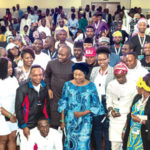
On December 11, some presidential candidates of political parties that are billed to participate in the 2019 general election assembled at the International Conference Centre, Abuja, to sign the peace agreement which was drafted by the National Peace Committee for the 2019 General Election headed by a former Head of State, General Abdulsalami Abubakar. Members of the diplomatic corps, the donor community, religious and traditional rulers attended the signing ceremony. Presidential candidates signed a similar pact in 2015 and the work of the committee was widely deemed to have been crucial to the peaceful outcome of the contentious presidential election that year.
Indeed, there was mild apprehension over the number of candidates that were absent at the December 11 event. The candidate of the Peoples Democratic Party (PDP), former Vice President Atiku Abubakar and the candidate of the Allied Congress Party of Nigeria (ACPN), Dr. Obiageli Ezekwesili, were absent at the event. However, they endorsed the pact drafted by the National Peace Committee at another ceremony at the Kukah Centre, Abuja, a few days later. This doused the brewing concern over the commitment of some significant presidential candidates to the peace accord.
According to the pact, the candidates have committed “to running issue-based campaigns at national, state and local government levels” and promised to refrain from campaigns that will “involve religious incitement, ethnic or tribal profiling, both by ourselves and by all agents in our names.” They also committed to ensuring that they or their followers refrain from making “any public statements, pronouncements, declarations or speeches that have the capacity to incite any form of violence, before, during and after the elections.” They promised to support the Peace Committee to monitor the adherence to the pact and to “support all institutions of government, including INEC and the security agencies, to act and be seen to act with impartiality.” Finally, they promised to “forcefully and publicly speak out against provocative utterances and oppose all acts of electoral violence whether perpetrated by their supporters and/or opponents.”
 We commend General Abubakar and members of the peace committee for the initiative. We consider it a major symbolic commitment to non-violence in electoral matters in Nigeria. The effort has the psychological effect of dousing tension. That was why there was widely expressed concern when a few aspirants were not present at the initial accord-signing event on December 11. Now that the the accord has been signed, the candidates and their political parties can be held to account on its basis. At the first sign of the suggestion of violence by a candidate or his party, the peace committee and other monitoring segments of society can draw the attention of the candidate and party to it for immediate action.
Even so, the pact will be symbolic and a mere paper tiger if the candidates and their followers fail to observe its contents. As a code of conduct for behaviour before, during and after the 2019 general election, the candidates and their supporters must observe the contents of the pact for it to be meaningful and effective. Experience from the 2015 general election where a similar accord was signed showed that it may not guarantee non-violent elections even though it contributed to the rancour-free outcome of the presidential election. The candidates must ensure that they work towards the achievement of a 2019 general election that is free from localised violence, which has remained persistent over the years. This requires that the spirit and content of the pact be passed down to members of the political parties at the lowest levels of wards and polling units.
WATCH TOP VIDEOS FROM NIGERIAN TRIBUNE TV
- Relationship Hangout: Public vs Private Proposals – Which Truly Wins in Love?
- “No” Is a Complete Sentence: Why You Should Stop Feeling Guilty
- Relationship Hangout: Friendship Talk 2025 – How to Be a Good Friend & Big Questions on Friendship
- Police Overpower Armed Robbers in Ibadan After Fierce Struggle