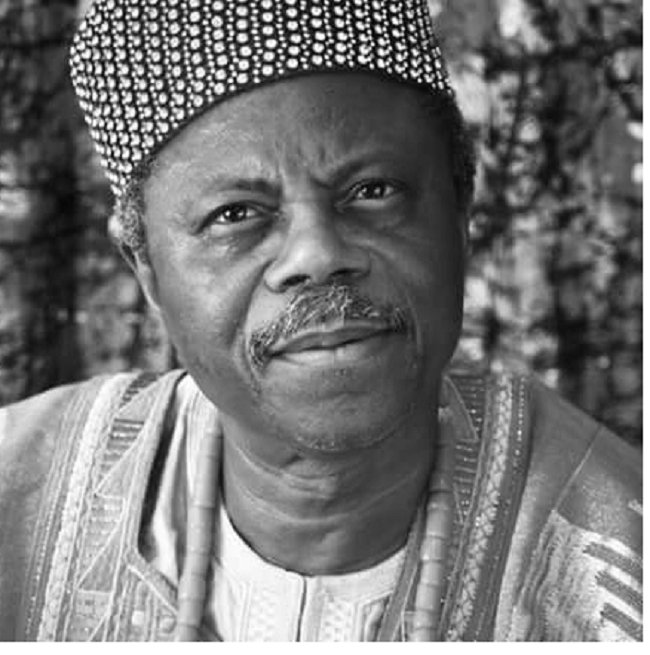
It is indeed a great pleasure to have received an invitation from the University of Bayreuth to hold a dialogue on my book, Sabelo Ndlovu-Gatsheni And African Decolonial Studies. I must express my gratitude to a long list of facilitators: Robert Debusmann, Diana Margeri, Rudiger Seesemann, and many more. The African graduate students took time to prepare a Nigerian lunch that became part of an intellectual feast.
The book on Sabelo Ndlovu-Gatsheni, a renowned academic of global repute, x-rays many of the writings of this intellectual not specifically to amplify what he has already stated in very clear terms but to evaluate all the underlying arguments with a view to locating its concerns within the global knowledge economy under which they are situated. For that, I have been able to interrogate his postulations and propositions, reviewing not essentially what he means by his intellectual protest but how he means what he means. That becomes possible because, as a historian, I can understudy the historical experiences that gave rise to Sabelo’s philosophical identity. This brings me to the conclusion that underneath his precocious academic intuition is the examination of the (un) coincidence of African realities, which he discovers having placed people’s sociocultural, sociopolitical, and socioeconomic conditions under scientific observation. His experimentation of the Zimbabwean experience produces very impressive results, namely, that African conditions in the current time, much as it indicates the unwillingness of leaders to bring desirable transformation to the continent, is itself a manufactured product, processed by the unrestrained universalists who continuously program the people’s minds by their excessive doctoring and distortion of actual reality. Examples abound in many revisionist contents deliberately produced for mass consumption.
Sabelo’s intellectualism, therefore, fits to be categorized within the context of restoration of lost dignity by his production of quality works that are meant to revive the so-called lifeless African consciousness so that taking back their position in global politics would not actually be the standard but the curtain raiser. In essence, the most important point of sparking that interest is to decongest the people’s minds and disabuse them by revealing to them the very layers of programming which their consciousness has been taken through and, coincidentally, which has brought about the near self-hate that has become the order of many activities. In all areas of knowledge, Africans continue to be dominated not because they are inherently backward or are themselves incapable of quality thought generation but because the manner of their thinking is predominantly triggered by external actors whose interests and concerns are predatory and parasitic.
Given the consistency of Sabelo’s decolonial approach, his protest is therefore rooted in Afrocentric philosophical thoughts that seek to de-Europeanize the people and re-Africanize them where and when necessary. One thing that his body of work does is to analyze the import of identity crises faced by Africans for a very long time and the negative consequences these bring to the continent as a whole. In essence, Sabelo establishes that the conditions of Africans are humanly inspired, and by that nature, they are not immune to effective change.
By historicizing the Zimbabwean past, Sabelo projects an eclipsed aspect of African accomplishments, which ordinarily would help inspire a rethinking so that they would begin to understand the foundation of current challenges and think creatively about how the past is not actually in the past, as they may have thought. Past Africans maintained their ground for ages and generations, not especially because they were resistant to any external innovation but because they negotiated intrusive innovations by making their indigenous ones the basis of their integration. That way, the ideas which they brought to their civilizations by externals were used only to the level that they did not contaminate their existing practices. As such, they reached exponential levels in no time. The onus of his argument is that the African thought process in the contemporary time has been usurped by capitalist ideas, itself a product of European imperialism, and by that condition, every form of innovation is coloured by that mindset. As such, Africans who are unable to produce scientific information that could rival the production of technologies made by their counterparts think that their problems come from the inability to apply the Western methodologies in which they are immersed. They refuse to acknowledge that their problem revolves around the failure to embrace Afrocentric understanding, which would bring them the right perspective to produce thought-provoking ideas expressed in innovative technologies.
My book, therefore, does not stop at emphasizing the need for thinking by Africans; it goes further to show how their thinking can generate a whole chain of ideological philosophy that can facilitate the progress of transcendental proportions. In every field of study, Africans have the tendency and capacity to outshine many others only when they can decolonize their minds of the monumental problems that they have been engrossed in because of their miseducation, misinformation and misconception of things associated with their history. For Africans to be creative, therefore, there is a need for them to patent their thoughts, and this is generally impossible when the instrument of thinking is not originally theirs. In essence, it is impossible to develop a civilization based on another person’s experience. Once the African people understand this, there is the possibility that they will revert to inherited epistemic traditions and refine ideas from there so that they can begin their journey to self-realization and importance. Sabelo’s experiments indicate that the absence of creativity in African knowledge production in contemporary times has necessitated a culture of dependence on others but themselves, and that has increased the problem of slavery, albeit not in the physical manners of the past but in the psychological domain. To the extent that Africans have large numbers of resources, they also have sufficient intellectual resources from which they can draw in the occasion that they look within.
The mentioning of the architectural beauty of the African past by Sabelo inspires a noteworthy rupture in the minds of Africans today that the available infrastructures which they have preserved in modern times do not have the ideologically defining attributes of the urban imaginations of the past Africans, which was more acceptable of socialist culture than what exists today. That way, the sense of togetherness entrenched in their historical relics is expected to be revived because not only is the contemporary one prohibitive of inclusion, but it is also averse to natural systems.
Contrary to the assumption that riches, wealth, and class are naturally given, Sabelo leads us to understand that they are humanly engineered. Therefore, it is more productive to bring about ideas which resonate with their identity than to continue to project the ones that have no bearing on their epistemic, ontological, and philosophical paradigms. An infrastructural practice that owes its existential inspiration to genuine African thoughts would, therefore, prioritize creativity, which is expected to bring innovations, initiatives, and ideas that can bring advancement. It should be emphasized here that Sabelo does not belong to the category of individuals who amplify their grievance from the angle of agonizing. Rather, he wants them to use these experiences of betrayal, loss, and deficit occasioned by their past experiences to launch themselves to the forefront of things.
To that extent, my book takes a deep dive into the conversation of epistemological revival. It seeks to bring out the unending importance of depending on one’s history as the basis of their actions and innovation. I have noticed, in line with the scholar’s observations, that the reproduction of poverty, of dysfunctional systems, and unproductive leadership, among others, stem from the continued application of Western solutions to African problems. As much as epistemology concerns itself with knowledge production and distribution, it is, therefore, safe to argue that every area of human development deserves an epistemic tradition inspired by indigenous thoughts. Although this is not to unnecessarily valorize the past, it would, after all, bring people to the realization that they have something to fall back on so that they could understand the complexity of their problems from an entirely impartial perspective.
Epistemic traditions in politics, medicine, technology, architecture, and social engagements, among others, are important for civilization, and unless they continue to draw inspiration from their own, they will continue to produce results that do not reflect their realities. This book does not propose a one-size-fits-all approach to the myriad of African problems. Instead, it leads the audience to understand the impediment of unoriginal thought to actual development. Once people understand that much as their past may be ridden with problems, the road to their liberty lies in re-imagining their ideas because
WATCH TOP VIDEOS FROM NIGERIAN TRIBUNE TV
- Relationship Hangout: Public vs Private Proposals – Which Truly Wins in Love?
- “No” Is a Complete Sentence: Why You Should Stop Feeling Guilty
- Relationship Hangout: Friendship Talk 2025 – How to Be a Good Friend & Big Questions on Friendship
- Police Overpower Armed Robbers in Ibadan After Fierce Struggle