
No matter how popular something is, how widespread and readily available both online and in the real world, there will always be more people who have never been a part of it than those who are passionate enthusiasts. Starting with a new interest, be it a hobby, a skill, or a transformation you want to go to, it takes time and effort. However, before anything can even begin, there needs to be some basic knowledge. The bare bones of it all, the meat and potatoes as they say, the thing in question broken down to its core elements.
When the thing in question is an extremely popular card game, one that is, by this point, synonymous with gambling as a whole, the best thing about it is that the basics are well known. It does not take a long time to understand the game of blackjack. One of the most popular and beloved games on the planet, it has had a stranglehold over casinos for centuries. If you have never tried it before, know next to nothing about it, but want to play blackjack online, there is no shame in it. Read on to learn everything a newcomer needs in this beginner-friendly guide.
Understanding Blackjack
Blackjack is a popular casino card game that combines simple rules with strategic decision making. The basic objective is to finish with a hand value closer to 21 than the dealer’s hand without going over 21. Unlike many casino games, blackjack gives players meaningful choices during each hand, such as whether to take another card, stop drawing cards, double the original wager, or sometimes split a pair. Although the outcome of an individual hand is determined partly by chance, learning the rules and using mathematically sound decisions can help a newcomer avoid many common mistakes.
The central goal is to beat the dealer, not necessarily to reach exactly 21. Each player competes against the dealer independently, so another player’s hand does not need to be beaten. A hand wins when its value is higher than the dealer’s without exceeding 21, or when the dealer goes over 21 while the player does not. If the player and dealer have the same final value, the hand is normally a push, meaning the original wager is returned. A player who exceeds 21 has busted and loses the wager immediately, regardless of what happens to the dealer afterward.
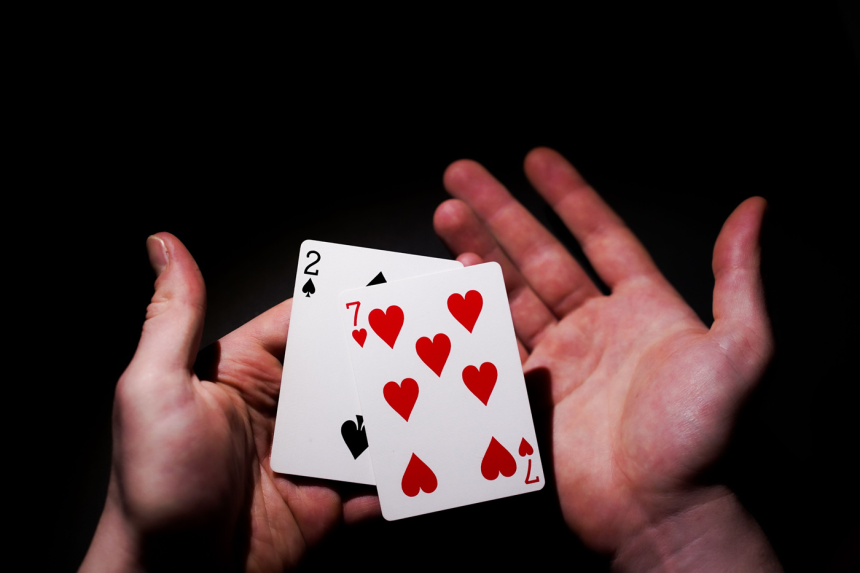
Number cards from 2 through 10 are worth their printed values. Jacks, queens, and kings are each worth 10. An ace is especially important because it can count as either 1 or 11, depending on which value benefits the hand without causing a bust. For example, an ace and a 7 can be valued as 18, because the ace can count as 11. If additional cards make that value exceed 21, the ace can instead count as 1. This flexibility is one reason hands containing aces require particular attention.
The namesake of the game, blackjack, happens when the starting hand consists of an ace and a 10-value card, such as a king, queen, jack, or 10. This produces a two card total of 21 and is generally stronger than an ordinary three card or larger hand totaling 21. The exact payout for a natural blackjack depends on the casino’s rules. Traditionally, blackjack has often paid 3:2, while some games pay 6:5 or use other arrangements. Because payout rules can significantly affect the mathematical advantage of the game, beginners should check them before placing a wager.
How a Round Works
A blackjack round begins when players place their initial wagers. The dealer then deals cards to the players and to themselves according to the table’s rules. In a common version, each player receives two cards, while the dealer receives two cards with one card initially visible and the other concealed. The dealer’s visible card is the upcard. Players normally make their decisions before the dealer reveals the concealed card and completes the dealer’s hand.
After receiving the initial cards, a player generally chooses between several actions. Hitting means requesting another card. Standing means keeping the current hand and taking no additional cards. Doubling down usually means doubling the original wager in exchange for receiving exactly one additional card before standing. Splitting is available when the initial two cards form a qualifying pair and creates two separate hands, each requiring an additional wager. Some games also offer surrender, allowing a player to give up the hand early in exchange for losing only part of the original wager.
The dealer does not make strategic choices in the same way a player does. Instead, they follow predetermined house rules. A common rule requires the dealer to continue drawing cards until reaching at least 17, although casinos differ over whether the dealer must hit or stand on a soft 17, a hand such as an ace and a 6 that can be valued as either 7 or 17. After the dealer completes the hand, their final total is compared with the players’ totals.
A hand with a value greater than 21 is a bust and loses immediately. If the player stays at 21 or below, the dealer completes the hand. The player wins if the dealer busts while the player does not, or if the player’s final value is higher than the dealer’s. The player loses if the dealer’s valid total is higher. Matching totals generally result in a push. A natural blackjack is normally treated separately from an ordinary 21 and may receive a special payout.
Common Bets for Newcomers
The standard blackjack gambling wager is the regular hand bet placed before the cards are dealt. For someone learning the game, this is usually the simplest wager to understand because the player is betting on the outcome of the hand and then making decisions based on the cards received. Blackjack tables may also offer side bets, separate wagers based on particular card combinations or other events. Examples include insurance, perfect pairs style bets, and various bonus combinations. These wagers can be entertaining, but they generally have different and often less favorable mathematical odds than the main blackjack bet.
Insurance is an optional side wager offered in many blackjack games when the dealer’s visible card is an ace. It is a separate bet that the dealer has a blackjack. If the dealer does have blackjack, the insurance wager typically pays 2:1, while the original hand is settled according to the normal rules. If the dealer does not have blackjack, the insurance wager loses. Side bets often have appealing names and exciting potential payouts, but a large possible payout does not necessarily mean a favorable bet. Their rules and house advantages can differ substantially from the main blackjack wager. Beginners may therefore find it easier to learn blackjack by concentrating on the standard hand wager first.
Basic Strategy
Basic strategy is a mathematically sound set of decisions designed to tell a player the statistically strongest action for each combination of player hand and dealer upcard. It considers the player’s total, whether the hand is soft or hard, whether the cards form a pair, and the dealer’s visible card. Basic strategy does not guarantee winning a particular hand because blackjack remains a game of chance. Its purpose is to minimize avoidable mathematical disadvantages over a large number of hands.
A hard hand is one in which an ace is either absent or must be counted as 1 to prevent the hand from exceeding 21. A soft hand contains an ace that can currently be counted as 11 without busting. This distinction matters because a soft hand has greater flexibility. For example, an ace and a 6 can be treated as 17 or 7. If another card is drawn, the ace can often switch from 11 to 1, reducing the risk of an immediate bust. Basic strategy treats soft and hard totals differently.
The dealer’s visible card is one of the most important pieces of information available to the player. Some dealer upcards are statistically stronger than others. A dealer showing a 2 through 6 is generally considered to have a weaker position because the dealer has a greater risk of eventually busting while following the required drawing rules. A dealer showing a 7 through ace is generally in a stronger position. This does not mean a player should automatically stand against weak cards or hit against strong ones. The correct decision depends on the player’s complete hand.
Blackjack Fun Facts and Trivia
- It started in France
Blackjack traces its roots to the French game Vingt-et-Un (“Twenty One”), played as far back as the 17th and 18th centuries.
- Online blackjack has gone high tech
Today, players can choose from classic digital blackjack, multi hand games, rule variations, and live dealer blackjack, where real dealers host games streamed from casino studios.
- Ben Affleck got too good
The actor was famously stopped from playing blackjack at the Hard Rock in Las Vegas in 2014 after casino staff suspected him of card counting. He was not banned from the entire casino, though, just from blackjack.
- There is more than one “21”
Popular variations include European, Spanish 21, Progressive, Multi-Hand, and Live Blackjack. The basic goal stays the same, but rules and payouts can differ dramatically.
- The game got its name from a bonus
In early American casinos, some games offered a special payout for a hand containing the ace of spades and a black jack (jack of clubs or spades). The nickname “blackjack” stuck, even after that bonus disappeared.
WATCH TOP VIDEOS FROM NIGERIAN TRIBUNE TV
- Relationship Hangout: Public vs Private Proposals – Which Truly Wins in Love?
- “No” Is a Complete Sentence: Why You Should Stop Feeling Guilty
- Relationship Hangout: Friendship Talk 2025 – How to Be a Good Friend & Big Questions on Friendship
- Police Overpower Armed Robbers in Ibadan After Fierce Struggle


