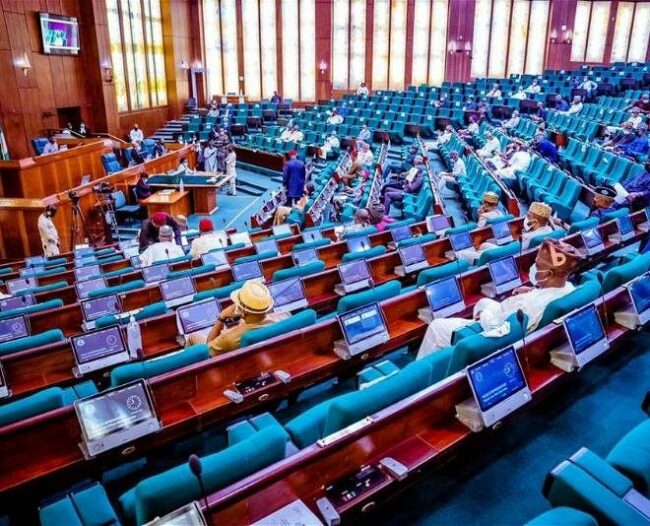
The House of Representatives on Thursday passed a bill seeking to strengthen food security in Nigeria through second reading, with lawmakers stressing the need for effective implementation of the legislation while also raising concerns over the country’s worsening security situation and its impact on citizens.
Leading the debate on the proposed legislation, Chairman of the House Committee on Nutrition and Food Security, Hon. Patrick Okafor, assured lawmakers that the bill would not impose any financial burden on the Federal Government or sub-national governments.
According to him, the proposed institution would be self-sustaining through members’ subscriptions, administrative fees, grants and other legitimate sources of funding.
He said: “It is completely self-funded. It is not going to rely on the government, just like other professional bodies. It will rely on members’ fees, administration and grants and support. It is not going to put any burden on the government at any level, either federal or sub-national.”
Hon. Okafor added that the legislation was designed to complement the House’s efforts at addressing food security challenges in the country, noting that it had been referred to the Committee on Nutrition and Food Security because of its relevance to the sector.
During the debate, however, lawmakers also reflected on the broader challenges facing Nigerians, particularly insecurity and kidnapping, arguing that the success of any law depends largely on the state’s ability to enforce it and protect citizens.
One of the contributors observed that while the country has enacted several laws, many have failed to achieve their intended objectives because government institutions have not effectively implemented them.
The lawmaker cited the recent release of kidnapping victims in Kogi State after spending 67 days in captivity, alleging that their families paid about N25.5 million, 50 bags of rice, motorcycles, recharge cards and other items demanded by the abductors before they regained their freedom.
He described the condition of the victims after their release as heartbreaking, saying they were too weak to stand or walk.
The member argued that criminalising the payment of ransom without first strengthening the nation’s security architecture would amount to punishing families whose loved ones are abandoned in captivity.
According to him, desperate relatives often resort to paying ransom because they have little confidence in the ability of security agencies to secure the release of victims.
ALSO READ: Presidency breaks silence on Peter Obi’s death threat claim
He further maintained that the government itself had, on some occasions, reportedly facilitated ransom payments to secure the release of abducted persons and avoid national embarrassment.
Hon. Okafor urged the House to exercise caution in enforcing anti-ransom provisions against victims’ families until the country develops a security system capable of rescuing kidnapped persons and bringing perpetrators to justice.
He disclosed that a close associate of his had also been held captive for 15 days in Okene, Kogi State, underscoring the personal impact of the country’s security crisis.
Following extensive deliberations, the House overwhelmingly supported the general principles of the proposed food security legislation and passed the bill for second reading.
The Speaker subsequently referred the bill to the House Committee on Nutrition and Food Security for further legislative action.
WATCH TOP VIDEOS FROM NIGERIAN TRIBUNE TV
- Relationship Hangout: Public vs Private Proposals – Which Truly Wins in Love?
- “No” Is a Complete Sentence: Why You Should Stop Feeling Guilty
- Relationship Hangout: Friendship Talk 2025 – How to Be a Good Friend & Big Questions on Friendship
- Police Overpower Armed Robbers in Ibadan After Fierce Struggle