
On January 30, 2025, Dr Kayode Opeifa formally assumed office as the Managing Director of the Nigerian Railway Corporation, targeting reforms and transformation of the nation’s railway infrastructure and operations. While much has been achieved within one year, proper funding has remained elusive, writes TOLA ADENUBI.
During his inaugural speech as the Managing Director of the Nigerian Railway Corporation (NRC), Dr. Kayode Opeifa laid out a comprehensive vision for repositioning the rail sector in alignment with the Renewed Hope Agenda of President Bola Tinubu.
Twelve months later, his inaugural speech now serves as a clear framework for reviewing the corporation’s journey—highlighting areas of progress, institutional consolidation, and, most critically, the challenge of funding, which has emerged as the defining issue after one year in office.
Dr. Opeifa was unequivocal that his leadership would not operate in isolation, but as a faithful expression of government policy. He defined his role as the face of the Renewed Hope Agenda within the rail sector, committed to translating presidential directives, ministerial policies, and the provisions of the NRC Act into practical outcomes.
This policy-driven posture has shaped management decisions over the past year, ensuring coherence between national transport objectives and NRC’s operational priorities.
Operational scorecard
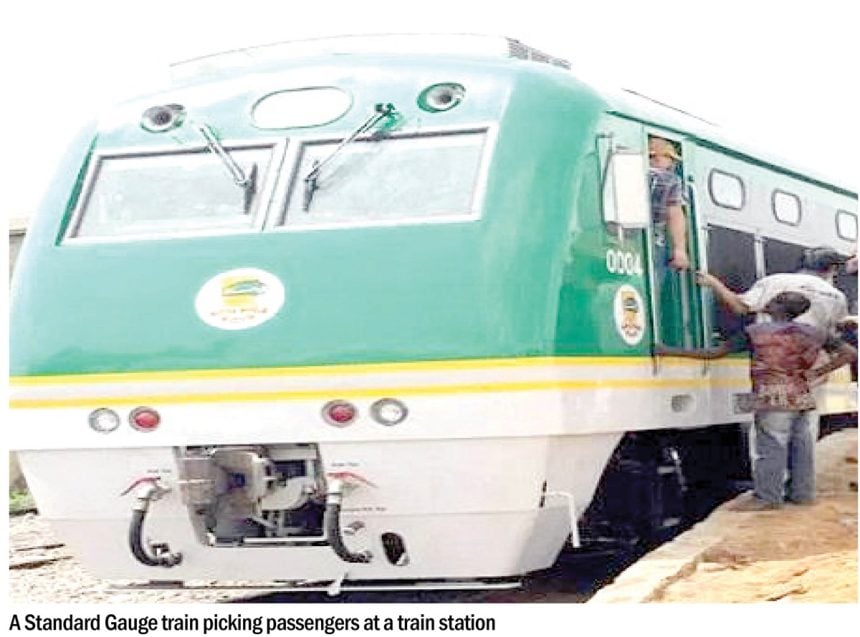
Despite prevailing constraints, the NRC under Dr. Opeifa has sustained passenger and freight operations across critical standard and narrow-gauge corridors. Services on the Lagos–Ibadan, Abuja–Kaduna, Warri–Itakpe axis, as well as Mass Transit Train operations, have remained central to NRC’s contribution to national mobility.
The administration’s focus on punctuality, safety protocols, operational discipline, and customer experience reflects the commitments outlined in the speech, particularly the emphasis on efficiency and service excellence.
A major theme of the address was the security of lives, properties, and railway assets. Over the past year, this commitment has been translated into sustained collaboration with national security agencies and host communities to combat vandalism, cable theft, and other operational risks.
Dr. Opeifa has consistently reinforced the message that railway infrastructure constitutes critical national assets, deserving collective protection. This stance has strengthened advocacy, enforcement efforts, and public consciousness around asset protection.
Staff, welfare/labour relations
Internally, the past year has been marked by deliberate efforts to stabilise the institution through improved staff engagement, welfare considerations, and harmonious union relations. Recognising that sustainable reform is people-driven, Dr. Opeifa’s administration has prioritised capacity building, professionalism, and accountability.
This approach has helped maintain operational stability while fostering a renewed sense of ownership and responsibility among employees.
His inaugural commitment to transparency and strategic communication has also shaped NRC’s engagement with stakeholders. The corporation has sustained open channels with the media, state governments, host communities, and regulatory agencies, ensuring that operational realities, challenges, and achievements are clearly communicated.
This openness has contributed to improved public perception and trust, even in the face of service disruptions or operational challenges caused by railway track vandalisation, among others.
Funding challenge
One year after he assumed office, funding has clearly emerged as the most significant constraint to accelerated transformation at the NRC. Dr. Opeifa has repeatedly underscored that the corporation’s challenges are not rooted in lack of vision or commitment, but in limited financial capacity to fully execute its mandate.
The NRC requires improved funding for railway development to address chronic infrastructure decay, enhance security, and meet ambitious modernisation goals set for 2026 and beyond.
Despite recording improved internally generated revenue (IGR) in 2025, the system faces severe constraints that require consistent financial investment to unlock its economic potential.
Key areas affected by funding constraints include:
Modernisation and expansion of rail infrastructure; maintenance and upgrade of rolling stock and signaling systems; deployment of modern technology, data systems, and sustainable energy solutions; speed of completion of ongoing and planned projects; and scaling of services to meet growing passenger and freight demand.
The NRC managing director has consistently maintained that adequate, predictable, and sustainable funding, complemented by enhanced private sector participation, would significantly improve operational efficiency, service quality, revenue generation, and overall sustainability of the rail system.
Rail transport is central to achieving broader national objectives, reducing logistics costs, easing pressure on roads, improving safety, promoting trade, linking agricultural production to markets, and supporting economic integration. Without sufficient funding, the rail sector’s contribution to the transportation sector and national GDP remains constrained.
Dr. Opeifa’s first year has, therefore, sharpened institutional focus on the need to align policy ambition with financial commitment, ensuring that rail reform moves beyond survival to growth and transformation.
Foundation laid, focus clarified
One year after his inaugural speech, Dr. Opeifa’s tenure reflects a period of consolidation, realism, and strategic clarity. While notable progress has been made in stabilising operations, strengthening institutional culture, and reinforcing stakeholder confidence, the experience of the past twelve months has brought funding to the forefront as the decisive factor for accelerated impact.
For 2026, the Federal Government has earmarked over N240 billion for rail-related projects, with N34.24 billion allocated specifically to the NRC for operational costs, rehabilitation, and train procurement.
However, experts indicate that to truly modernise the system, significantly higher investment estimated at up to $575 billion for total national infrastructure delivery, is needed, requiring a mix of government funding and Public-Private Partnerships (PPP).
Speaking during the second international railway conference in Abuja, the Director-General of the Infrastructure Concession Regulatory Commission (ICRC),Mr. Jobson Ewalefoh called for PPP initiative to boost the nation’s transport infrastructure system.
According to Ewelafoh, “Nigeria will require about 575 billion dollars for transport infrastructure between 2020 and 2043, making it the second-largest investment needed after the energy sector, which is projected at 759 billion dollars.
“Together, both sectors form a significant portion of the country’s overall 2.3 trillion-dollar infrastructure requirement. These sums cannot be raised through public funding alone.
“Our annual budgets have consistently fallen short of the 100 billion dollars required to close the infrastructure gap. Without private sector involvement, rail development will remain underfunded and inadequate.”
As the NRC enters the next phase of his administration, attention is increasingly directed at mobilising sustainable funding frameworks that will translate vision into scale and potential into performance, positioning the Nigerian Railway Corporation as a stronger engine of mobility, economic growth, and national development.
WATCH TOP VIDEOS FROM NIGERIAN TRIBUNE TV
- Relationship Hangout: Public vs Private Proposals – Which Truly Wins in Love?
- “No” Is a Complete Sentence: Why You Should Stop Feeling Guilty
- Relationship Hangout: Friendship Talk 2025 – How to Be a Good Friend & Big Questions on Friendship
- Police Overpower Armed Robbers in Ibadan After Fierce Struggle


