
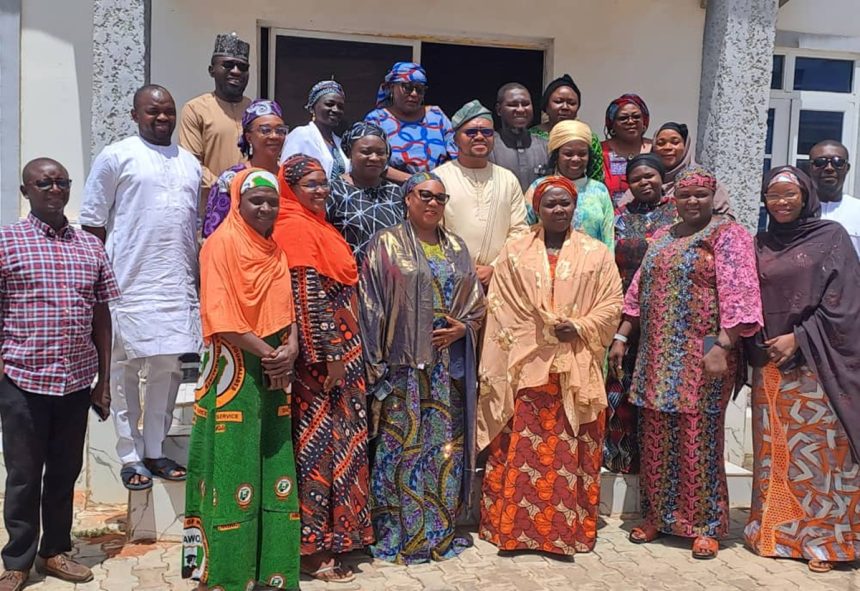
The Civil Society Legislative Advocacy Centre (CISLAC) has called for gender-sensitive tobacco control policies and higher taxes to reduce tobacco use and protect women and girls.
The call was made during a one-day training organised for members of the Nigeria Association of Women Journalists (NAWOJ), Gombe State chapter, on tobacco taxation and gender mainstreaming to improve their understanding of tobacco control issues.
The one-day workshop focused on the link between tobacco use, gender, and public health, as well as the role of women journalists in creating awareness about the dangers of tobacco consumption.
Speaking at the training, CISLAC Programme Officer, Mr Solomon Adoga, said tobacco affects women in different ways, including direct use, exposure to second-hand smoke, and the loss of family income that could have been spent on food, healthcare, education, and shelter.
According to him, women are at risk of several tobacco-related diseases, including cervical cancer, breast cancer, and complications during pregnancy.
Adoga also said tobacco control policies and programmes should take the needs and experiences of women into account.
He further stressed the need for more research to better understand tobacco use among women in Nigeria.
He called for tobacco control programmes that support women, including public awareness campaigns, smoking cessation services, and stronger enforcement of smoke-free laws.
ALSO READ: NITP calls for stronger govt partnership on urban planning
He also recommended higher tobacco taxes to make tobacco products less affordable, the promotion of smoke-free environments, and wider access to treatment and support services.
Adoga said funds generated from tobacco taxes should also be used to address health challenges affecting women as a result of tobacco use and exposure.
He described tobacco use as one of the leading causes of preventable deaths worldwide, noting that it kills up to half of its users.
According to him, more than eight million people die each year from tobacco-related causes, including about 1.2 million non-smokers exposed to second-hand smoke.
He added that about 80 per cent of the world’s 1.3 billion smokers live in low- and middle-income countries and warned that tobacco could claim one billion lives this century if urgent action is not taken.
“People who smoke die earlier, and smoking damages almost every organ in the body,” Adoga said.
In her goodwill message, the Chairperson of NAWOJ in Gombe State, Mrs Abigail Kolo, thanked CISLAC for organising the training and giving members the opportunity to learn more about tobacco control.
She said the training would help women journalists report more effectively on tobacco-related issues and support efforts to reduce tobacco use through public education.
“Tobacco consumption is a serious public health issue. Women journalists are committed to educating the public on the dangers of tobacco use and promoting healthy lifestyles through accurate reporting,” she said.
Kolo also assured CISLAC of NAWOJ’s support in raising awareness about tobacco control and public health issues.
WATCH TOP VIDEOS FROM NIGERIAN TRIBUNE TV
- Relationship Hangout: Public vs Private Proposals – Which Truly Wins in Love?
- “No” Is a Complete Sentence: Why You Should Stop Feeling Guilty
- Relationship Hangout: Friendship Talk 2025 – How to Be a Good Friend & Big Questions on Friendship
- Police Overpower Armed Robbers in Ibadan After Fierce Struggle


