
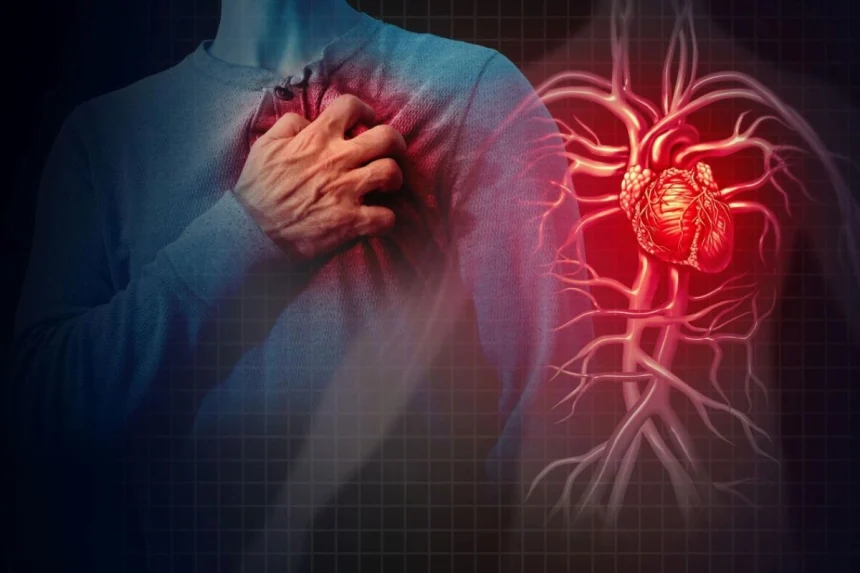
Researchers at Helmholtz Munich and the Technical University of Munich (TUM) have developed a new medical imaging tool, “fast-RSOM,” that can detect heart disease years before it develops.
The technology, known as fast raster-scan optoacoustic mesoscopy (fast-RSOM), can detect hidden blood vessel damage long before heart disease becomes apparent. The scan can capture highly detailed images of the smallest blood vessels directly through the skin. It was published in Light: Science & Applications.
By enabling early detection of cardiovascular risk, this technology could allow doctors to act sooner, tailor treatments more precisely, and support better long-term heart health.
Some of the earliest warning signs of cardiovascular disease begin in the body’s smallest blood vessels. These early changes involve subtle problems in the widening and narrowing of blood vessels, a condition known as microvascular endothelial dysfunction (MiVED).
ALSO READ: Researchers develop artificial saliva mouthwash to prevent tooth decay in cancer patients
Dr Hailong He, the first author of the study and a researcher at the Institute of Biological and Medical Imaging at Helmholtz Munich, explained that with fast-RSOM, it will be possible for the first time to directly observe or measure these changes in people in a non-invasive manner.
He added, “Our novel approach offers an unprecedented view of how cardiovascular disease manifests at the microvascular level.
Fast Raster Scan Optoacoustic Mesoscopy (Fast-RSOM) uses brief pulses of light to generate ultrasound signals, producing detailed 3D images of structures beneath the skin that traditional imaging methods cannot detect.
It captures high-resolution dynamic biomarkers linked to MiVED, revealing small but meaningful impairments in blood vessel function. These changes often appear well before noticeable symptoms or large-scale signs of cardiovascular disease and diabetes. These early changes are commonly linked to risk factors such as smoking, high blood pressure, and obesity.
Rather than estimating risk based solely on these conditions, fast RSOM directly measures the physical effects they have already caused in the body’s tiniest blood vessels. This allows clinicians to observe the functioning of the smallest blood vessels long before serious complications emerge.
By identifying these early signals, fast-RSOM creates new opportunities for earlier diagnosis, prevention, and more accurate monitoring of cardiovascular health than conventional methods. This technology could help pinpoint individuals at higher risk with greater precision and track how lifestyle changes or medical treatments affect blood vessel function over time.
The research team now aims to test fast-RSOM in larger and more diverse patient populations and work toward integrating its biomarkers into everyday clinical practice.
Because the device is portable, fast, and non-invasive, it could eventually be used in outpatient settings as part of routine cardiovascular risk assessment.
WATCH TOP VIDEOS FROM NIGERIAN TRIBUNE TV
- Relationship Hangout: Public vs Private Proposals – Which Truly Wins in Love?
- “No” Is a Complete Sentence: Why You Should Stop Feeling Guilty
- Relationship Hangout: Friendship Talk 2025 – How to Be a Good Friend & Big Questions on Friendship
- Police Overpower Armed Robbers in Ibadan After Fierce Struggle


