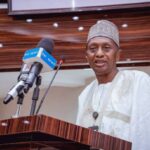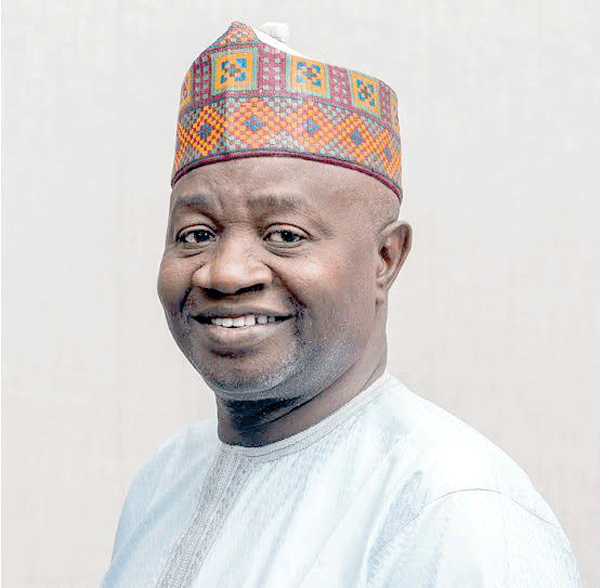
Recently, the Executive Secretary of Agricultural Research Council of Nigeria, Professor Garba Sharubutu spoke with journalists on the activities of the Council and their plans to grow the agriculture sector, COLLINS NNABUIFE and HANNAH ADEYEMI bring excerpts.
What is the Mandate of the ARCN in the growth of agriculture in Nigeria?
We were established with a certain mandate and number one mandate is for us to be able to advise the government on matters that have to do with agricultural research, training and extension services. These three key words are very important to any nation in the development of agriculture.
You will recall that the ARCN came into being sometimes In 2006. Why did it come at that point?
It was because we had numerous agricultural research institutes was spread across the length and breadth of the country that are doing their activities in isolated fashion. Isolated because each agricultural research Institute was implementing the mandate without recourse to what its counterpart doing. So, in the wisdom of the government, there was a need to give specific mandate to each of the Agricultural Research Institutes and therefore, 16 agricultural research institutes we have in this country now have specific mandate of their own crop. So there are those that are in charge of mainly cereals that is grains like, rice, maize, guinea corn and beans.
There are those that are in charge of tree crops like rubber, palm oil. There are also those that are in-charge of fishery, marine and fresh water. There those whose responsibility is for livestock like the National Veterinary Research Institute as well as the National Animal Production Research Institute. There are also those that are responsible for extension, National Agricultural Extension Research and Liaison Services. There are those that are meant for proper storage of our products, like the National Stored Product Research Institute. Just recently, we have also the National Centre for Agricultural mechanisation in order to make sure they advance technological Initiative and ensure that our machineries are improved upon and fabricated back here at home.
The second mandate is to be able to direct the agricultural research institutes under us to focus on the cardinal purpose for which the country has its own research policy. Because in the wisdom of the government, you cannot be running researches that are not telling on the direction in which the government is focusing.
What do you think can be done to produce more food for the growing population?
This administration is taking the subject matter of food security very seriously and since it came on board, it decided that we must refocus our attention to make sure that at least food is placed on the table, and if we need food to be placed on the table our advice to the government is to concentrate on quick maturing crops. What do we mean by quick maturing crops? We mean rice, yam, cassava, wheat, guinea corn, millet. These are what we call the quick maturing crops. But our advice also entails the fact that other products or other commodities should not be neglected. We cannot neglect the cash crops because of the need to diversify and if you look at the mandate of Mr President and his priority list, he mentioned food security as number one.
Having understood the principle by which the President Bola Tinubu government is driving, we as agencies under the Ministry of Agriculture and Food Security also receive these direction from the Minister, Abubakar Kyari giving him what we are doing at various levels.
In implementing your mandate, do you consider local and international collaboration?
Particularly that Mr President has come up to declare a state of emergency in food security. As Agricultural Research Institution of Nigeria, the implementation of our own mandate has a good number of strategies. The number one strategy is what we are doing at the national level. The second is what we are doing at the International level because we try as we could to make sure that our researches are made viable and answer all the questions of our farmers. We must link up with international organisations for us to be able to thrive; especially those that provide the necessary funding for us to continue.
At the national level, we rely strictly on the provision of the yearly budget that we receive because foreign funding are project specific and they are determined by what we have proposed. At the national level, we are thinking of improving the working environment of our staff and our various research institutes and what do I mean by working environment? By working environment, I mean the condition of service that will enable our workers or our staff to function very well.
The first is the issue of capacity building. We have undertaken vigorous capacity building for our own staff especially those that are already in service.
In addition to that, just recently, we also completed another round of training of our newly recruited scientists. For your information, the Federal Government approved the recruitment of 1,650 new scientists to boost the staff strength in the area of research. Particularly, the instruction is for us to recruit breeders, to recruit those who will bring about the genetic improvement of our local crops. This training we completed recently that was attended by a selected few particularly those that are breeders because these are areas that we are in dire need of.
The second aspect is the provision of working materials for our staff first in the area of accommodation and second in the area of tools.
Like I said, we are a coordinating body and as coordinators we should be able to have materials for data generation. We move around to monitor and generate data for the purpose of working with it. That is the more reason the calibre of staff that we have here have to be that with experience from outside so that whatever information comes from our various research institutes and colleges, we should be able to analyse.
Some Nigerians are skeptical when accepting some research work, does the Council have modalities of monitoring these researches?
For research to be successful and products released to the populace, there is a need for us to do a thorough search on what we are doing. For example, if we come up with a new variety, it is not okay for us to begin the trade of these new varieties and release them to the public.
Government, in its wisdom, has established the National Biotechnology Development Agency (NABDA) that is supposed to look at whatever we have developed in the land and try to see whether those products have an effect on the environment, individuals, plants and animals. Similarly, the
National Biosafety Management Agency (NBMA) has also been established to make sure that the safety of whatever comes out of the laboratory from us is guaranteed.
After a detailed work by these two agencies on our products, we are also expected to take it to National Varietal Release Committee, where they will look at those varieties that we have produced in the laboratory, look at the authentication that NABDA and NBMA have been able to do and then declare it free for consumption.
Just last week, we held a meeting National Varietal Release Committee in Ibadan and we were able to successfully release 23 varieties that were researched in house, although we had the assistance of our foreign partners, I want to say very clearly that it is time for us to give credit and gratitude to our international collaborators for the work they are doing in helping us at the level of laboratory.
Can you give some breakthroughs Nigeria has recorded in these researches?
We have been able to bring about four varieties of maize that are resistant to the armyworm, we are still working on more, that does not mean that these varieties are only going to resist the armyworm, they are also supposed to be quick maturing and withstanding drought. These had been released to the public. In 2022, we were able to produce beans that can resist insects that actually decrease their productivity. The National Institute for Horticultural Research in Ibadan has also been able to release some varieties of tomatoes and okra, which are expected to be quick maturing in order to give us a large number of products.
We have also gone as far as trying to see the extent to which we can develop models that will help in storage, the National Stored Products Research Institute in Ilorin has a lot of models for the storage of yam, cassava, grains, they are all available for the farmers and of course the farmers have been using them.
In terms of international engagements, how far has the Council gone?
By virtue of the Act establishing the ARCN, we have the opportunity to represent Nigeria and the sub-Sahara Africa in the consultative group for International Agricultural Research Consultative group, because the international agricultural research is the umbrella body for all agricultural research institutes and Nigeria represents the sub-Sahara Africa with alternative membership from Kenya.
This organization is the parent body for Africa Rice, International Institute for Tropical Agriculture (IITA). In fact until recently they are collaborators of ICRISAT. These bodies we represent have been able to undertake numerous researches, like I said research has to do with collaboration. If you look at the variety of yam and cassava that is coming from our own research institute the National Root Crop Research Institute in Umudike, Abia State are all in collaboration with IITA.
The beautiful work that is done with the release of over 65 varieties of rice by the National Cereals Research Institutes, Badeggi is with the help of Africa Rice; as member of the organizations we want to commend them and report to you that these organisations are actually being up and doing as far as Nigeria is concerned.
The Africa Agricultural Technology Foundation (AATF) also resident in Kenya, I represent Nigeria on that board and through the instrumentality of our representation we have been able to get them to establish two very vital companies.
We have the ECO Basic for the supply of quality seeds domicile in Kaduna and we have the AgriDrive for mechanization training and improved Agricultural productivity along the value chain, domicile in Ibadan. These two organizations may not be strictly owned by Nigeria but we are participants and they are established here courtesy of our representation. ECO basic has taken off, and AgriDrive has also taken off.
WATCH TOP VIDEOS FROM NIGERIAN TRIBUNE TV
- Relationship Hangout: Public vs Private Proposals – Which Truly Wins in Love?
- “No” Is a Complete Sentence: Why You Should Stop Feeling Guilty
- Relationship Hangout: Friendship Talk 2025 – How to Be a Good Friend & Big Questions on Friendship
- Police Overpower Armed Robbers in Ibadan After Fierce Struggle