
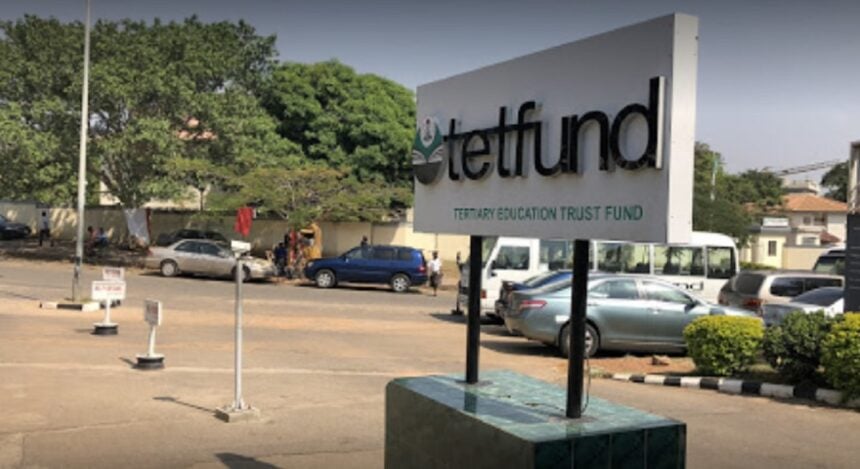
The Federal Ministry of Education, through its Research, Innovation and Commercialisation Committee (RICC), in collaboration with the Tertiary Education Trust Fund (TETFund), has launched a nationwide initiative aimed at transforming research outputs from Nigerian universities and research institutions into commercially viable products and enterprises.
The initiative commenced with the South-South Zonal National Commercialisation Intelligence and Ecosystem Engagement Workshop, held from July 9 to 10 in Port Harcourt, Rivers State.
The two-day workshop, the first in a series of six zonal engagements across the country, brought together policymakers, researchers, academics, industry leaders, investors, development partners, innovation hubs, financial institutions, and other stakeholders to strengthen collaboration and develop strategies for advancing research commercialisation.
Speaking at the event, Chairman of the Research, Innovation and Commercialisation Committee (RICC), TF Okujagu, described the workshop as a major step towards building a coordinated national innovation ecosystem capable of driving industrialisation, economic diversification, and sustainable development.
He said Nigeria must transition from being largely a consumer economy to one driven by innovation, research, and value creation, noting that the country’s large population represents a ready market for locally developed technologies and products.
Okujagu said the committee would draw lessons from countries such as Brazil, India, South Korea, and Malaysia, which have successfully leveraged research and innovation to accelerate economic development.
He outlined the committee’s priorities, including the development of a National Commercialisation Intelligence System, a Digital Public Infrastructure for research commercialisation, stronger university-industry partnerships, improved financing for commercialisation, pilot partnerships, and a national framework to guide research commercialisation efforts.
According to him, the proposed government-owned intelligence platform will provide evidence-based insights, support the commercialisation of indigenous innovations, strengthen research-industry collaboration, and create sustainable economic value through intellectual property and home-grown technologies.
“This is a collaborative national process. Academia, government, industry, research institutions, innovation hubs, investors, and the private sector must all serve as co-designers of Nigeria’s innovation future,” he said.
During the workshop, participants assessed the South-South region’s innovation strengths, identified barriers limiting the commercialisation of research findings, and explored solutions to strengthen technology transfer, investment mobilisation, enterprise development, and research-industry partnerships.
Discussions also focused on generating commercialisation intelligence, identifying market opportunities for research outputs, establishing systems for monitoring commercialisation outcomes, and developing recommendations for Nigeria’s National Research-to-Commercialisation Framework.
Delivering the keynote address, Professor Seth Akutson, Professor of Economics and Entrepreneurship Development and Vice President of the Capital Markets Academics, said Nigeria must urgently bridge the gap between research and industry to unlock its economic potential.
He observed that although Nigerian universities produce high-quality research and globally competitive scholars, much of the knowledge generated remains confined to laboratories instead of being translated into products, technologies, and services that create jobs and wealth.
Drawing examples from South Korea, China, Israel, and Malaysia, Akutson said sustained investment in research, innovation-friendly policies, and strong university-industry collaboration have been central to the rapid economic transformation of those countries.
He advocated reforms to strengthen technology transfer, intellectual property protection, science parks, innovation hubs, and demand-driven research that addresses national development priorities.
The professor also urged stakeholders to move beyond policy discussions to coordinated implementation, stressing that research must become a catalyst for innovation, productivity, and sustainable economic growth.
Participants commended the initiative for creating a platform for meaningful engagement among key players in Nigeria’s innovation ecosystem and pledged to support the implementation of the workshop’s recommendations.
The South-South engagement is the first of six zonal workshops scheduled across the country’s geopolitical zones. Similar workshops will be held in Enugu for the South-East from July 13 to 14, Plateau for the North-Central from July 20 to 21, Gombe for the North-East from July 24 to 25, Kano for the North-West from July 27 to 28, and Lagos for the South-West from July 30 to 31.
According to the organisers, insights from the consultations will inform the development of Nigeria’s National Research and Commercialisation Intelligence Ecosystem and support the implementation of the National Research-to-Commercialisation (R2C) Initiative, aimed at positioning research and innovation as key drivers of industrial competitiveness, economic growth, and sustainable national development.
WATCH TOP VIDEOS FROM NIGERIAN TRIBUNE TV
- Relationship Hangout: Public vs Private Proposals – Which Truly Wins in Love?
- “No” Is a Complete Sentence: Why You Should Stop Feeling Guilty
- Relationship Hangout: Friendship Talk 2025 – How to Be a Good Friend & Big Questions on Friendship
- Police Overpower Armed Robbers in Ibadan After Fierce Struggle


