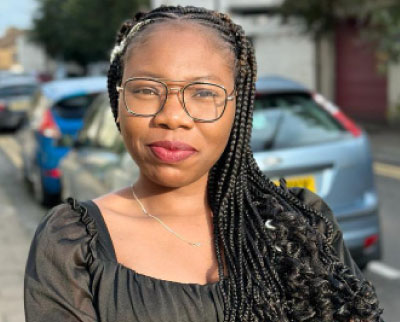
Once a victim of flooding, Esther Oluwatoyin is a climate change advocate and agriculturist who has been actively working to raise Nigerian voices on climate change globally. In this interview, she delves into pivotal moments that shaped her activism, exploring why climate action has been slow to take hold. She also discusses sustainable agricultural practices that fortify local food security.
What do you think are the main challenges and opportunities that characterise the relationship between agriculture and climate change?
As an environmentalist, I have seen firsthand how climate change threatens crops and livelihoods. When floods destroy farms, families go hungry, women lack income to feed their children, men cannot provide for their households and poverty becomes more entrenched. Therefore, as Nigeria’s population grows, feeding everyone is a huge challenge. Climate change makes it even harder for farmers to produce enough food. It endangers the food security and development of our country.
We need a better approach – farming in ways that work with the environment, not against it as well as methods that grow plenty of food but also conserve water, regenerate soil health, and minimise emissions. This balanced path can feed more Nigerians despite climate troubles. It also protects the land and allows it to keep feeding people in the future.
Our agricultural future requires everyone working together, starting from policymakers, agribusinesses and communities. With collaboration between all parties, we can overcome hunger, poverty and climate risks. Nigeria can prosper through environmentally-responsible farming. Food security and economic stability are possible, even with climate change, but we must come together to make it happen.
Considering the country’s potential, is Nigeria showcasing enough climate leadership in Africa today and in what areas are we failing?
Well, this is what I think. A country with the size of our economy and massive population, ideally should be the real climate leaders of Africa, but the reality is that we have not fully exercised the amount of influence and even what we can do where it lies. We are performing pretty poorly in a few areas. First, we lack ambitious emissions reduction targets commensurate with our world-leading vulnerability. Ambitious national decarbonisation goals would inspire other African nations while unlocking green funding opportunities.
Secondly, policy frameworks regarding climate adjustment and agricultural agroecology practices used by nearly half of Nigerians remain imprecise. Smart incentives for eco-conscious farming practices are also important. More importantly, we need to empower local governments and grassroots activists driving critical mitigation efforts. Just imagine a situation where officials amplify their work on global platforms, naturally it would help Nigeria champion decentralised solutions in addition to top-down policies. I think it is important we get this right to secure Africa’s future livelihoods and stability.
What are some of the most impactful initiatives on climate change that you feel the President Bola Tinubu administration should take going forward?
To be candid, I feel the current administration needs to be more courageous and carry out a few key initiatives. As a youth in this country, I can only advise the president to make climate change his top priority. The future of my generation and those to come depend on it. I know the president has many complex issues demanding his attention, but environmental threats are increasing across all regions of Nigeria every day. Weather disasters threaten lives and livelihoods in more communities every year. The youth have ideas and energy to address this crisis, but lack power and resources. The president should please empower us to protect our shared future. We need young advisers on the presidency’s climate team. We need assistance with funding youth-led projects in climate mitigation and adaptation. We also want support in shaping national environmental policies.
Specifically, we need urgent action to regulate deforestation and support farmers struggling with the impacts of a changing climate. Food and economic insecurity will only rise without intervention. Proper waste management is also essential to preserve health and sustainability nationwide.
Now, for me, this is even more important. I urge President Tinubu to please work closely with our state governors to tackle this emergency. While the challenges may seem daunting, young Nigerians like myself remain hopeful and determined. We are ready to work with Mr President. Our nation’s survival depends on all generations coming together to heal our environment before it is too late.
You have identified the role that would be played by localising our climate policies, do state governors also need to step in this direction?
If you see the devastating floods submerging more Nigerian homes year after year, then you’ll agree with me that we urgently need localised climate action from our state governors. Our governors are uniquely placed to tailor robust policies that confront the escalated climate threats faced by our communities. To help at-risk houses, our governors should implement grassroots awareness campaigns, climate-smart land rules, sustainable drainage systems, and early warning systems.
I strongly call for quick, context-specific policies that each state administering localised climate impacts must urgently enforce, especially those that apply to flood-prone areas.
What experiences in your youth helped shape you to dedicate your life to climate activism, and what message would you want to give Nigeria and the rest of the world?
An instance in my early life that fueled my dedication to climate activism was when my community was displaced by flooding. The image of homes underwater and people being forced from them left a lasting impact. Effectively, as a young person, I joined in the process of cleaning up the massive plastics that were all over the place. The noise created by the social awareness brought about by the video I made pointed us towards an action that needed to be urgently taken.
This motivated me to engage people in the community, even for cleanups and discussions concerning the proper disposal of waste. My interaction with members of the community made me even change my approach to climate education. Most of them were not aware of how deep we were into a climate cycle, let alone the meaning that surrounded the word climate change and its impacts on society.
How do you reach out to policymakers and other stakeholders with the objective of promoting sustainable climate policy and practice and what effect do you seek to achieve in your advocacy efforts?
I use a localised strategy as a climate change advocate when interacting with stakeholders and collaborators. I disagree with the generalisation of climate change issues and would want to place greater emphasis on knowledge of the particular difficulties that are faced by particular nations or communities. Determining and emphasising the unique issues that each community faces pave the way for fruitful discussions. It is simpler to explain a remedy to address the discrepancies and include stakeholders and policymakers in compelling action plans after the problem has been identified.
Through my advocacy work, I hope to have an impact on sustainable climate policies and practices that recognise and address inequalities, such as the needs and realities of diverse communities, in a way that promotes resilience and positive environmental impact.
Your NGO, Eco Diversified International, has globally shared Nigeria’s voices on climate change. Can you share an example of successful initiatives or projects that you have effectively undertaken?
Eco Diversified International has led many high-impact initiatives since our founding, focused on uplifting Nigerian voices globally on the pressing threats of climate change. Just to emphasise a few stellar examples, allow me.
As of date, our Eco Network on Education for Sustainable Development has trained over 4,000 Nigerian students and teachers. We have done this through intensive workshops and hands-on sustainability programmes specifically tailored for classrooms, equipping these educators and youths to drive grassroots actions that mitigate environmental harm in their local communities. The measurable impact includes substantially decreasing plastic usage and carbon emissions in participating schools.
Our “Plant 1000 Trees Per Year” project aims at climate restoration through deliberate, large-scale tree plantation. We also initiated “Young Voices on Climate Change” to enable learning and exploration for children while ensuring that their concerns about climate change can be voiced.
The project, “Climate Education Tour Nigeria,” will run in ongoing sessions for the rest of the year and is designed to educate 40,000 Nigerians on climate change and knowledge about the Sustainable Development Goals (SDGs) with a view to training 4,000 sustainability ambassadors. Another notable project is “Youth Involvement in the Actualisation of the SDGs,” whereby its first edition was held featuring 250 youths. This dynamic platform encourages the learning, discourse, and strategising of young individuals, aiming to contribute towards meeting the SDGs by 2050. These include, among others, showcasing our initiatives towards a positive impact and sharing Nigerian voices on climate change across the globe.
What challenges have you faced in this all-important work and what do you think could inspire more Nigerians into action?
One of the biggest roadblocks we come up against almost every time is a lack of knowledge about the urgency of the climate crisis. You will find that it can be very difficult to persuade people accustomed to ecologically unsound behaviour to change their ways. The point is often lost on adults, who will not see the essence of all our efforts simply because they do not feel threatened.
For example, people who are used to throwing plastic waste everywhere will ignore plastic waste disposal campaigns. Their behaviours and attitudes are deeply rooted and do not let them realise that they should change practices that damage the earth. Changing such attitudes needs long-term public education showing how climate change actually hurts communities now in a responsive manner.
Ideas on the environment must be made relevant in the daily lives of people for them to act.
My counsel now on gaining commitment from climate-conscious Nigerians is simple: continuous, tailor-made education and communication strategies should be aimed at emphasising the visible impacts of the climate crisis. Encourage feasible, gradual steps towards sustainability, not drastic lifestyle changes. Of course, celebrate collective progress, however small. People need to be reminded very often that it is the small improvements made by many that eventually have such a hugely significant influence. We can continue to base the messaging on reality, yet tailor it to the listening public at any one time, hence increasing awareness of why this is so important for us all and our growing urgency as a people and as an obligated species to reduce our impact on the environment.
What should we expect from you in 2024, particularly in the areas of climate change support as well as agriculture?
Definitely, I will aspire to further target-intensive projects in 2024 that would support climate resilience in the rural agricultural areas of Nigeria while raising higher expectations through empowering women farmers.
One of my major goals this year is to train at least 100 female farmers on sustainable farming for income stability and food security for their respective families.
At the same time, I will leverage the networks of our NGO to amplify the voices and realities of Nigerians on climate change globally. This promises new youth climate summits, policy interventions, and even deeper grassroots awareness around the urgency of mitigation and adaptation action at all levels, from the communities to the policymakers. All in all, we hope for an eventful year.
YOU SHOULD NOT MISS THESE HEADLINES FROM NIGERIAN TRIBUNE
FULL LIST: 45 visa-free countries Nigerian passport can travel in 2024
Nigeria sits behind Ghana, Guinea, Kenya, Lesotho, Morocco, Benin Republic and Namibia which are at…
How my brother and I became professor same day in same varsity —UNILORIN don
Recently, two brothers –Ahmed Oloduowo Ameen and Mubarak Oloduowo Ameen– were promoted to…
‘I expected N2,000 as my share from sale of human head we got at Saki cemetery’
Thirty-two-year-old Alli and Abdullahi, aged 35, who were the two suspects arrested by…
Why Port Harcourt refinery is yet to start production—Soneye, NNPCL Chief Comm Officer
Mr Femi Soneye is the Chief Corporate Communications Officer (CCCO) of the…
Fear women, fair women and Minister Ojo
Betta Edu, Sadiya Umar-Farouq and Halima Shehu are the reigning women in our…
What you should know about players in Nigerian 2024 AFCON team
The Nigerian football team have appeared in the finals of the Africa Cup of Nations on twenty different occasions. Nigeria has…
WATCH TOP VIDEOS FROM NIGERIAN TRIBUNE TV
- Relationship Hangout: Public vs Private Proposals – Which Truly Wins in Love?
- “No” Is a Complete Sentence: Why You Should Stop Feeling Guilty
- Relationship Hangout: Friendship Talk 2025 – How to Be a Good Friend & Big Questions on Friendship
- Police Overpower Armed Robbers in Ibadan After Fierce Struggle