
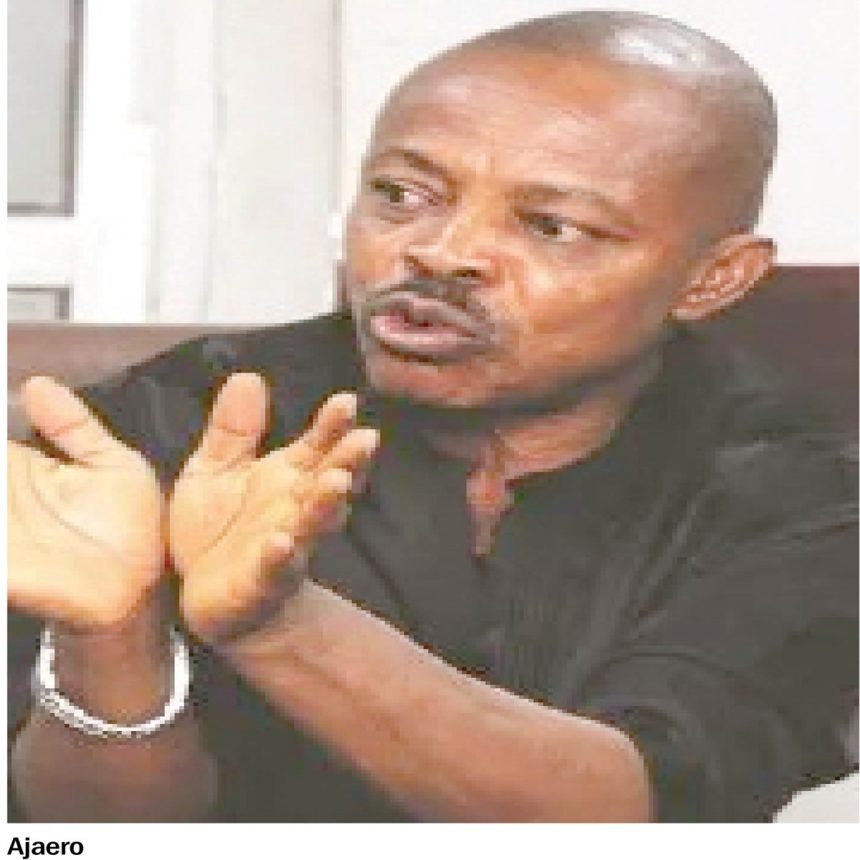
In this interview with CHRISTIAN APPOLOS, president of the Nigeria Labour Congress (NLC), Comrade Joe Ajaero, says the workers’ union will do all within its reach to demand national minimum pension for retirees. He also speaks on the kind of minimum wage Nigerians should expect this time.
You hinted in Geneva that the process for a new minimum wage would begin in July. Where are we now?
What I said would begin in July was the process of writing formally to commence negotiations, not necessarily that discussions would start immediately. The process is not entirely under our control because the other social partners also have to agree on a date, the modalities for meetings and other preparations. Resource materials also have to be put together. At the moment, we are working seriously on a joint proposal between the Nigeria Labour Congress (NLC) and the Trade Union Congress (TUC). Once that is done, a joint committee will harmonise the proposals. One centre may have one figure in mind, while the other has a different position. We have to harmonise our views and arrive at a common proposal. The two labour centres also have their respective programmes, so we must agree on a convenient time for everyone.
Employers say they are ready for negotiations but won’t accept outrageous wage demands. Your reaction?
I won’t respond directly to that, but I also cannot sympathise with employers who are looking for what amounts to slave wages. Whether they consider Labour’s demand beyond their comfort zone is another matter. Employers who genuinely cannot pay should not become the reason workers continue to suffer, especially when the cost of living remains extremely high. We have to strike a fair balance.
What kind of minimum wage should Nigerians expect this time?
Labour’s opening position in every wage negotiation is based on what we believe can sustain a family. From there, negotiations move to other issues, particularly the ability to pay. During the last exercise, the President indicated that the Federal Government could pay more; he mentioned figures like ₦150,000 or even ₦200,000, but concerns raised by state governments eventually shaped the outcome. Ironically, many states later returned home and began paying much higher amounts than the agreed ₦70,000. Some now pay over ₦100,000, while others pay ₦80,000 and above.
As for the exact figure this time, it is still too early to say. Even those earning ₦1 million monthly tell you it is no longer enough because responsibilities continue to increase.
Many Nigerians have simply adjusted their dreams to fit harsh economic realities. Parents cannot send their children to the schools they desire, while many workers remain tenants throughout their working lives because survival has taken priority over aspiration.
Should the Federal Government still tie its wage decision to what state governments can afford?
That was one of the major lessons from the last minimum wage negotiations. During the negotiations, Mr President indicated that the Federal Government could actually pay more. He mentioned figures like ₦150,000 or even ₦200,000. However, concerns raised by state governments about their financial capacity eventually influenced the outcome.
Some governors insisted they could not pay more than ₦60,000, and the negotiations ultimately reached the stage of presidential intervention before ₦70,000 was agreed upon.
Ironically, after the agreement was reached, many of those same state governments returned home and began paying much higher wages. Today, some states pay over ₦100,000 as minimum wage, while others pay ₦80,000 and above.
In effect, the Federal Government ended up looking like the weakest employer because it remained at ₦70,000, while several states went beyond the nationally agreed minimum.
READ ALSO: Why anti-union attacks, others pose threat to world of work future in Nigeria —Ajaero
That is why I believe we need to look at the realities differently this time. Since wage payments are already varying across states according to their financial capacities, the Federal Government should no longer tie its own wage decision solely to what sub-national governments can afford. Every employer should determine what it can responsibly pay based on its own capacity, while ensuring workers earn wages that can sustain a decent standard of living.
Beyond the minimum wage, you have unveiled plans for a National Minimum Pension. Why is this now a priority for Labour?
We are currently preparing for a major national struggle for a comprehensive review of the National Minimum Wage. But let me state unequivocally that it is no longer acceptable to discuss the welfare of workers without also discussing the welfare of those who have completed their active years of service. Accordingly, the Nigeria Labour Congress will not only push for a new National Minimum Wage but will also demand the establishment of a National Minimum Pension.
It is a historical injustice that men and women who devoted their youth, strength and productive years to serving this nation should be condemned to live below the poverty line after retirement. The cost of living has risen astronomically. Food, healthcare and transportation have become increasingly unaffordable. We cannot continue to allow our senior citizens to survive on pensions that have become poverty wages. Every retiree deserves to live with dignity after decades of faithful service.
I therefore urge pensioners across the country to remain united and prepared as this process begins. Legacy House should become more than a physical structure; it should serve as a centre for mobilisation, strategic engagement and solidarity. The working class has always understood that those who exploit workers are united in advancing their interests. We too must remain united in defending our collective interests and ensuring the government fulfils its obligations to both serving workers and retirees.
We will continue to demand the immediate payment of outstanding pension arrears and the implementation of a pension regime that guarantees every retiree a life of dignity and security.
The ILO has given Nigeria until September 1 to address concerns over Convention 98. Is the country on track?
From what I have seen, the Minister of Labour and Employment has made the initial effort in addressing these concerns.
We met last week and discussed virtually all the issues raised by the ILO, including the review of Nigeria’s obsolete labour laws. I understand the ILO has provided funding for the drafting process, while legal drafters from the Federal Ministry of Justice are already working on the amendments.
The National Labour Advisory Council (NLAC) will review the draft before it proceeds further. We also discussed the crisis in the National Union of Road Transport Workers (NURTW), and efforts are ongoing to bring all parties together. Most of the issues raised by the ILO are already receiving attention. The major challenge now is implementation, and I believe the government will have tangible progress to report before the deadline.
What is the latest on the Edo State labour dispute?
The issue came up during our meeting with governors on insecurity, and the governor of Edo State was present. Similarly, during our meeting with the Minister of Labour, the Governor of Imo State, who chaired the session, informed us that the President had been briefed. According to the minister, a letter outlining the steps being taken on all outstanding issues, including Edo State, has already been prepared, complete with implementation timelines.
How do you assess the country’s security situation following the rescue of the abducted schoolchildren and their teachers in Ibadan?
The Federal Government and our security agencies deserve commendation for rescuing the schoolchildren and their teachers. It demonstrates dedication, professionalism and commitment. However, beyond reacting to incidents, we must become more proactive. The objective should be to prevent attacks before they occur. These criminals are not invisible. With stronger intelligence gathering, adequate funding and modern technology, many of these incidents can be prevented. Security affects workers, farmers, teachers, public officials and every Nigerian. It should never be politicised because it remains the foundation of national development.
Labour has been quiet on the controversy surrounding the Presidential Foreign Investment Commission. What is your position?
That story is one of the dramas we experience in this country. There is no other person that can speak authoritatively on it apart from the Presidency.
Our reaction will largely depend on how the Presidency responds because that will assure Nigerians that the matter was not swept under the carpet.
Many people have already called for an investigation, and we have anti-graft agencies whose responsibility is to handle issues like this. We should allow them to do their jobs.
If the commission eventually turns out to be fake, what does that say about the Nigerian state?
If the agency is not real, then serious questions must be answered. You cannot say it is fake when it allegedly opened an account with the Central Bank, claimed to have offices within government premises and said it was captured in government projects. Those claims must all be thoroughly investigated.
Whether the agency is genuine or fake, there is already a problem. If it is fake, then a fake organisation successfully penetrated critical government institutions. That is a serious institutional concern. We are waiting for the government to tell Nigerians the truth, but whichever way the investigation goes, important questions must be answered.
WATCH TOP VIDEOS FROM NIGERIAN TRIBUNE TV
- Relationship Hangout: Public vs Private Proposals – Which Truly Wins in Love?
- “No” Is a Complete Sentence: Why You Should Stop Feeling Guilty
- Relationship Hangout: Friendship Talk 2025 – How to Be a Good Friend & Big Questions on Friendship
- Police Overpower Armed Robbers in Ibadan After Fierce Struggle


