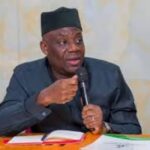
Speaker of the House of Representatives, Hon. Abbas Tajudeen, on Wednesday vowed that the House would no longer approve budgetary allocations to any Development Finance Institutions (DFIs) that fail to demonstrate accountability, sound financial conduct, and measurable economic impact.
The Speaker issued the warning in Abuja during the inauguration of an ad hoc committee to investigate the operations, funding, and performance of Development Finance Institutions in Nigeria, namely: the Bank of Industry (BoI), Bank of Agriculture (BoA), Nigeria Export-Import Bank (NEXIM), Development Bank of Nigeria (DBN), and the Infrastructure Bank.
While noting that public funds meant for economic growth must be managed with transparency and discipline, Hon. Tajudeen stressed that every disbursement should translate into visible outcomes such as job creation, industrial expansion, agricultural productivity, and SME support.
The Speaker, represented by the Deputy House Leader, Hon. Abdullahi Halims, lamented that despite substantial government interventions, DFIs have struggled to significantly influence poverty reduction or improve the performance of small and medium enterprises.
Addressing stakeholders at the inauguration, Hon. Obetta explained that the ad hoc committee was entrusted with a task that sits at the heart of the nation’s economic stability and progress. He reiterated the House’s resolve to ensure that institutions created to drive national development truly deliver on their mandates.
Expressing concern over inefficiencies, lack of transparency, and limited innovation in DFI operations—which have hindered their ability to support economic reforms and inclusive growth—he disclosed that the ad hoc committee would engage regulators, government agencies, and beneficiaries to determine whether the level of funding received corresponds with measurable economic results.
“In recent years, there have been persistent questions about the impact, accountability, and overall performance of these institutions, particularly concerning the utilisation of public funds, the accessibility of their credit facilities, and the transparency of their operations.
“Preliminary public reports and sector commentary suggest that inflows into Nigeria’s DFIs in the last seven years—including government capital injections, budgetary appropriations, bond issuances, concessional loans, and donor funding—are in excess of ₦12 trillion. This figure is indicative and will be subject to verification; the committee will request audited, itemised inflow and utilisation data from each DFI during our investigations,” he noted.
In his address, the Director of Development Finance Institutions Supervision at the Central Bank of Nigeria (CBN), Mr Ibrahim Hassan, who pledged the apex bank’s full cooperation, promised to provide all required data to aid the proposed investigation.
In his remarks, NEXIM Managing Director, Mr Abba Bello, described the probe as timely, noting that DFIs should serve as engines of growth through export promotion, job creation, and support for productive sectors.
The House stated that the outcome of the investigation would guide future legislative action to ensure public funds are efficiently utilised to strengthen Nigeria’s development finance system.
ALSO READ TOP STORIES FROM NIGERIAN TRIBUNE
WATCH TOP VIDEOS FROM NIGERIAN TRIBUNE TV
- Relationship Hangout: Public vs Private Proposals – Which Truly Wins in Love?
- “No” Is a Complete Sentence: Why You Should Stop Feeling Guilty
- Relationship Hangout: Friendship Talk 2025 – How to Be a Good Friend & Big Questions on Friendship
- Police Overpower Armed Robbers in Ibadan After Fierce Struggle