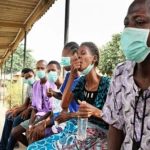
AMONGST the many vices which have bedeviled Nigeria in the course of its existence as a nation, poverty seems to hold sway; generally beginning as a controllable malignancy and, thereafter, insidiously growing to become the most ubiquitous challenge facing a vast majority of Nigerians today. To make matters worse, the advent of the Covid-19 pandemic gave the problem of poverty an entirely new dimension; with outrageous inflation rate, increased unemployment, astronomical increase in cost of food, and crash in price of crude oil. At this rate, it seems there is no light at the end of the tunnel. A news report noted that:“Oil-rich Nigeria can’t seem to catch a break. From an unemployment rate forecast to rise to 33.5% by 2020, to a global pandemic that could push at least 5 million people into poverty and, a near 14% inflation rate as well as an impending recession, the Nigerian future looks dire in the coming months, according to multiple data and reports from several agencies including the World Bank and the United Nation’s World Food Programme”
Prior to the Covid-19 pandemic, the Nigerian Bureau of Statistics reported that 86.9 million Nigerians lived in extreme poverty in 2018. The World Bank, which anticipates Nigeria heading into its worst recession in 40 years as it projects the economy to further shrink this year, noted that the COVID-19 shock alone is projected to push about 5 million more Nigerians into poverty in 2020. To say this is not scary is tomfoolery and an act of self-deceit. There is no doubt that a combination of factors, including extensive lockdown measures and depressed global crude prices, completely derailed the very fragile Nigeria’s economic recovery from its 2016 recession. This has therefore engendered an increase in fiscal deficit and a synonymous rise in the rate of external debt, further plunging the country, and its people, into poverty. On the part of the populace, it has occasioned a rise in crime rate and public lootings, as recently witnessed in the course of the #EndSars protests – such indeed in the power of poverty.
However, prior to 1965 and indeed prior to the coming of Europeans, poverty was unknown in Africa. The fact that there was no poverty and that there were no beggars was confirmed with compelling finality by Lord Macaulay in his address to British Parliament on 2nd February, 1835 when he said: “I have travelled across the length and breadth of Africa and I have not seen one person who is a beggar, who is a thief such wealth I have seen in this country, such high moral values, people of such calibre, that I do not think we would ever conquer this country, unless we break the very backbone of this nation, which is her spiritual and cultural heritage and therefore, I propose that we replace her old and ancient educational system, her culture, for if the African thinks that all that is foreign and English is good and greater than their own, they will lose their self-esteem, their native culture and they will become what we want them, a truly dominated nation.”
Begging by the poor is everywhere. Beggars besiege and embarrass people at wedding, birthday parties, naming ceremonies, funeral ceremony, coronation, chieftaincy installation, petrol stations and on the highway. Nigeria is a country endowed with more enormous human and material resources than most of the developed countries of the world that has per capita income of USD300,000 and above and also life expectancy of 70years. Per capita income in Nigeria is only about USD300 while life expectancy is 52years. About 70% of Nigeria live in abject poverty with less than N500 per capita. This large population lives in squalor, unlike developed countries where less than 10% are poor. For a country with massive wealth and huge population to support commerce, a well-developed economy and plenty of natural resources such as oil, the high rate of poverty is disturbing.
Poverty in Nigeria is getting worse by the day. Why is this? Are the poor people to blame for their predicament? Have they been lazy? Have they made poor decisions? Have they been responsible for their own plight? Is their poverty due to lack of capital or funds to start a good business? Is it due to mismanagement? Is it due to non-availability of resources at individual, corporate or national level? Is it due to lack of good priority setting? Is it due to economic monetary and banking policies of the government? Is it due to excessive interest charged by CBN and commercial banks? Is it due to the education system which was not designed to turn out entrepreneurs and industrialists?
In order to fully appreciate the extent of poverty in the country, it is necessary to firstly examine what life in Nigeria was in its pre-independence days.
In the 50s and 60s, the economy, although subsistence farming was stable,there were only two classes of people; namely the white men, the Obas and Chiefs regarded as the upper class,while the others were in the lower class. Between 1952 and early 70s, three classes of people had emerged namely: the Politicians and the Obas in the upper class; the middle class consisting of professionals and businessmen; and the working class.
Since the 80s however, new classes of people have emerged namely: a. The super rich b. The politicians including Presidents, Governors, Ministers, Senators etc c. The tycoons d. The middle class consisting of civil servants and professionals. e. The workers f. The poor g. The very poor
The emergence of these new classes and the attendant economic and social consequences was brought about by many factors including the discovery of oil, reliance on oil and the almighty revenue earner, the policy of government to export crude oil and import refined oil for local consumption, instead of refining enough oil for local consumption; the neglect or abandonment of agriculture; the lucrativeness of politics, the indiscriminate issuance of licenses and waivers for tycoons for importation of sugar, flour, cement, corn, wheat and other basic essential commodities. Other factors which inflicted hardship and poverty on the citizenry include failure to provide steady and reasonably cheap electricity, abandonment of rail transportation, poor road transportation system, poor education and poor health service. Of all these, the Structural Adjustment Program (SAP), which many of us including my humble selfopposed, had the most profound effect on the economy of the nation. It brought about steady currency devaluation, internationally uncompetitive low wages and the collapse of the middle class. It also sounded the death knell for many national bodies such as the Nigeria Airways, and the Nigerian National Shipping Line and railways. The gradual worsening of the economy and increase in poverty level is therefore cumulative and all previous governments are to blame for the present level of poverty in the land.
Effects of poverty
The first noticeable effect of poverty is inequality. The poorest people will always have less access to health, quality education and other services. Hunger, malnutrition and diseases have more effect on the poorest in the society. They are invariably marginalized in society and have little or no representation of voice in public or political debates. By contrast, the wealthy benefit more from economic or political policies. The wealthy have access to the bank and the government whereas the poor suffers in silence. The gap between the rich and the poor is dangerously widening. Soon, we may produce the richest man on the planet and also the largest number of poorest people.
…To be continued
Aare AfeBabalola, OFR, CON, SAN, LL.D, D.Litt
YOU SHOULD NOT MISS THESE HEADLINES FROM NIGERIAN TRIBUNE
ICYMI: CBN Lists Business Activities Eligible For N75bn Youth Investment Fund
THE Central Bank of Nigeria (CBN) has revealed main business activities and sectors in the Nigerian economy that are eligible to access its N75 billion Youth Investment Fund…
#EndSARS: Fr Mbaka Asks Buhari, Past Leaders To Apologise To Nigerians
Controversial Catholic priest and Spiritual Director of Adoration Ministry, Enugu, Nigeria, (AMEN), Rev Fr Ejike Mbaka, has taken a swipe at President Muhammadu Buhari and past leaders of the country demanding that the President should apologize to the country, especially the youth, on behalf of himself and his predecessors, for causing Nigerians so much pain…
WATCH TOP VIDEOS FROM NIGERIAN TRIBUNE TV
- Relationship Hangout: Public vs Private Proposals – Which Truly Wins in Love?
- “No” Is a Complete Sentence: Why You Should Stop Feeling Guilty
- Relationship Hangout: Friendship Talk 2025 – How to Be a Good Friend & Big Questions on Friendship
- Police Overpower Armed Robbers in Ibadan After Fierce Struggle