Nigeria has reported significant progress in its implementation of the WHO Framework Convention on Tobacco Control (WHO FCTC), announcing new enforcement measures, major policy actions, and a landmark penalty against a leading tobacco company.
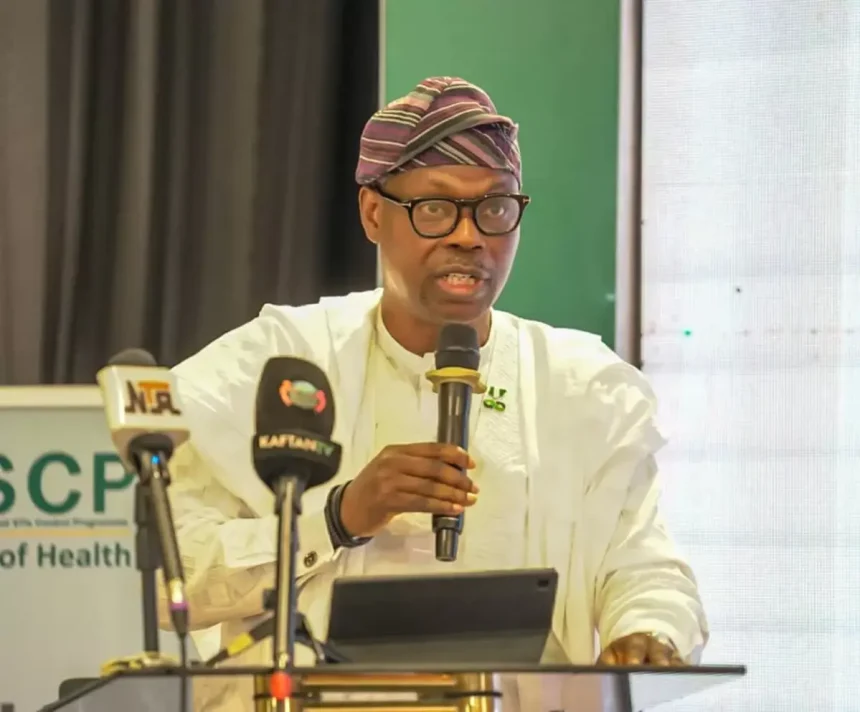
The Minister of State for Health and Social Welfare, Dr. Iziaq Adekunle Salako, presented the update on Monday at the Eleventh Session of the Conference of Parties (COP11) to the WHO FCTC in Geneva.
Salako reaffirmed Nigeria’s solidarity with African countries at the conference, saying, “I affirm Nigeria’s alignment with the position of the African group as delivered by Benin.” He also commended the organisers for “working hard to put this meeting together.”
The minister highlighted major gains since COP10 in Panama, particularly in prevention and regulatory oversight. “Nigeria has made remarkable progress in the regulation of tobacco distribution and consumption, particularly in the areas of use prevention and monitoring policies,” he said.
A key milestone is the completion of the Global Adult Tobacco Survey (GATS 2025), making Nigeria the first African country to complete the second round of the survey.
According to Salako, “We have just successfully concluded data collection and analysis for the 2nd round of the Global Adult Tobacco Survey.”
He said fresh data shows a notable decline in daily tobacco use among adults compared to the 2012 baseline. “This positive trend reflects the effectiveness of our sustained multisectoral interventions, enforcement of tobacco control laws, regulations, and public education efforts,” he explained.
He also highlighted the increasing impact of pictorial health warnings: “The percentage of current smokers who reported thoughts of quitting smoking due to the health warnings increased from 26.7% in 2012 to 43.3% in 2025.” The minister added that exposure to second-hand smoke at home and in public places has also “significantly declined.”
To strengthen enforcement, the government has rolled out several national policy instruments, including the National Tobacco Control Strategic Plan of Action (2024–2028), the National Tobacco Control Communication Strategy (2024–2028) and the National Tobacco Control Enforcement Plan (2024–2028).
Salako announced a major development under Article 19 of the WHO FCTC, which empowers countries to hold tobacco companies accountable. “Nigeria has advanced the implementation of Article 19… which encourages Parties to hold the tobacco industry legally and financially accountable,” he stated.
He revealed that the Federal Competition and Consumer Protection Commission (FCCPC) recently imposed a $110 million fine on British American Tobacco Nigeria (BATN) for multiple violations of tobacco control and consumer protection laws.
“This represents one of the most significant applications of Article 19 globally and sends a strong message that the tobacco industry must bear responsibility for its actions,” he said.
Nigeria has also taken bold steps to curb tobacco promotion in entertainment. The Nigeria National Film & Video Censors Board (NFVCB) has introduced new regulations banning tobacco advertising, promotion, and sponsorship across films, TV, music videos and digital media. “For a country with one of the world’s largest film industries, this is a bold step to give practical effect to Article 13 of the WHO FCTC,” he said.
Reflecting on the conference theme, “Healthy planet, healthy future: uniting for a tobacco-free generation”
Salako urged renewed global commitment. “The 20th anniversary of the WHO FCTC challenges us to reflect and recommit ourselves to global tobacco use control as an effective strategy to prevent non-communicable diseases and environmental degradation,” he said.
He acknowledged persistent challenges, including weak subnational enforcement, misinformation about emerging nicotine products, and ongoing industry interference. “While significant progress has been made, key challenges persist,” the minister admitted.
Despite those concerns, Nigeria reaffirmed its commitment to global tobacco control. “Nigeria remains unwaveringly committed to the enforcement of the WHO FCTC and other evidence-based, legally binding international treaties,”
Salako stated, adding that the country welcomes “technical and financial support, knowledge exchange, and global collaboration.”
WATCH TOP VIDEOS FROM NIGERIAN TRIBUNE TV
- Relationship Hangout: Public vs Private Proposals – Which Truly Wins in Love?
- “No” Is a Complete Sentence: Why You Should Stop Feeling Guilty
- Relationship Hangout: Friendship Talk 2025 – How to Be a Good Friend & Big Questions on Friendship
- Police Overpower Armed Robbers in Ibadan After Fierce Struggle