HIV is not just a medical condition—it is a life-altering reality that carries deep psychological burdens. Today, more than 39 million people globally live with HIV, with Nigeria alone accounting for approximately 1.9 million cases. While modern medicine has transformed HIV into a manageable chronic illness, its mental health impact remains largely overlooked. Research shows that people living with HIV (PLHIV) are two to three times more likely to experience mental health disorders than the general population. Yet, mental health support remains inadequate, leaving many to battle their struggles in silence.
The Toll of HIV on Mental Wellbeing
Receiving an HIV diagnosis can trigger a variety of emotional and psychological reactions, such as shock, denial, fear, confusion, shame, guilt, and profound grief. If left unaddressed, these initial responses can evolve into a range of serious mental health conditions that significantly affect quality of life. Among the most common is depression, which affects up to 40 percent of people living with HIV (PLHIV). This is often rooted in stigma, isolation, and the overwhelming uncertainty that accompanies the diagnosis. Alongside depression, many individuals experience anxiety disorders, including generalized anxiety and panic disorders, with prevalence rates ranging from 30 to 40 percent. These are frequently driven by fears of rejection, disclosure, job insecurity, or declining health.
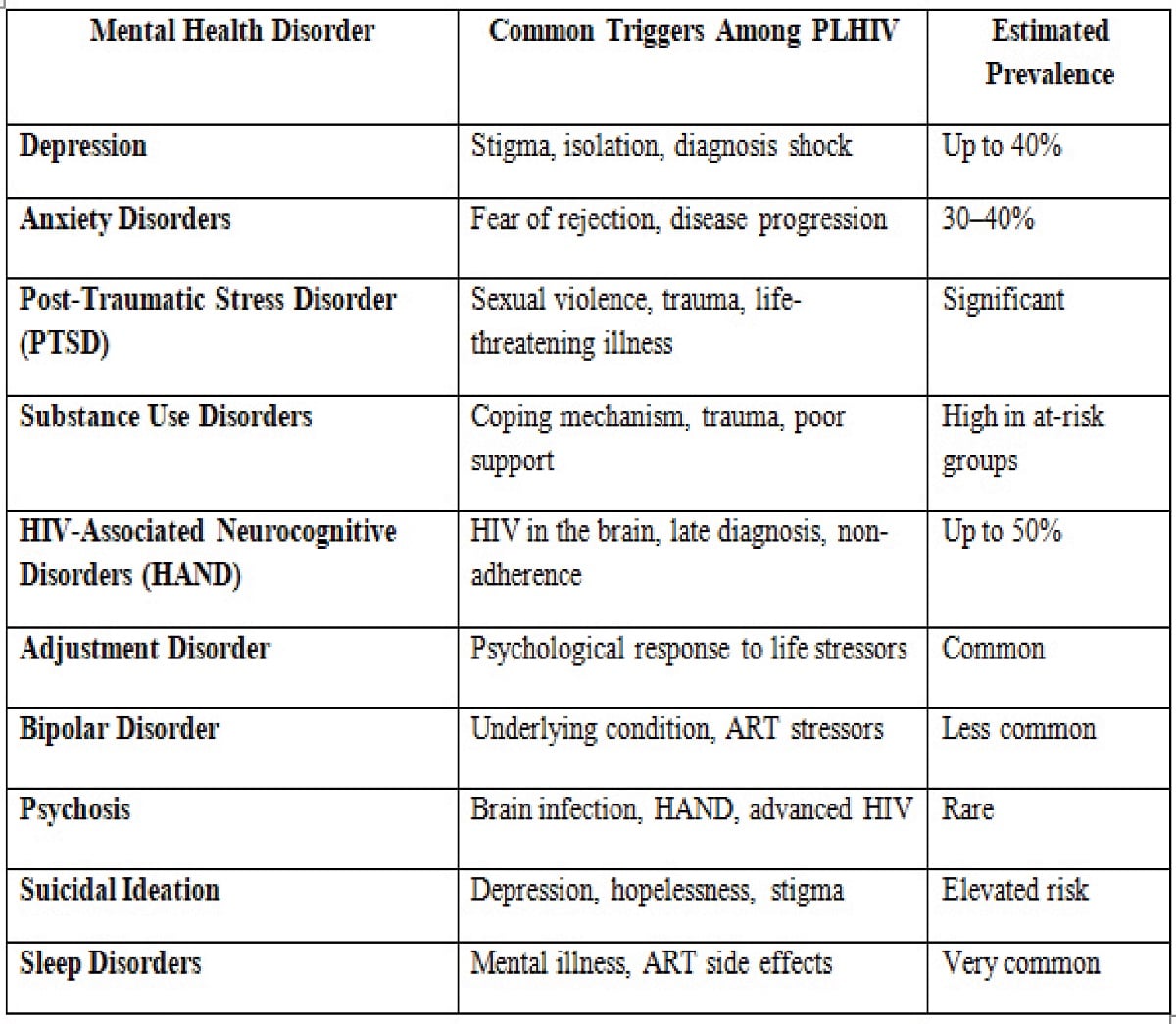
For some, the psychological burden is compounded by a history of trauma, especially where HIV was acquired through events like sexual assault, intimate partner violence or medical negligence. In such cases, post-traumatic stress disorder (PTSD) may develop, marked by recurring flashbacks, nightmares, hypervigilance, and emotional numbing. In a bid to escape these distressing symptoms, some individuals may resort to substance use, turning to alcohol, opioids, or stimulants. This coping mechanism, however, often backfires—disrupting adherence to antiretroviral therapy (ART), increasing risky behaviours, and exacerbating mental health decline.
Another critical but often overlooked condition is HIV-associated neurocognitive disorder (HAND). HAND arises from the virus’s impact on the brain and encompasses a spectrum of cognitive impairments—affecting memory, concentration, and executive functioning. Studies suggest that up to 50 per cent of PLHIV may experience some form of HAND, especially if diagnosis is delayed or ART adherence is poor. In the early stages of adjustment, many individuals also experience adjustment disorders, struggling to mentally and emotionally integrate this new reality into their lives. Persistent sadness, mood swings, and trouble focusing can severely disrupt daily functioning.
In certain cases, bipolar disorder may emerge or be exacerbated, with mood instability, impulsivity, and episodes of mania or depression complicating both treatment and interpersonal relationships. In more advanced stages of HIV, particularly when associated with opportunistic infections or severe cognitive impairment, psychosis can occur. This may involve hallucinations, delusional thinking, and disorganized behaviour, sometimes triggered by neurological damage or medication side effects.
Tragically, suicidal thoughts and behaviours are also more common among PLHIV, fuelled by co-existing depression, hopelessness, social rejection, and emotional exhaustion. This risk increases substantially when mental health support is lacking, or substance use becomes a chronic escape. Sleep disorders—including insomnia and hypersomnia—are frequently reported as well, often stemming from the interplay between psychological distress, ART side effects, and neurocognitive complications.
The cumulative effect of these mental health challenges illustrates one critical truth: HIV is not only a physical health condition—it is an enduring psychological experience that demands integrated, compassionate mental health care.
Conclusion
Living with HIV isn’t just about managing a virus, it’s about navigating a whole world of emotional challenges that often go unseen. From depression and anxiety to memory problems and sleep disturbances, the mental health impact of HIV can be just as serious as the physical effects. Sadly, many people face these struggles in silence because of fear, stigma, or lack of support.
But it doesn’t have to be this way. With the right care, people living with HIV can feel mentally strong, emotionally supported, and fully in control of their lives. Mental health support like counselling, support groups, and regular check-ins should be part of every HIV care plan. When we talk more openly about these issues and treat mental health as just as important as physical health, we make it easier for people to thrive, not just survive.
READ ALSO: Assessing NACA’s renewed push for an HIV/AIDS-free Nigeria
WATCH TOP VIDEOS FROM NIGERIAN TRIBUNE TV
- Relationship Hangout: Public vs Private Proposals – Which Truly Wins in Love?
- “No” Is a Complete Sentence: Why You Should Stop Feeling Guilty
- Relationship Hangout: Friendship Talk 2025 – How to Be a Good Friend & Big Questions on Friendship
- Police Overpower Armed Robbers in Ibadan After Fierce Struggle