
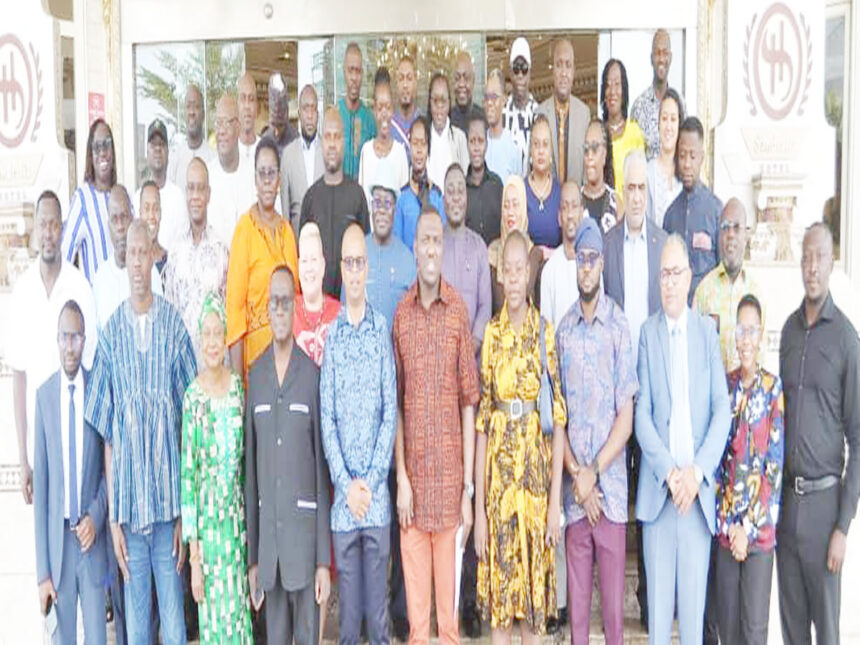
Poised to sustain and scale up its advocacy and campaigns for the protection of African migrant workers, a network of trade unions has reaffirmed its commitment to combating unfair labour practices and the exploitation of migrant workers, especially in the Gulf countries.
Converged on Abuja for a three-day annual meeting from 21 to 23 May, the network; operating under the aegis of the African Trade Unions Migration Network (ATUMNET) in collaboration with the International Labour Organisation (ILO) and private recruitment agencies, emphasised the importance of collaborative efforts, sustained action, and adherence to ethical recruitment practices to ensure the rights of migrant workers are effectively protected.
With the theme “Contributing to Pro-Rights Labour Migration Governance, Integration and Fair Recruitment Practices,” the meeting, organized by ATUMNET with support from the ILO and other partners, marked a significant shift in approach. A key outcome of the gathering was the development of a concrete action plan, with stakeholders pledging commitment to its implementation.
Speaking at the opening ceremony, the General Secretary of ITUC-Africa, Comrade Akhator Joel Odigie, stated, “This year, we have changed our approach. We aim to deepen social dialogue, foster collaboration, and strengthen partnerships with state actors across the continent.”
In a departure from past ATUMNET meetings, returnee and migrant workers were invited to share their personal stories and experiences. Their contributions provided deeper insight for stakeholders, enriching the development of a thematic action plan.
“We decided to change our method by stepping up our action plan,” Odigie continued. “For the first time, we have recruitment agencies participating alongside government officials. More importantly, we have a larger representation of migrant workers, including those who returned from the Middle East.”
He emphasised the importance of inclusivity, saying, “We want to see a more inclusive strategy that promotes pro-rights migration by working more closely with stakeholders to improve the overall migration experience.”
“This meeting opens up more space for engagement with governments and other stakeholders, including trade unions from outside the African continent,” Odigie added. “Tackling the complex issues surrounding migration requires a collaborative approach.”
In her opening remarks, Aida Awel, ILO Chief Technical Advisor for the Better Regional Migration Management (BRMM) Project, noted that despite their significant contributions, migrant workers often face numerous challenges, including exploitative conditions such as low wages, excessive work hours, and limited access to social protection.
She highlighted the critical role of trade unions in advocating for migrant workers’ rights. “By organizing and representing migrant workers, trade unions can amplify their voices and ensure their concerns are heard and addressed,” she said.
However, she acknowledged a gap in unionization, stating, “We don’t see many migrant workers organized in our region and beyond. We would like to see more progress in this area because it is essential.”
Awel called for enhanced partnerships to drive the agenda forward. “Addressing labour migration challenges is not solely the responsibility of trade unions. It demands the collective involvement of governments, employers, recruitment agencies, academia, development partners, and civil society. Together, we can foster an environment where migrant workers are treated with dignity and respect.”
She stressed that one of ILO’s key priorities is eliminating exploitative recruitment practices. “Migrant workers often accumulate significant debts just to secure employment, making them vulnerable to abuse and forced labour. Promoting fair recruitment is essential for enhancing workers’ rights, protection, and access to justice.”
ATUMNET is an initiative of ITUC-Africa, created to address the issues confronting African migrant workers and to advance migration governance across the continent.
Representing the National Commission for Refugees, Migrants, and Internally Displaced Persons, Ambassador Catherine pledged support for the resolutions adopted at the ATUMNET meeting. She assured stakeholders that the Commission is committed to ensuring effective migration governance in Nigeria, aligned with the protection and well-being of migrant workers.
READ ALSO: Global labour migration grows to 169 million amidst vulnerabilities
WATCH TOP VIDEOS FROM NIGERIAN TRIBUNE TV
- Relationship Hangout: Public vs Private Proposals – Which Truly Wins in Love?
- “No” Is a Complete Sentence: Why You Should Stop Feeling Guilty
- Relationship Hangout: Friendship Talk 2025 – How to Be a Good Friend & Big Questions on Friendship
- Police Overpower Armed Robbers in Ibadan After Fierce Struggle


