
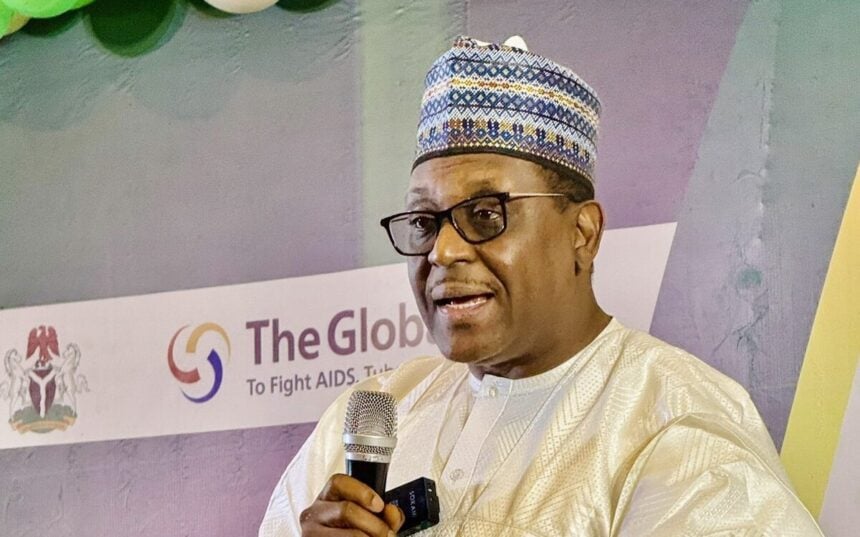
The Federal Government has flagged off the distribution of medical equipment to primary health care centers across the country to mark significant milestone in the revitalization of Nigeria’s primary health care system.
The Coordinating Minister of Health and Social Welfare, Professor Mohammed Ali Pate, during the flag-off on Thursday in Abuja, said the distribution of medical equipment is part of the Federal Government’s efforts to strengthen the primary health care system and improve access to quality health services for Nigerians.
He said, “This is not just an event, but it is also a promise kept. Two years ago, we embarked on an ambitious effort to revitalize the primary health care system, setting targets, and now we are seeing that promise being kept.”
ALSO READ: Court rejects application seeking to stop Mark, Aregbesola from assuming ADC leadership
Pate noted that the revitalisation of primary health care centers is crucial to improving the health outcomes of Nigerians, particularly in rural areas.
The Minister issued a stern warning that the Federal Government will not tolerate any diversion or misapplication of the medical equipment and essential drugs being distributed to primary health care centers.
“We will not stand idly by while these resources are misused. Any frontline worker, any health facility manager, any local government or state official, or even federal official who diverts anything that is deployed to serve our people, will face consequences.”
“For too long, our primary health care centers have languished,” he said. “They are not very functional in many areas. Our mothers have to travel long distances for delivery, and many of them die in the process. Children missed their vaccinations. Communities didn’t have much hope.”
The Minister praised the NPHCDA for its progress in revitalizing primary health care centers across the country. “I’m glad to hear from the Executive Director that we’ve made a lot of progress in terms of the physical infrastructure.”
“But we also have to equip them, which is what we are doing, stock them with the essential medicines, have the frontline health workers, and make them centers that communities can trust.”
Pate expressed his gratitude to the development partners, including the Global Alliance for Vaccines (GAVI), the Global Fund, WHO, UNICEF, and UNFPA, for their support in the revitalization of primary health care centers.
“We appreciate the support of our development partners who have believed in this nationally-owned effort and have contributed their time, their technical and financial resources,” he said.
Pate reiterated that the journey to revitalizing Nigeria’s primary health care system has just begun, and assured that the Federal Government is committed to ensuring that the health system rises again.
“Today’s flag-off is further proof that the Nigerian health system can rise again, and proof that President Bola Ahmed Tinubu’s Renewed Hope Agenda is real. Let us join together to build a health system that leaves no Nigerian behind.”
Also speaking, the Executive Director of the National Primary Health Care Development Agency (NPHCDA), Dr Muyi Aina, provided an update on the revitalization of primary health care centers across Nigeria.
According to Aina, the agency has made significant progress in refurbishing primary health care centers, installing solar power, and training frontline health workers.
“We have 1,295 primary health centers that have been completely refurbished, in terms of the buildings.
“We have installed solar power in 38 PHCs across the country, and we are working in partnership with the SWAP office and our sister agency, the NHIA, to revitalize CMON sites.”
Aina also reported that the agency has trained 69,106 frontline health workers, and provided kits, including crocs and uniforms, to these health workers.
“In partnership with the Renewed Hope Initiative of the First Lady, we have provided kits to these health workers across the zones,” he said.
The Executive Director noted that some states have recruited new health workers, and the NPHCDA will be supporting the states in paying the salaries of these health workers over the next few years.
“Kaduna, for example, has recruited 216 skilled health attendants and 969 community-based health workers,” Aina said.
Aina also provided an update on the Maternal and Child Health Initiative (MAMI), saying that 411,000 pregnant women have been enrolled across 21 states, and 30,587 of them have received specific care, including antenatal care and referral for diagnostics.
The Executive Director expressed gratitude to the Federal Government and development partners for their support in the revitalisation of primary health care centers.
“We have spent over nine billion Naira on equipment, and over 14 billion Naira on health commodities,” he said.
Aina called on state governments to build on the momentum generated by the Federal Government’s intervention and commit more resources to equipping and staffing their facilities. He also urged Nigerians to participate in the upcoming measles and rubella campaign, which aims to reach 109 million Nigerians aged up to 14 years old.
“We hope to reach 109 million Nigerians aged up to 14 years old, and the idea is that the measles vaccine they will get, those that are eligible for polio vaccines will get, other interventions like nutrition, like malaria commodities, we’re integrating it,” Aina said.
WATCH TOP VIDEOS FROM NIGERIAN TRIBUNE TV
- Relationship Hangout: Public vs Private Proposals – Which Truly Wins in Love?
- “No” Is a Complete Sentence: Why You Should Stop Feeling Guilty
- Relationship Hangout: Friendship Talk 2025 – How to Be a Good Friend & Big Questions on Friendship
- Police Overpower Armed Robbers in Ibadan After Fierce Struggle


