•Bad roads, bandits, fuel costs: The ordeal of Ibadan fruit sellers
Behind every basket of fresh fruits displayed in local markets lies a difficult journey. The journeys are filled with sacrifice, uncertainty, and survival. ELIZABETH BABAWALE, an intern with the Nigerian Tribune, writes on the effects of poorly-maintained roads, bandit attacks along certain routes, and continuous increase in fuel price have on the financial survival of fruit sellers. Traders in the popular Oje Market in Ibadan tell their story.
THE time was 9:00 a.m. The scene was the popular Oje Market in Ibadan, Oyo State, widely acknowledge as the home of fruits in the sprawling city.
Fruits like oranges, tangerines and other citruses; mangoes, African star apple when it is in season; watermelon, banana, plantain, and the likes are daily in display in this market. Activities for the day had begun. The fruit sellers were making their way to their stalls.
One by one they gathered, waiting anxiously for a truck which ought to have delivered its goods, this time oranges, 12 days earlier.
The delay, they knew, could be attributed to two major factors – bandits’ attack, which has turned farm routes into no-go areas, and a road so badly damaged that hours spent on journeys become prolonged, leaving drivers and passengers worn out, and the transported fruits facing phases of change.
As the long-awaited truck finally groaned into the market, the sellers heaved a sigh of relief.
They were all expecting the delivery of rotten oranges, which meant a total loss, but there was a glimmer of hope, the hope of making a little proceed appeared on their faces as the oranges tumbled out of the truck.
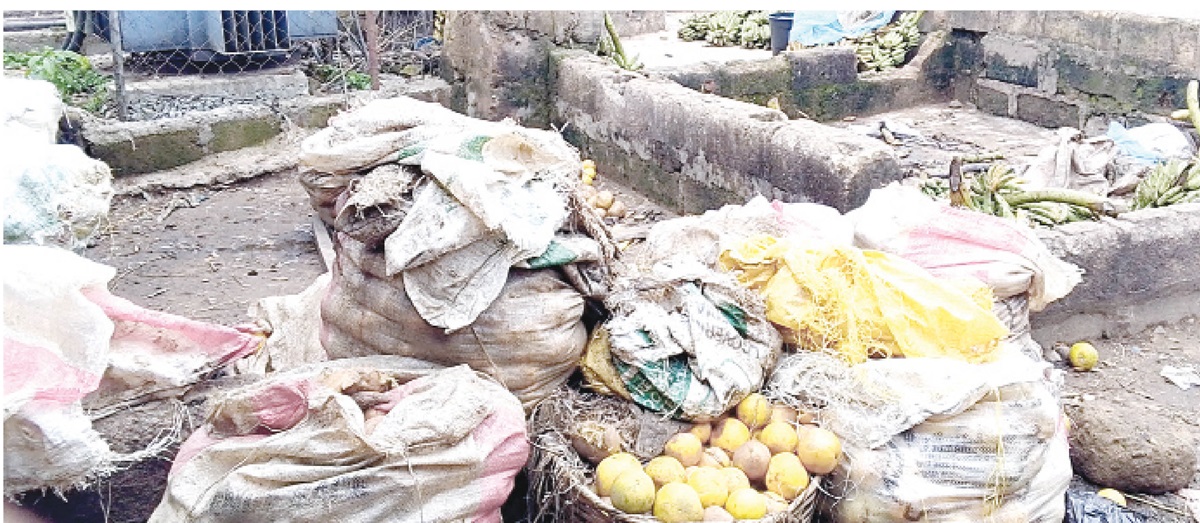
The skins of these oranges were already soft, having lost the firm texture and the glossy, waxy, sheen, fresh look which the oranges supplied a few days earlier bore.
This is the experience of the Nigerian fruit seller, who the burdens of insecurity, bad roads and hike in fuel price conspire to turn their profit into rot before a single customer arrives.
The truck’s arrival set off the regular routine.
Mr Kamarudeen Ishola, who sells a variety of fruits in the market, commenced the sorting of the fruits.
“We have to sort them immediately,” he said, pointing at piles of sacks of oranges which could no longer be sold at the normal price as a result of the effect the delay caused by the damaged vehicle conveying them from the farm, had on them.
The delay, he explained, had already consumed a meaningful portion of his capital.
“The truck transporting the oranges came from as far as Benue State. It was to supply the fruits within three or four days. The journey unfortunately, took 12 days because it broke down on the way.
“We ought to sell the fruits last week, but they were delivered just yesterday.”
The threat to the survival of fruit-selling business, however, does not start with the truck, but rather it began from the communities that accommodate fruit farms.
Bandits have today taken over these areas, therefore making it a life-threatening gamble for farmers to tend their crops or harvest at the right time.
Fruits left too long on the trees get overripe; those harvested in a panic are bruised.
The fear that grips the farm travels with the produce, arriving at the market as a hidden wound that sellers can only discover when it is too late.
Transporting the surviving farm produce to town also comes at a punishing expense.
The sharp increase in the price of fuel has doubled the cost of transportation.
READ ALSO: NAFDAC warns fruit sellers against using calcium carbide for artificial fruit ripening
Mr Blessing, Chairman, Oje market fruit sellers, stated, “The increase in fuel price has a lot of impact on our business. Before the fuel price increase, we buy a sack of orange for between N7,500 and N8,000, but now we purchase these at nothing less than N10,000 per sack. Most of the time, we buy the sacks of oranges from the farm at N12,000, this excluding other expenses.
But the financial trap does not end with transport cost. Behind many stalls lies a quieter, more relentless drain, debt.
Most of these traders do not own the capital they use in purchasing their stocks. They take loans, from micro-credit schemes, cooperative societies, or local lenders and they must repay with interest, whether the fruit sells or rots.
As one of the traders explained, the loan must be settled even when the profit has long turned to mush.
“We collect loans from cooperatives and banks to run our business and we still have to return the loan with interest. We have been surviving through God‘s mercy.”
Near the market stands a government-provided waste drum, but its usefulness carries a bitter irony.
The air around it is a thick cocktail of fermented oranges, rotten banana peels, and decaying watermelon. “We have where we dispose of our spoilt fruits, a place provided by the government,” Mr Blessings added.
“But the people who help us dispose of the rot also collect money. We use money to dispose of money. It is one of the biggest challenges here.”
Iya Tunde, a seller of bananas and plantain, explained that once her fruits begin to get overripe, they are not wasted. They are sold at a low discount to women who will transform them into a snack, popularly called dodo Ikire, a local fried plantain.
She said while the fruit is rescued, “The profit margin is gone. It is a salvage operation, not a sale.”
By 1:00 pm, the early and careful display of these fruits, backed with hope for a bountiful sale, gives way to an urgent rearrangement.
The “must sell now” pile grows. Prices become whispers of desperation.
A mango that was sold at a reasonable price at dawn is offered for half its normal price, then as the day drags on, a quarter of its worth.
And if, unfortunately, no hand picks it for purchase, then it joins the bucket of rot and loss by sunset.
Despite this daily encounters or experience, these traders stay.
When asked what keeps them anchored to a business that breaks the heart as often as it fills the pocket, Mr. Ishola’s answer was simple.
“As long as we have not seen an alternative, we will continue,” he said, adding that passion, too, binds them to this precarious trade.
Fruit selling is often dismissed as a low-rung, barely profitable hustle. But spend enough years watching things ripen and rot under the sun, and you begin to see more than fruit.
You see the shape of the economy, the failures of the state, and the path you pray your children never have to walk.
It is a life that sharpens a particular kind of wisdom and the sellers are not shy about sharing it.
Ask Mr. Ishola about the young graduates who complain there are no jobs, and he will fix you with a direct, unapologetic gaze.
“There is work here,” he said. The fruit trade, he insisted, teaches a person to deal honestly.
“Do not let the certificate you carry make you blind to what your hands can do.”
Another seller, watching the transaction, nodded and added his counsel.
Blessing concluded: “Youths today should not just sit down. They should endeavour to develop themselves.”
There was no bitterness in their voices, only the clear, unvarnished conviction of people who have learned that dignity is not printed on a degree, but earned in the daily effort to create value from something perishable.
And pleading with the government, they ask for what should be basic, security for the farmers who risk their lives to plant and harvest, good roads that do not turn a day’s journey into a fruit-killing odyssey, and affordable fuel that does not devour their capital before a single sack is opened.
Mr Blessing pleaded that the government support their business by giving them financial backing.
Most of all, they want the government to see them, not as a footnote in the food chain, but as a vital artery that is being severed, slowly, by neglect.
Adding to this, Mr Ishola said that there is an association of fruit sellers named Nigeria Food Dealer and Seller Association registered under Cooperate Affairs Commission which should be funded by the government and bus be given to the association to make transporting easier.
As dusk fell over the market, the unsold fruits were covered with damp cloths, a final, fragile shield against the night.
The waste drum received the last of the day’s casualties.
The lenders’ ledgers, however, remained open, unsoftened by the sight of a bucket of rotting oranges. Tomorrow, the clock would reset. Another truck, if the roads allowed, would arrive with more fruit, more hope, and more hidden losses. And the sellers, as they have always done, would be there to sort through the wreckage, looking for the one perfect orange that makes the whole brutal journey and the interest on the loan worth it.
WATCH TOP VIDEOS FROM NIGERIAN TRIBUNE TV
- Relationship Hangout: Public vs Private Proposals – Which Truly Wins in Love?
- “No” Is a Complete Sentence: Why You Should Stop Feeling Guilty
- Relationship Hangout: Friendship Talk 2025 – How to Be a Good Friend & Big Questions on Friendship
- Police Overpower Armed Robbers in Ibadan After Fierce Struggle