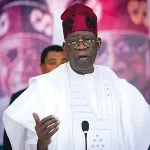
“It is time to move beyond rhetorical hope…Nigeria’s future cannot be built on beautiful aspirations and emotive patriotism, but must be anchored in a collective demand for transparency, justified expectation, equity, responsible governance, and freedom from want on the many needs of living a good life”
WHAT is patriotism? One definition of it which has gained currency but which is always (deliberately?) misquoted, misinterpreted, and misapplied to suit the personal interests of those concerned is the one popularized by US naval officer, Commodore Stephen Decatur. His exact words were: “Our country! In her intercourse with foreign nations may she always be in the right; but our country, right or wrong”. Sheer patriotism! Blind love for the motherland – or is it the fatherland! The egotist zeal of a soldier risking all, waging battles, winning wars and gaining honour and respect for his country! Decatur became famous for his dare-devil acts of valour in the early 19th Century, especially for leading a handful of men to storm and set on fire the frigate USS Philadelphia that had been captured by pirates from the Barbary states. He came back victorious without losing a single man in an operation described in those times as “one of the boldest and daring acts of the age”. Decatur followed up with another successful mission of signing the peace treaty with Algeria in 1816. He was honoured at a banquet where he raised his glass and made his hair-splitting statement quoted above.

Not only applause but also consternation and condemnation have, however, followed Decatur’s statement for what many have regarded as its “highly narcissistic undertones”. While many have argued that a thoughtful use of the statement can “encourage positive patriotism and inspire change”, others have pointed at its immense capacity for promoting “blind patriotism (and) potentially leading to harmful nationalism”, the same as gripped Adolf Hitler’s Germany and Benito Mussolini’s Italy leading to the Second World War (1939 – 1945), and Francisco Franco’s Spain (1939 – 1975). A defence of Decatur, however, is that his focus was on relations between nations – my country versus foreign nations – and not on the individual country’s internal politics. Besides, he also made efforts to insist on the justness of his country’s cause – may she always be in the right. “Right or wrong”, therefore, does not mean it must ride roughshod over others or flex muscles anyhow. It must bend over backward to ensure the justness of its cause. The wisdom of our own elders says we should first drive away the fox before returning home to scold the chicken for wandering far away from home.
Here, today, we shall be reviewing ex-Lagos state governor and former Minister, Babatunde Raji Fashola’s treatise on patriotism. The reviewer is no less a person than a former diplomat, lawyer, and professor of Political Science and International Relations at Chrisland University, Abeokuka, Babafemi Badejo, who is no stranger to these pages. Titled “My country, right or wrong mentality is actually unpatriotic: A dialogue with Fashola”, Badejo scrutinises Fashola’s speech at the 60th birthday lecture of my brother and professional colleague, Seye Kehinde, publisher of high-flying City People magazine, on Thursday, April 24, 2025 . We shall return to fire parting shots as usual. Enjoy it:
“Mr. Babatunde Raji Fashola, erstwhile Governor of Lagos State and former Minister of Works and Housing in the Buhari administration that ran Nigeria aground, presented a passionate and compelling message titled: “Why I Remain Optimistic About Nigeria.” Fashola’s speech was an appeal for national hope and resilience. He emphasised the strengths inherent in Nigeria’s cultural richness, human potential, and the importance of unity. He extolled the nation’s cultural depth, entrepreneurial energy, and the uncommon resilience of her citizenry as assets for national redemption. His message, delivered with characteristic conviction, was a call to national hope and perseverance amid Nigeria’s complex crises.
“While such depths of optimism and patriotic zeal are commendable, it is imperative to critically assess the underlying factors that challenge such a perspective. Fashola’s message, though well-intentioned, side-stepped the systemic leadership deficit, rampant corruption, administrative/institutional decay, and the external dynamics, not to mention the infrastructure deficits, that have made meaningful progress elusive.
Leadership failure and corruption: The glaring contradictions
“The core issue afflicting Nigeria is not the absence of human or natural resources but the sustained failure of leadership. From the local through the states to the federal level, governance is often tainted by opportunism, incompetence, and corruption. The optimistic narrative Fashola portrays stands in stark contrast to the lived experiences of many Nigerians who contend daily with failing infrastructure, unemployment, insecurity, and a justice system many consider compromised.
“Fashola only scantily touched on the pervasive and fundamental issue of corruption, referencing it only through a non-justiciable constitutional provision that seeks the abolition of corruption. He had no time elaborating on the failure since 1999 of the National Assembly (NASS) to enact a law that would, for instance, allow easy access to the asset declarations of public office holders. Fashola’s passing mention is insufficient given the devastating impact that corruption continues to have on governance, insecurity, public trust, and national development.
“His attempt at promoting national optimism, brand image protection, and patriotism, whilst failing to adequately confront corruption with the same intensity, does not make for a more balanced approach to the issues thrown up. The inability to handle corruption flows from a leadership deficit concerning a visionary approach that focuses on popular interests. The persistent gross inadequacies in governance have led many articulate Nigerians to seek a redefinition of corrupt values towards genuine progress and development.
“The persistent erosion of public trust is evident in the widespread perception of corruption across various arms, levels, and sectors of Nigeria. Findings from a nationwide corruption perception survey I conducted in 2024, which has been published as a book: ‘Nigeria Corruption Perception Data’, show that a vast majority of Nigerians, well over 80%, believe corruption has either worsened or remains widespread. The survey, involving 1,426 respondents across all geopolitical zones, revealed that:
• 748 respondents (more than 52%) rated Nigeria as “extremely corrupt”.
• Over 90% expressed dissatisfaction with the transparency and efficiency of public services.
• Encounters with corruption were most prevalent in the public sector, followed by the private and social sectors.
• Religious and civil society institutions, once seen as moral bastions, were also implicated, with 88% of respondents agreeing that even religious organisations are corrupt.
“Similarly, according to a recent NOI-Polls result, 80% of Nigerians believe that their country’s corruption level has increased over the past year, with the police and the National Assembly perceived as the most corrupt institutions. This perception is not unfounded, as numerous high-profile corruption cases involving former governors and public officials have surfaced, highlighting systemic issues within the leadership structure.
“The ridiculous level of corruption and leadership deficit continues to promote large-scale underdevelopment, poverty, and unlivable conditions for many Nigerians. This situation further moves many Nigerians away from utmost freedom (the UN’s Sustainable Development Goals coupled with access to the benefits accruable from the Universal Declaration of Human Rights).
“These data present a very different picture from Fashola’s upbeat and all-is-good tone. Like they say, “In God We Trust absolutely, but all Men Must come to the Table with Data”. It is based on these data that we shall begin to examine the basis and reality of the high hopes and patriotic excitements that Fashola tried to propagate.
Patriotism examined: Between love for country and disillusionment
“It is a disservice to equate blind loyalty in the face of stark realities with patriotism. True patriotism does not entail defending a broken/failed system or remaining silent in the face of injustice and oppression. Rather, it requires a sober critique and active engagement for necessary reforms. It is such critiques that lead to improvement in societies. The silence or ‘siddon look’ towards societal ills, not to mention deceptive praise-singing in the face of stark realities, actually constitutes a disservice to Nigeria.
“It is not in doubt that ordinary Nigerians deeply love and care about their country, as seen in their resilience and persistent demand for accountability, as well as their failure to organize to throw off the yoke of oppression. What is in doubt is how much love and commitment the people who have been handed the job of managing the material resources, governance, and leadership apparatus of the country truly have for the country. Very painfully, Nigeria’s challenges continue to compound the people’s suffering.
“A deep analysis would demonstrate the lethal situation of the combined effects of leadership deficit, corruption, and the failure of leadership to make the best of the external environment. Such visionary leadership would be opposed to the current reality of being willing tools for the continued external subjugation of Nigeria. Important is also the failure of leadership to start or maintain the process of building viable institutions and expanding the horizon on the paucity of human and material resources.
“In effect, leadership deficit remains central to the increasingly unbearable living standard of Nigerians, hence severing the people from desirable quantum moves towards utmost freedom. Even the most passionate patriot is forced to confront the painful dissonance between eulogy for patriotism and lived reality. The lived reality of the average Nigerian makes the Fashola type of call, couched under the pretense of patriotism, sound very hollow.
Realistic optimism and accountable leadership
“While Fashola appeals for collective hope, Nigeria’s development continues to fail to leapfrog towards development in comparison with countries with similar trajectories, like India, Malaysia, Indonesia, and South Korea. This cannot be ignored in calling for Nigerians to raise their head high in patriotism. Since gaining flag independence around the puerile decolonisation period, countries with relatively better visionary leadership and lower levels of corruption have made significant gains in economic diversification, infrastructure, and human development indices. Clogged by cyclical corruption and poor governance, Nigeria has squandered decades of opportunities for internal consolidation and regional leadership. Love of country does not need to be from the pulpit in those countries (where) people are living reasonably and improving the realities of their life.
“It is time to move beyond rhetorical hope. True national healing requires hard truth-telling, actionable reforms, and people-centred leadership. The escapist argument that all societies are corrupt should be avoided. Many societies that are meeting the needs of their people through development have effective institutional arrangements to radically reduce the level of corruption, as opposed to Nigeria’s tolerance level for cancer.
“The inverse relationship between the known number of Nigerian billionaires (many are not on the Forbes list as a result of hidden wealth) and the poverty level in Nigeria is largely a result of corruption. It is a result of live and direct outright theft, as well as deliberate policies to gouge the public. The resulting inequalities and inequities cannot build the type of patriotism Nigeria had in the 1950s through to the mid-1980s when oil blocks started being handed over to individuals, thereby privatising the life-line of national patrimony without value addition. The result has been a reduced level of peace and security, development, respect for human rights, and humanitarian resilience.
“The 2024 corruption survey I conducted shows a population that is engaged, informed, and yearning for transformation. Nigeria’s future cannot be built on beautiful aspirations and emotive patriotism, but must be anchored in a collective demand for transparency, justified expectation, equity, responsible governance, and freedom from want on the many needs of living a good life. At the top of such a governance arrangement must be visionary leadership able to reverse the level of corruption, adequately respond to the external environment, as well as handle institution-building and expansion on human/material resources.”
I agree with Badejo that “patriotism no be for mouth alone.” And each time I hear Fashola’s name, my mind races to his administration’s ambivalence on the Freedom of Information Act when he was the governor of Lagos state. Even if he washes in Jordan seven times or in the Pool of Siloam…!
READ ALSO: Nigeria’s constitution most maligned document — Fashola
WATCH TOP VIDEOS FROM NIGERIAN TRIBUNE TV
- Relationship Hangout: Public vs Private Proposals – Which Truly Wins in Love?
- “No” Is a Complete Sentence: Why You Should Stop Feeling Guilty
- Relationship Hangout: Friendship Talk 2025 – How to Be a Good Friend & Big Questions on Friendship
- Police Overpower Armed Robbers in Ibadan After Fierce Struggle